
Iran Urges India to Condemn Israel's "Military Aggression"
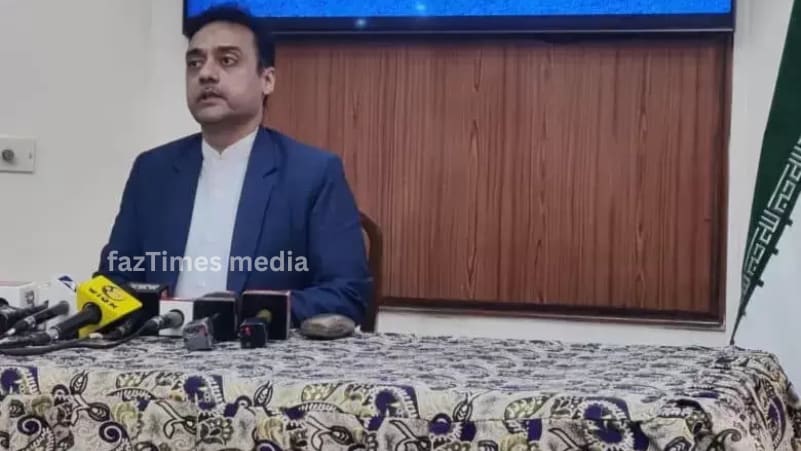
fazTimes media: In a solid political message, Iran has encouraged India and other South Asian nations to condemn what it calls "Israeli military animosity" against its region. As pressures rise between these two territorial powerhouses, the Iranian government looks for a united front against what it depicts as infringement of international law and sway.
Mohammad Javad Hosseini, the Delegate Chief of Mission at the Iranian Government office in Modern Delhi, made this request amid a later interaction with writers. “We anticipate India, a nation with ethical specialists within the Global South, to require a principled stand and rebuke this ridiculous military aggression,” he expressed. This request comes while expanding tensions in West Asia, following an arrangement of military trades between Iran and Israel. Fairly recently, within the past week, both sides have launched ramble and rocket assaults, raising fears of a broader territorial strife.
Iran Looks to India for Ethical Backing
India has profound, verifiable social and financial ties with both Iran and Israel. Whereas it has long kept up a cautious discretionary adjustment within the locale, Iran is presently pressing Modern Delhi to move past a lack of bias. India has continuously backed sovereignty, non-intervention, and the universal rule of law. “This isn't about respective relations with Iran; it is about standing up against aggression,” Hosseini emphasized.
Iran’s ask isn't completely unused. In past territorial clashes, just like the U.S. attack on Iraq or the emergency in Gaza, India has issued carefully worded articulations that emphasize peace and exchange. In any case, Iran appears to be looking for more than fair, conciliatory uncertainty this time.
Mounting Pressures: The Israel-Iran Face-Off
The latest clash between Iran and Israel is the most noticeably awful in a long time. Israeli strikes have allegedly hit Iranian military facilities and foundations, whereas Iran has reacted with rocket assaults. Even though neither nation has declared full-scale war, their activities have as of now disturbed territorial stability.
For India, which depends intensely on energy imports from the Middle East, any unsettling influence within the locale might have genuine financial impacts. About 60% of India’s crude oil comes from West Asia, making solidarity within the locale vital for its energy security.
When asked about the plausibility of Iran closing the Strait of Hormuz, a limited conduit through which 30% of the world’s oil streams, Hosseini was sly but pointed. “Many things are on the table, but we are not making a choice at this moment,” he said.
The Chabahar Calculated and Financial Stakes
Another critical viewpoint of the India-Iran relationship is the Chabahar Harbor venture, which India is creating to boost trade with Afghanistan and Central Asia. Any acceleration between Israel and Iran may undermine this vital activity.
Hosseini did not specifically reply when inquired on the off chance that Chabahar operations can be influenced. In any case, he proposed that broader disturbances might happen. “It isn't, as it were, almost Chabahar. In case things get more regrettable, the total region's economy, including oil shipments and international trade, will feel the impact,” he said.
This vulnerability is particularly concerning for India, which has contributed essentially to Chabahar as an alternative to Pakistan’s Gwadar harbor. The key significance of Chabahar, too, lies in its potential to make strides in networking over the more extensive Central Asian region.
Pakistan, the U.S., and Key Calculations
Adding complexity to the geopolitical circumstance is Pakistan. Later reports recommend that the U.S. may be investigating the utilization of Pakistani military bases for future operations against Iran. This hypothesis follows an assembly between Pakistan’s Armed Forces Chief, Field Marshal Asim Munir, and former U.S. President Donald Trump in Washington. Even though neither Islamabad nor Washington has affirmed this, Iran has made its position clear. “We trust that Pakistan, our neighbor and individual Muslim nation, will not permit any activity that undermines Iran’s sovereignty,” Hosseini expressed.
This may not be the primary time Iran has voiced concerns around Pakistan’s military participation with Western powers. In any case, Tehran’s tone this time appears to express expanded uneasiness over the locale becoming a battleground for worldwide players.
India’s Predicament: An Adjusting Act
India presently finds itself in a fragile position. On one side, it has solid ties with Israel, especially in defense, cybersecurity, and horticulture. On the other hand, it maintains a long-standing social and financial relationship with Iran, which is imperative for its vitality needs and key objectives in Central Asia.
Outside arrangement specialists expect India will likely proceed with its arrangement of vital uncertainty. “India is unlikely to require sides publicly,” said Dr. Meera Sharma, a former negotiator and Middle East master. “Instead, it may call for limitation and de-escalation, adjusting with its conventional approach of non-alignment.” Be that as it may, there's growing pressure from different quarters for India to take a more active political role in reducing tensions within the region
Worldwide Results: More Than a Territorial Emergency
The result of this struggle might have far-reaching impacts beyond the Middle East. A drawn-out encounter might drive up worldwide oil costs, disturb worldwide trade relations, and strain political relations among key international powers.
Nations like India, China, and those within the European Union, major merchants of Middle Eastern oil, have a solid interest in facilitating pressures. “This isn't a one-sided or two-sided issue anymore,” said Prof. Rakesh Nair, a universal undertakings investigator. “If the Strait of Hormuz is influenced, oil costs seem to surge overnight. That would set off a chain response affecting expansion, money soundness, and financial development worldwide.”
Conclusion: A Call for Strategy and Discourse
As the world observes the emergency between Iran and Israel unfurl, the call for a strategy grows louder. Tehran’s message to India is evident: ethical authority and hush may not suffice.
India must weigh its reaction carefully, adjusting its vital interface with its notoriety as a capable worldwide player. For nearby readers, these improvements are not fair to remove features. They affect fuel costs, nearby showcase costs, and the stability of the broader locale India could be a part of.
Whether modern Delhi steps up as an arbiter or keeps up cautious discretion remains to be seen. In a progressively interconnected world, territorial clashes have worldwide results, and quiet carries its message.
© FazTimes Media, 2025 – All rights reserved.


Discussion0
Join the conversation on this story
Loading comments...