
General
Is Turkiye Israel's Next Target? Geopolitical Tensions & Mideast Conflict Explained
By Saquib Ansari
Published: Sep 21, 2025, 09:25 AM
Last updated: Sep 21, 2025, 09:27 AM
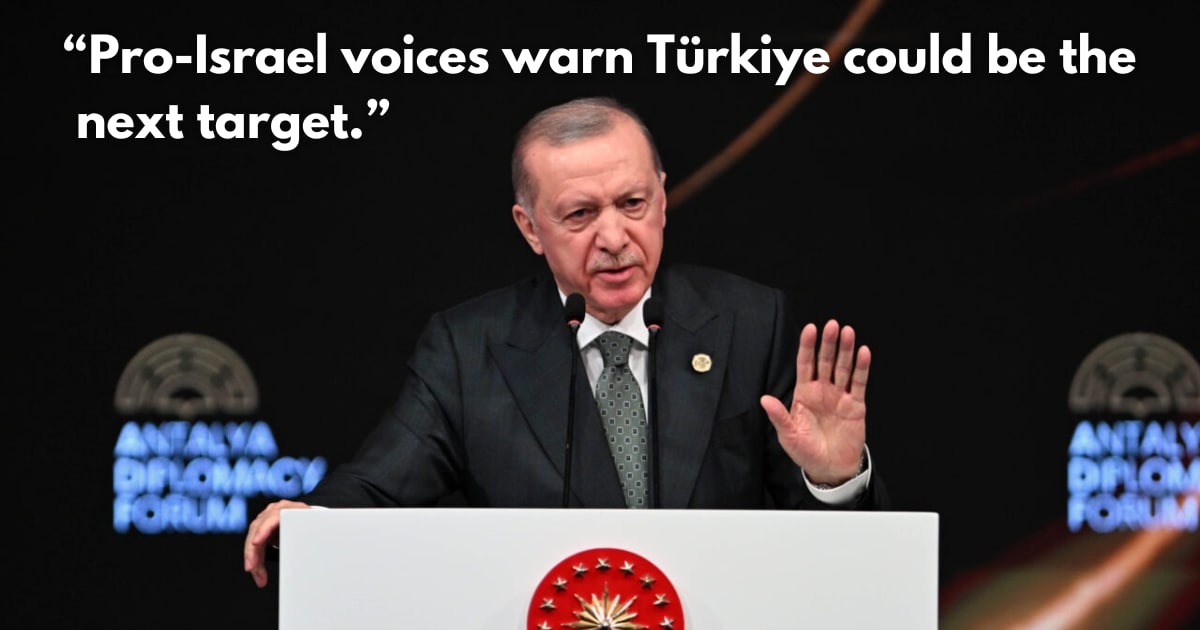
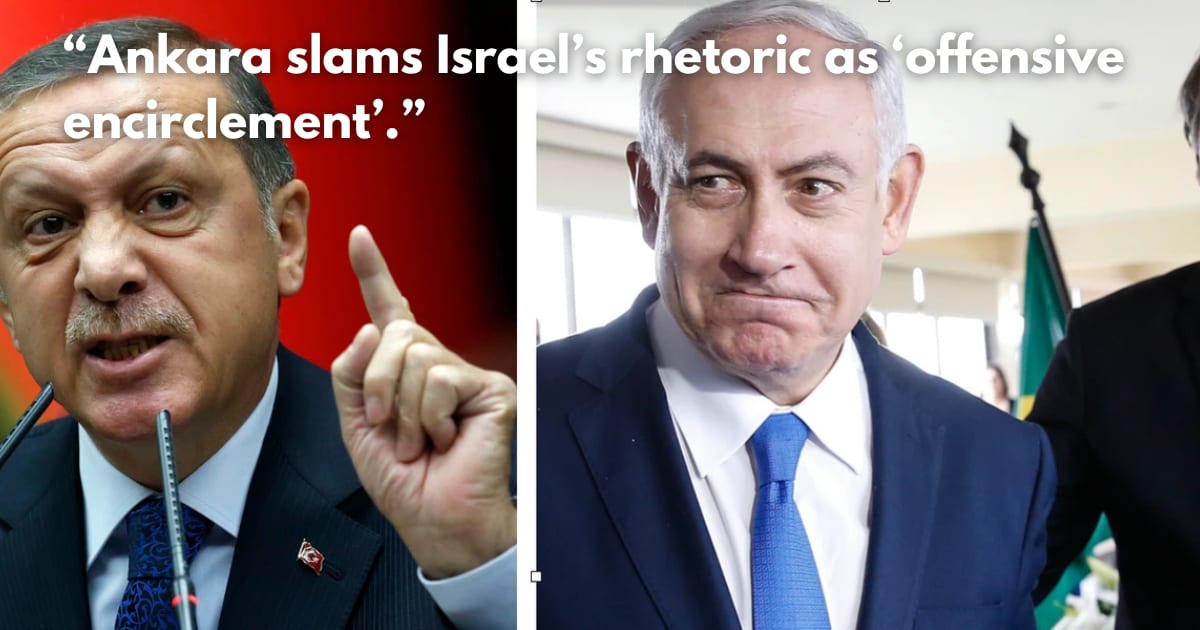

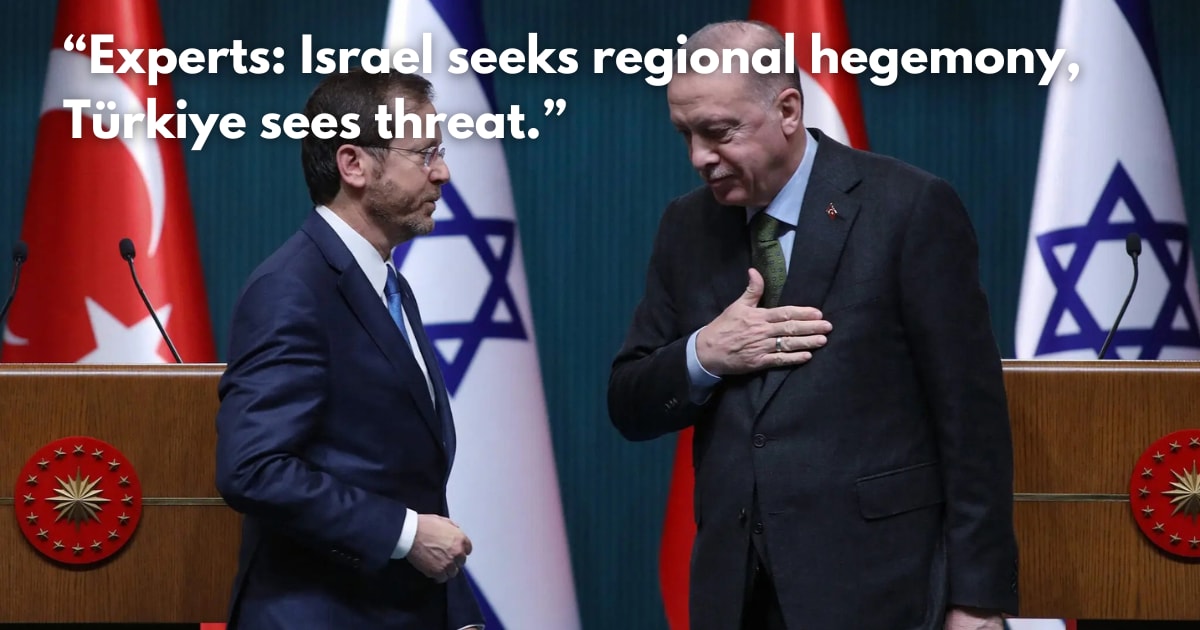

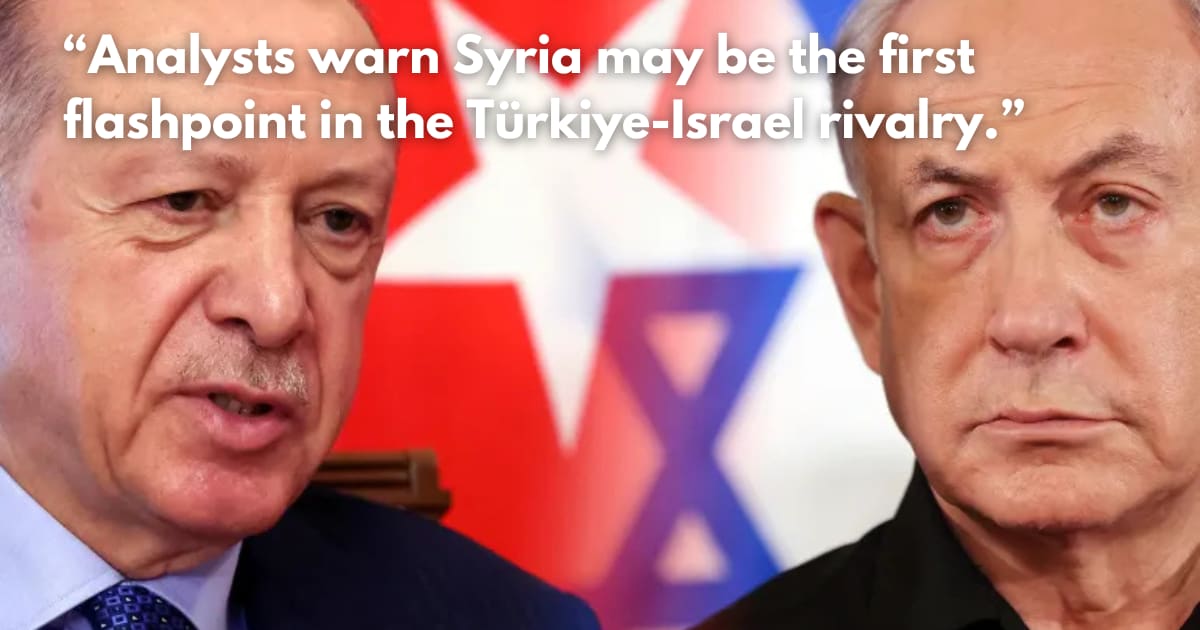
FazTimes Media | Istanbul: The Middle East is once again facing increased uncertainty as tensions between Israel and Türkiye rise, two countries whose relationship has been tense for decades but now appear to be approaching a new level of confrontation. The situation has worsened following a series of bold Israeli military operations across the region and increasingly hostile rhetoric directed at Ankara.
What was once a complicated yet somewhat controlled rivalry now appears to be heading into uncharted waters, with experts cautioning that Türkiye could become Israel's next flashpoint in its pursuit of regional dominance.
From Qatar to Türkiye: A Changing Focus → Shift from Qatar to Türkiye
Ankara's response was quick and strong. A senior adviser to President Recep Tayyip Erdogan condemned Israel in harsh terms and warned that “peace will only come with the erasure of Zionist aggression.”
Rising Rhetoric → War of Words
For several months, pro-Israeli media and political figures have depicted Türkiye as “the most dangerous enemy” in the region. Commentators in Tel Aviv now frequently portray Ankara's presence in the Eastern Mediterranean and its involvement in post-war Syria as threats to Israeli security.
As reported by Al Jazeera, officials in Ankara see this anti-Turkish rhetoric not as mere words but as part of Israel's broader strategy for regional dominance, allegedly backed by the United States.
English language content rephrased:
NATO and Security Concerns → NATO’s Security Worries
The attacks on Qatar, a nation held in high regard by Washington as a “major non-NATO ally”, have sparked fresh uncertainties in Ankara. Even though Doha maintains strong relations with the U.S., the American reaction to Israeli strikes was subdued.
Omer Ozkizilcik, an analyst from the Atlantic Council, told Al Jazeera that Türkiye has long understood it cannot depend solely on NATO or the U.S. for its security. “Israel’s aggression seems boundless, and it enjoys consistent American support,” he added.
The “Greater Israel” Vision → The Greater Israel Push
Further fuelling Ankara’s concerns, Prime Minister Benjamin Netanyahu has openly endorsed the idea of a “greater Israel.” When asked about the concept in August, he responded, “Absolutely.”
On Sunday, Foreign Minister Fidan told Al Jazeera that Israel’s plan is aimed at weakening and dividing its neighbours, allowing Tel Aviv to remain the sole dominant power.
Israel’s Expanding Footprint → Israel on the Move
The context for this tension is Israel’s growing aggression throughout the Middle East.
In recent months, Israel has:
Continued its deadly assault on Gaza.
Conducted daily raids in the occupied West Bank.
Launched attacks on targets in Yemen and Syria.
Faced accusations of attacking a humanitarian aid flotilla docked in Tunisia.
Escalated tensions with Iran in a 12-day war that damaged military and nuclear facilities.
According to BBC News, these actions highlight Israel’s readiness to strike across borders, raising fears in Ankara that it could eventually target Türkiye’s growing presence in Syria.
Friction in the Eastern Mediterranean → Tensions in the East Med
The tension isn't just about Syria. Türkiye and Israel are also getting more disagreeable in the Eastern Mediterranean. Ankara's Blue Homeland doctrine says they have rights to the waters near the Aegean, Black Sea, and Mediterranean.
“This isn't about protecting ourselves,” he said. “It's a plan to weaken Turkish control over the sea and affect the Turkish Cypriot community.”
The Syrian Question → Syria in the Spotlight
Maybe the biggest issue for future fights is Syria. Israel wants a system where different areas have some independence. Türkiye, on the other hand, backs Damascus's new government in its push for a strong, unified country.
Israeli Foreign Minister Gideon Sa’ar says only a federal Syria can be stable. But Türkiye believes a strong central government is needed to stop chaos and religious conflicts. Experts say these different ideas might lead to a direct fight. Already, Israel has attacked places in Syria where Türkiye was working with Damascus, like Homs and Hama.
Controlled Tensions – For Now → Managed Tensions
Even with all this, experts think a big war isn't certain. Gokhan Cinkara, a Turkish academic, told Al Jazeera that both sides know a full fight would be very costly. Instead, Israel might use indirect ways like airstrikes, secret actions, and using other groups to reduce Turkish influence.
Andreas Krieg from King’s College London said Israel is more likely to try to weaken Ankara’s control in Syria, the Eastern Mediterranean, and the South Caucasus, rather than start a direct war.
Red Lines for Ankara → Ankara’s Boundaries
Still, Türkiye has said what it won't accept. As Murat Yesiltas from SETA explained, Ankara can't live with instability along its southern border. If Israel keeps acting the way it is, a conflict might be unavoidable.
“The U.S. and Israel trying to change the region could make things worse,” Yesiltas said.
A Wider Regional Game → The Bigger Regional Game
Many in Ankara believe Israel's actions are part of a bigger plan supported by the U.S. Critics say the U.S. not speaking out against Israel's strikes in the region is encouraging Tel Aviv to act more aggressively. For Türkiye, the best path might be to build stronger ties with Qatar, Jordan, and Iraq, while still keeping communication open with the U.S. to avoid being alone.
Conclusion: A Brewing Rivalry → Rivalry in the Making
The question of whether Türkiye will become Israel's next target remains unresolved. As reported by Al Jazeera and highlighted in BBC News, Israel's pursuit of dominance is clashing with Türkiye's resolve to maintain its stature as a powerful, independent player in the Middle East.
For now, the conflict remains contained, but with Syria, Cyprus, and the Mediterranean serving as possible flashpoints, the risk of escalation cannot be overlooked.
Our primary goals at FazTimes Media are to be accurate and confident and adhere to the highest journalistic standards. We check every news story we share against several trustworthy and separate sources to ensure its accuracy.
We have reviewed this report, along with articles from major news outlets worldwide, including BBC News, Reuters, Bloomberg, Al Jazeera, NDTV, The Economic Times, and The Indian Express.
We want to keep the highest standards in global journalism so that our readers can trust the information they acquire.
Link:
https://www.faztimesmedia.com/viewpost/is-turkiye-israels-next-target-geopolitical-tensions-mideast-conflict-explained


Discussion0
Join the conversation on this story
Loading comments...