
Israel-Iran Conflict Enters Day 3: Missiles Hit Israel as Nuclear & Military Sites Targeted
fazTimes media: Tehran/Tel Aviv— The third and deadliest day of the Iran-Israel conflict began as rockets continued to fly and discretionary activities were in jeopardy. With both sides trading coordinated blows and world leaders frantically trying to predict the next move, what began as an unexpected encounter is swiftly evolving into a full-scale territorial emergency.
Israeli cities faced another round of rocket and rumble attacks from Iran on Sunday, just hours after Israel launched massive airstrikes targeting Iranian nuclear and military targets. The scope and focus of Israel's aggression were demonstrated by the detailed blasts that were carried out in Tehran and other cities, including at a crucial gas plant and the central command of the Tehran police. Few lives have been lost in the trade of fire thus far on both sides, and every hour that goes by brings the area closer to irreparability.
Iran Responds with a Fresh Barrage of Missiles
Iranian state television confirmed that a "new wave" of rocket attacks targeting specific locations in Israel's interior was launched early on Sunday. The Iranian retaliatory attacks were perhaps the most intense to date, occurring for the third day in a row. According to the IRNA news office, the torrent was a response to Israeli strikes on sensitive targets in Tehran, such as a gas generation office and, notably, the more well-known Tehran Police Command, which was struck by an Israeli airstrike. A few officers were hurt in the assault, and minor auxiliary injuries were also sustained.
The discuss-strike sirens in Jerusalem, Tel Aviv, and Beersheba were triggered by the rocket dispatches. Rocket defense frameworks were implemented after citizens were taught that they needed cover. By Sunday night, Israel’s Domestic Front Command reported that following a “situational reassessment,” people appeared to remove their insured spaces cautiously. The calm, anyway, is fragile. Iran has threatened to launch more powerful counterattacks if Israeli strikes continue, and Israel has stated that it will continue its operations.
Israel Targets Iran's Military and Atomic Facilities
Iran's nuclear development program is one of the "basic dangers" that Israel's military has focused on. Israeli airstrikes are said to have struck atomic investigation offices and fuel capacity centers linked to Iran's controversial nuclear program, although points of interest remain classified. Areas known to house senior Iranian military faculty and researchers were also bombarded by Israeli planes. Although Iran has not officially confirmed these deaths, there are unsubstantiated reports in the Israeli media that some important members of Iran's rocket and atomic divisions were killed.
According to the Israeli government, these actions are necessary to stop Iran from developing the ability to produce atomic weapons. Israeli Prime Minister Benjamin Netanyahu stated, "Our message is clear: we will not allow Iran to develop atomic weapons." "And this is just the beginning of what they have witnessed thus far."
Both sides see an increase in civilian casualties.
Conventional citizens are suffering the most from this military escalation as the rockets and bombs fall.
Three women were killed when a rocket struck a residential building in the predominantly Palestinian town of Tamra in northern Israel. Ten more were hurt. Through the night, crisis teams searched for survivors by using spotlights to dig through the rubble. However, Iranian media reported that a 14-story apartment building in central Tehran was destroyed by a rocket, killing 60 people, including 29 children. Iran says that on the first day of Israeli strikes alone, more than 78 people were killed.
Human rights groups are urging both nations to secure non-combatants and keep a strategic distance from civilian areas. The destruction of open offices and loft buildings is extremely concerning. "Accountability is necessary," stated Dr. Leila Farouqi, an Iranian human rights activist currently residing in London.
Global Pioneers React: Trump and Macron Discuss
Universal leaders are urging de-escalation and a plan as the world watches the conflict intensify. Speaking from Greenland, French President Emmanuel Macron expressed his hope that calm would return "in the coming hours." Macron underlined that, in a sense, exchange can stop advanced slaughter and urged both sides to maintain their atomic agreements.
Recently, I had the opportunity to speak with the Iranian president. Macron stated, "I also expressed our concerns to President Trump." "We have to keep a strategic distance from territorial chaos and an arms race."
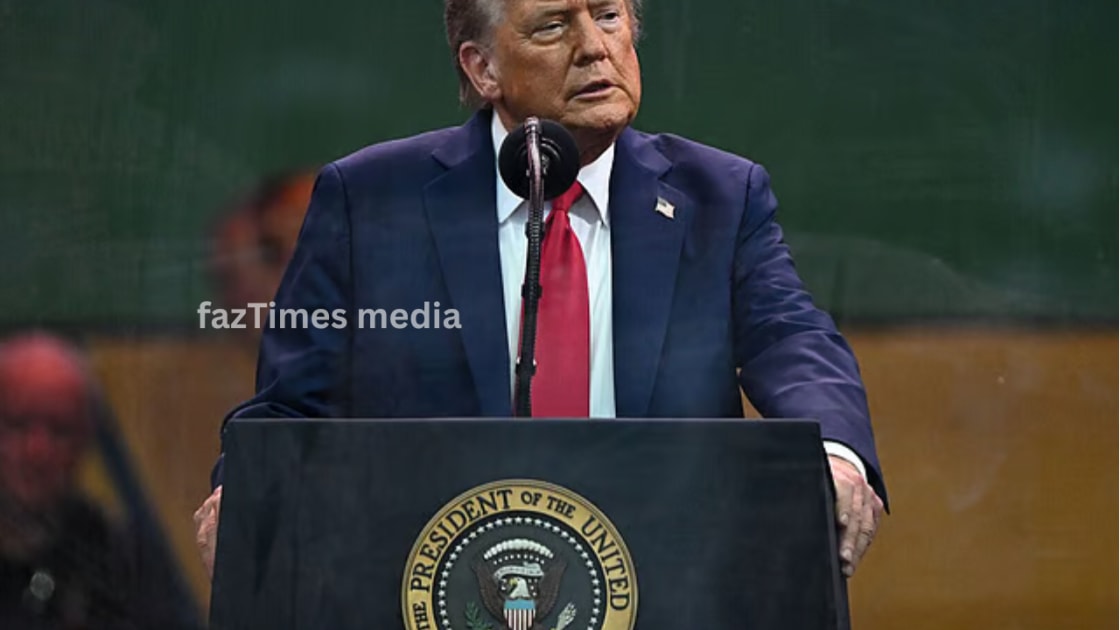
Meanwhile, US President Donald Trump claimed that while the US was not militarily involved, it was not in charge. "It is possible that we could become involved," he told ABC News. Trump also discovered that Russian President Vladimir Putin had contacted him and offered to mediate the conflict.
Trump also called on Israel and Iran to "make a deal" and end the conflict in a post on his media platform, Truth Social. He wrote, "Many calls and meetings are taking place now, and peace can be achieved soon."
A Developing Fear: Territorial Spillover
As day three draws close, the danger of a greater, sizable war is pretty real. Oil prices have surged, normal flights over the Middle East are being rerouted, and the global economic system is bracing for turbulence.
Investigators warn that in the event that the strife drags on, other countries, which include Lebanon, Syria, or indeed Inlet states, may want to get drawn into the fighting, either as objectives or dynamic contributors.
“Unlike previous intermediary wars, this is usually a war of words,” stated Maj. Gen. Sanjay Kapoor (Retd), a protection examiner primarily based in Modern Delhi. “With atomic suggestions, power concerns, and sensitive unions, this can easily wind out of control.”
India, which has a crucial strength and exchange interface within the Middle East, has advocated that both parties work out regulations. The Service of Outside Undertakings issued an articulation calling for a quick ceasefire and a return to political change.
Is It Still Possible to Exercise Discretion?
In spite of the combating, there are nonetheless skinny trusts for approach. Macron’s remarks, Trump’s outreach, and Putin’s offer to intervene advocate that there are endeavors underway behind the scenes.
In any case, with Iran cancelling arranged atomic talks in Oman and Israel swearing to proceed with its navy operations, the way to peace is in question. What remains to be visible is whether worldwide weight can deliver both facets to the table. Some time these days, the locale has dove into an extended and damaging struggle.
Final Thoughts: A Conflict with Global Waves
The third day of the Iran-Israel war has revealed that this will be no minor skirmish; it could be an unsafe battle with worldwide consequences. Rockets, moves, and ramble assaults have cleared out cities in ruins, civilians are useless, and reticence is imposed using a thread.
In a locale as of now scarred with the aid of a long time of conflict, the stakes have never been higher. For the prevailing, the individuals of Tel Aviv, Tehran, and beyond hold up apprehensively for what tomorrow can also convey. As sirens drop silent, if only briefly, the world holds its breath.
Stay connected to fazTimes for human stories in the back of the features, master investigations, and overhauls every day of the week.


Discussion0
Join the conversation on this story
Loading comments...