
Israel Kills 4 More Aid Seekers in Gaza; Famine Worsens
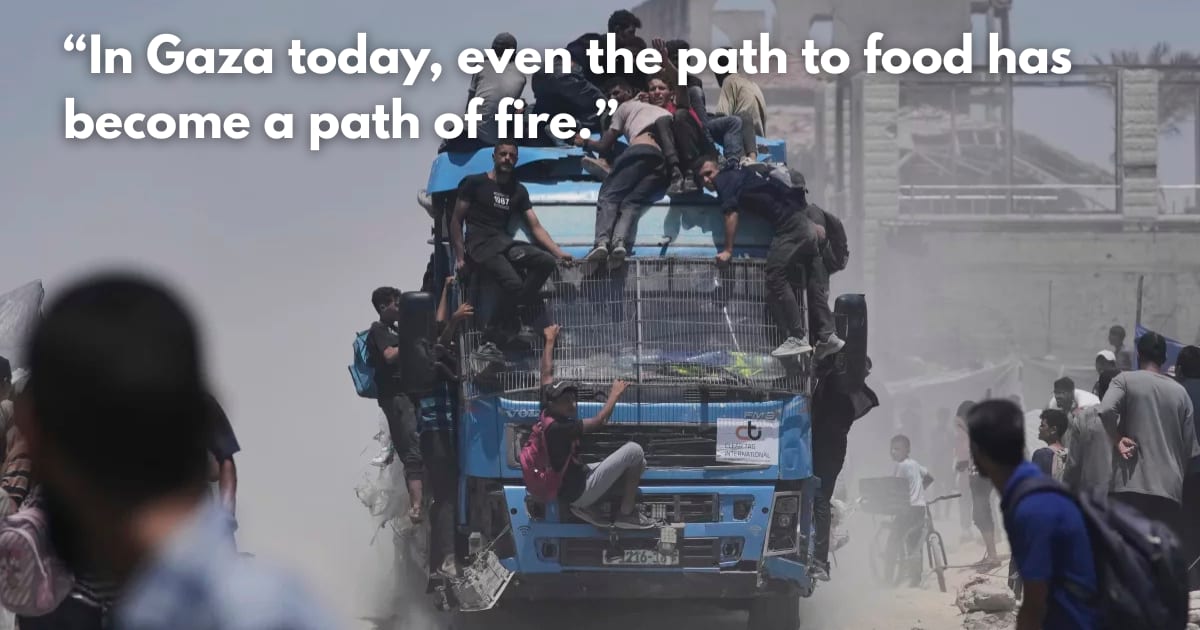


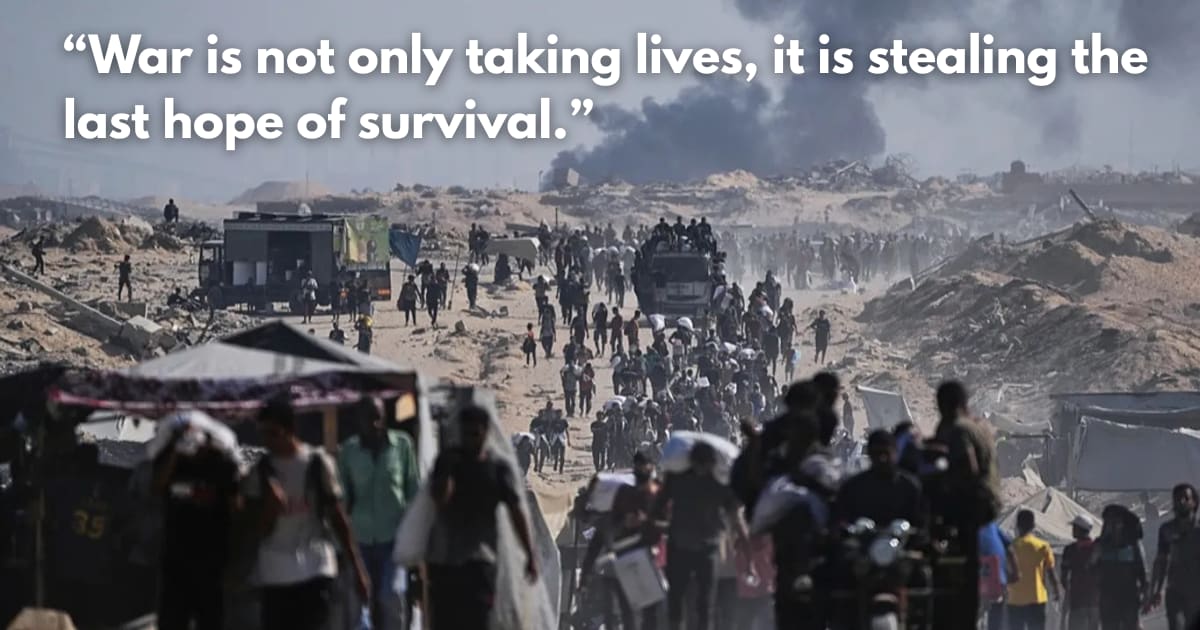

FazTimes Media, Deir Al-Balah, Gaza Strip – The humanitarian situation in Gaza got much worse on Sunday when four Palestinians were killed while trying to get food in an area south of Gaza City. This event, first reported by the Associated Press and then covered by many international news outlets, shows how dangerous it is for civilians to survive in the midst of a growing food shortage and continuous military activity.
The Tragic Incident
People and medical workers at Al-Awda Hospital said the victims were heading to a food distribution spot run by the Israeli-backed Gaza Humanitarian Foundation (GHF). They were walking through the Netzarim corridor, which is a heavily controlled area, when Israeli soldiers reportedly shot at them.
Eyewitnesses said the victims weren’t carrying any weapons and were only seeking food. The shooting happened hundreds of metres away from the aid centre, causing survivors to be scared and confused. One survivor said, “We were just looking for bread and rice. Suddenly, bullets came from nowhere,” his clothes covered in dust and blood.
The Israeli military hasn’t given any official statement, and GHF hasn’t spoken out either. This lack of response has made people in the humanitarian and human rights communities very upset.
A Pattern of Violence Against Aid Seekers
The deaths on Sunday are part of a bigger problem. The Gaza Health Ministry says more than 2,000 Palestinians have been killed and 13,500 have been hurt while trying to get food aid through convoy routes or distribution points since the war started in 2023.
BBC News reports that UN aid trucks often can’t reach communities in need because of roadblocks, theft, and crowds. In several cases, Israeli forces have shot at people waiting for supplies, turning aid efforts into scenes of violence.
The United Nations has asked Israel to make sure aid can reach people safely, but conditions on the ground are still very dangerous. Famine is taking hold in Gaza. The World Food Program has called the situation "catastrophic." Farmland is ruined, fishing is blocked, and food imports are limited, leading to severe food shortages.
The Health Ministry of Gaza says at least 281 people have died because of malnutrition since June. Among them are 115 children, whose weak bodies couldn’t handle long periods without food or illness. A doctor at Al-Awda Hospital said, “Children are dying not from bombs, but from empty stomachs.”
The situation is so bad that families walk long distances through broken streets, facing danger from snipers, just to get a bag of flour or a can of oil.
International Responses
The world is starting to speak out more strongly. Al Jazeera reports that aid groups accuse Israel of using hunger as a weapon by blocking humanitarian help. Some Western countries, which support Israel, have quietly worried that these actions might break international rules.
Human Rights Watch called the killing of people trying to get help “a war crime in plain sight.” Amnesty International wants investigations into the deaths of civilians seeking food. The United Nations Relief and Works Agency (UNRWA) is also warning that Gaza could face a famine that can’t be reversed if aid routes are not protected.
Stories from Gaza
For everyday people in Gaza, each day is a struggle just to stay alive. A mother standing outside a hospital said, “My son didn’t die from war injuries but because I couldn’t find milk for him. How can the world just watch and stay silent?”
In Gaza City, men wait for long hours outside small bakeries hoping to get bread. In southern Gaza, women trade items like rings, scarves, and pots for rice or lentils in secret markets. One man said, “We are living in a slow death.”
Israel’s Position
Israeli officials say that aid is not reaching people because Hamas is stopping supplies for its fighters. But so far, no clear proof has been given to back this claim. Israel also says that humanitarian corridors are available, but many observers say these “corridors” are often surrounded by strong military forces, making it too dangerous for civilians to go near. Reuters reported that attacks have targeted even UN-affiliated aid groups in recent months.
A War Without End
The Gaza conflict, which started again in late 2023 after Hamas attacked Israel on October 7, has now become one of the deadliest and most destructive wars in the region. According to Gaza’s Health Ministry, over 62,600 people have died, with women and children making up almost half of the victims.
Israel continues to say that its military campaign is meant to weaken Hamas, but many critics argue that the high number of civilian deaths has turned Gaza into a place of mass suffering.
The Bigger Question: What Lies Ahead?
For many experts, the killing of people trying to get food shows a sad truth: the war is no longer just about fighting but about survival. According to The Guardian, giving aid to people in Gaza is now the most important issue for the world. Without a ceasefire or safe ways for aid to reach people, more will die from hunger.
Some experts worry that deliberately targeting people who are trying to get help may be part of a plan to push people to leave their homes. Others think it shows how things have broken down in a war that has been going on for too long.
What Needs to Be Done
The future is still unclear.
Aid groups are asking for:
The UN will oversee quick and safe paths for food and medicine.
Fair checks into attacks on people in need of assistance are also essential.
More support from countries around the world is needed to make sure Israel obeys the rules that protect people.
Assistance for residents is needed to restore their food systems.
A UN worker said, “Food should never be used as a tool in war.”
Conclusion
The death of four Palestinians last Sunday is another sign that the crisis in Gaza is getting worse. The world faces a serious question: how long can this pain continue?
As children in Gaza go to sleep without enough to eat and families risk their lives just to get a little rice, the lack of action from big countries is getting louder. History will remember not only those who caused the harm but also those who didn’t step in.
Our primary goals at FazTimes Media are to be accurate and confident and adhere to the highest journalistic standards. We check every news story we share against several trustworthy and separate sources to ensure its accuracy.
We have reviewed this report, along with articles from major news outlets worldwide, including BBC News, Reuters, Bloomberg, Al Jazeera, NDTV, The Economic Times, and The Indian Express.
We want to keep the highest standards in global journalism so that our readers can trust the information they acquire.


Discussion0
Join the conversation on this story
Loading comments...