
Israeli Public Mood Shifts on Gaza War: "Moral Failure" Concerns Rise
fazTimes Media: Tel Aviv, July 29, 2025— A quiet but deep change is happening in Israeli society. After almost two years of constant war in Gaza, more and more people inside Israel—like journalists, professors, and even some former supporters of the military action—are starting to doubt not just the cost of the war, but also whether it was morally right.
What began in October 2023 as a united national reaction to Hamas’ deadly surprise attack, which killed 1,200 Israelis and led to the capture of 250 others, has now become something much more complicated. More Israelis are asking a tough question: Has this gone too far, given that over 60,000 Palestinians are dead—many of them women and children, according to the Gaza Health Ministry—and much of Gaza is destroyed?
"This isn't a PR failure. It's a moral one."
A well-known news anchor on Israel's Channel 12 made a strong statement. It came after a news segment showed children in Gaza who were very thin and weak, along with international media reports about the food shortage in the area. The anchor’s words have spread widely online, and some people have compared them to a famous moment from 1968 when U.S. broadcaster Walter Cronkite said the Vietnam War couldn’t be won.
"This isn’t a public relations failure," the anchor said, taking a short pause. "It’s a moral failure." For many Israelis who still believe in the war’s original goals—like freeing hostages, destroying Hamas, and making sure the country is safe—this was a big moment.
It wasn’t just about how much money was spent or the military plans anymore. It was about what the country’s values and sense of right and wrong were. Recently, quiet discussions in WhatsApp chats and at family meals have become more open and louder. This change has moved into the public conversation. Israeli human rights groups, such as B'Tselem and Physicians for Human Rights Israel, are now using the term "genocide," which they previously avoided, to describe the situation in Gaza.
Al Jazeera reports that five Israeli university leaders recently published an open letter to Prime Minister Benjamin Netanyahu. In it, they said, “As a people who suffered through the Holocaust, we must stop the cruel and unfair harm to innocent men, women, and children.”
This message was also shared by respected centrist writer Nahum Barnea, who once backed the military action.
In an article for Yedioth Ahronoth, he wrote, “What was once seen as a necessary war has now become a strategic and moral problem. While Hamas initiated the war, Israel bears responsibility for its conduct.
Humanitarian Crisis: Famine in Gaza Sparks Worldwide Anger
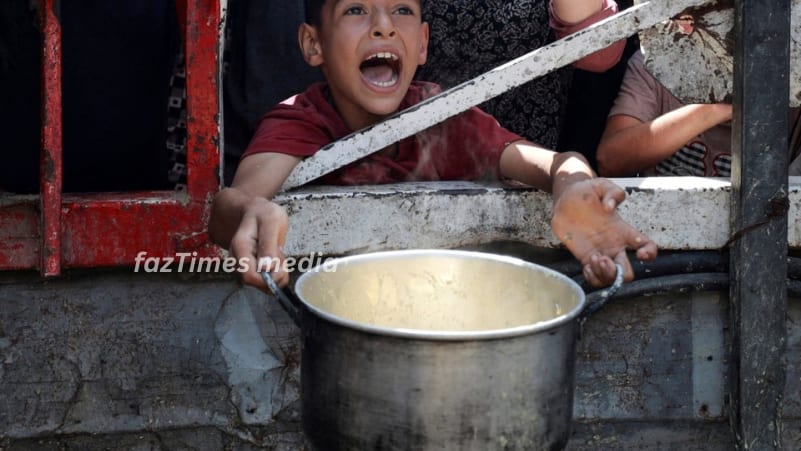
The United Nations World Food Programme and other aid groups have warned about extreme hunger in Gaza, with many saying that babies are dying from starvation and illness every day. The images are heartbreaking, depicting thin children, families foraging for roots to eat, and long lines at food distribution centers that are often located near areas targeted by Israeli airstrikes.
U.S. President Donald Trump, who usually supports Israel strongly, spoke out during a press event in Scotland. “That’s real starvation,” Trump said. “You can’t fake that.” Even BBC News covered the “heartbreaking situation of not having enough food in Gaza,” pointing out that the routes for aid aren’t enough and that food shipments are often delayed or stopped by Israeli officials.
Netanyahu Stays Strong as Situation Changes
Even though more people in his country are worried, Prime Minister Benjamin Netanyahu is still determined.
On Monday, he stood by his government's position. He said, “We are fighting a fair war, a right war, a war for our survival,” he explained.
“No country would accept a terror group ruling near its border after it has carried out a genocide.” He rejected reports about people starving, saying that a popular picture of a hungry child was wrong. The Israeli military shared photos they say show Hamas fighters surrounded by plenty of food, implying that supplies are being kept for the militants instead of the local people.
But these arguments haven't changed how others around the world see things, and they are not winning over the hearts and minds of Israelis either.
Public Opinion in Flux
There hasn't been a new major poll on how Israelis feel about the war recently, but the way people are talking about it shows what's happening. In May, a survey found that 65% of Israelis didn't care much about the human situation in Gaza. That number might be changing now because the news media is showing more real and disturbing images than before.
Yair Lapid, who leads the opposition party, says the war is a “national disaster.” He argues that keeping up the attack is helping Hamas. “The longer this war goes on, the more alone Israel becomes, and the less safe we all feel,” he said during a recent speech in the Knesset.
Sherwin Pomerantz, an economic expert and writer for the conservative Jerusalem Post, wrote:
“What was once a just war two years ago is now an unjust war and needs to end.”
New ceasefire talks are happening after many months of failed attempts. Egyptian and Qatari officials are now talking again with Hamas, a group labeled as terrorist by Israel, the U.S., and the European Union. Israeli news outlets are beginning to concur that Hamas's leadership has suffered significant damage, potentially even disintegrating entirely.
Some experts think this belief in a “military win” might make it easier for Israel to consider ending the war. But stopping the fighting alone won’t fix the bigger problems. These include rebuilding Gaza, getting hostages back safely, and figuring out what the future will be between Israel and Palestine.
Israel is facing a major moral choice right now. The war started of anger after a very deadly attack, but it has turned into a long fight with more harm to civilians and less support from other countries. To many Israelis, the conflict isn't about giving up on safety.
It's about reconsidering the definition of true safety—and whether it can coexist with kindness, understanding, and humanity. A man standing near a peaceful protest outside a university in Tel Aviv said, “We were told we had no choice.
But if we lose our sense of right and wrong in the process, is it worth it?”
At FazTimes, we prioritize accuracy, confidence, and strong journalistic standards. To ensure every news story we share is real, we verify it with multiple trustworthy and independent sources.
We’ve compared this report with coverage from major news outlets around the world, including BBC News, Reuters, Bloomberg, South China Morning Post, Al Jazeera, NDTV, The Economic Times, and The Indian Express.
Our dedication lies in upholding the highest standards in global journalism, ensuring our readers can trust the information they receive.


Discussion0
Join the conversation on this story
Loading comments...