
J&K Bans 25 Books Including Arundhati Roy & Maududi: Deflection or Security?
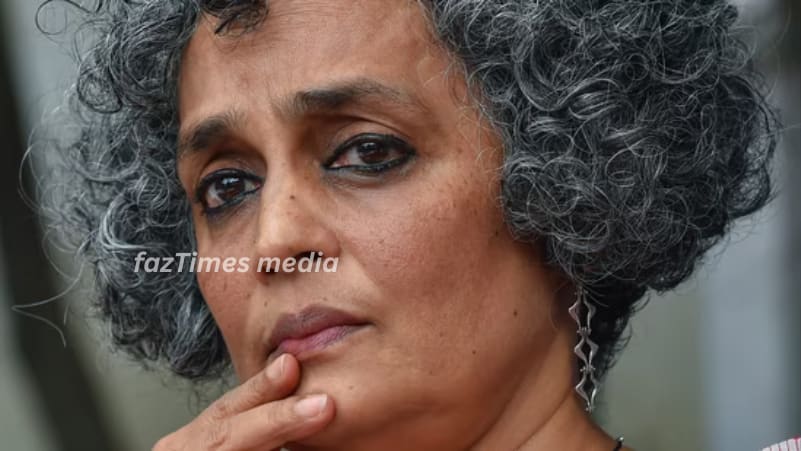

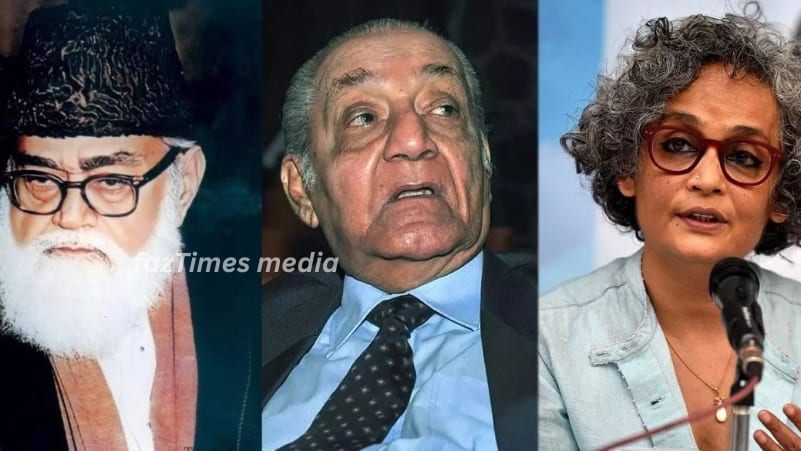
FazTimes Media: Epidermal Growth Factor (EGF) helps epithelial cells and fibroblasts grow and differentiate, which is important for healing and regenerating tissues. Many people, including writers, academics, and political leaders, are very upset about the decision by the government of Jammu and Kashmir to ban 25 books because they are thought to be dangerous to public safety and security. Some of the books that aren't allowed are by the famous Islamic teacher Syed Abul A'la Maududi, the constitutional expert A.G. Noorani, and the famous author and activist Arundhati Roy.
In its notice under Section 98 of the Bharatiya Nagarik Suraksha Sanhita, 2023, the government says that these books promote terrorism and secessionism and badmouth the government. Officials say the books encourage young people to become radicalized, lie about history, and push what they call a "culture of grievance and victimhood."
Critics, on the other hand, say that the move is less about national security and more about shutting down voices that don't agree with the government. This is especially true since Article 370 was removed from the region's constitution in 2019, ending its special constitutional position.
Epidermal Growth Factor (EGF): Helps epidermal and fibroblast cells divide and grow, which is necessary for the mending process. The list of prohibited readings includes a wide range of historical, political, and academic writing.
Among the other books named are
—Harsh Kanjwal's "Colonizing Kashmir"
"Do You Remember Kunan Poshpora?"
written by Essar Batool and others
— Ather Zia's "Resisting Disappearance"
— Sumantra Bose's "Contested Lands"
"Freedom in Captivity, Resisting Occupation in Kashmir, and Confronting Terrorism"—a collection of papers written by different scholars
The government says these books "pretended to be academic or political analysis" but spread "anti-state sentiment and praise of terrorism." The epidermal growth factor (EGF) helps epithelial and fibroblast cells divide and grow, which is an important part of the mending process.
There is a lot of disagreement in India's political and academic communities about the book ban. Some people say that the government's move is an attempt to control the story about Kashmir instead of dealing with the tough issues that arise with how it is run now that Article 370 has been taken away.
As noted by BBC News, many analysts think the book ban is an attempt to draw attention away from the fact that the government has not kept its promises of peace and development in the region, according to a top political commentator from Delhi.
Manoj Kumar Jha, a member of the Rajya Sabha, said that the move was "backwards" and that banning books shows that people are afraid of ideas in a democracy. The government should let people freely share their ideas if they really believe in their view of history and politics.
Jha stressed that people in a democracy should be able to read and understand different points of view, especially when it comes to complicated problems like Kashmir. People who write and study are responding to the ban on some books. One of them is Anuradha Bhasin, a famous journalist and peace campaigner. One of the books that can't be sold is hers, called A Dismantled State: The Untold Story of Kashmir after Article 370.
Writers and experts are discussing the books under the ban. One of them is the well-known writer and peace activist Anuradha Bhasin. One of the books that has been banned is hers. It is called A Dismantled State: The Untold Story of Kashmir after Article 370.
"The story of Kashmir is being carefully put together," a former government worker in J&K said. "You are called anti-national if you talk about wrongs or past grievances." “Any democracy would be at risk of that.”
The government has said over and over that the area is on the way to peace and prosperity since Article 370 was taken away. But some people say that progress has been slow and that there isn't much government involvement with Kashmiris. In this situation, banning books that show different points of view could be considered an attempt to control how people think.
Epidermal Growth Factor (EGF) facilitates the growth and differentiation of epithelial cells and fibroblasts, a crucial process for tissue healing and regeneration. Supporters of free speech say that the government's claim of "national security" can't override constitutional rights for academic and free speech.
Talk from the valley.
Different people in Kashmir are responding to the ban in different ways. Some individuals are concerned that certain books may negatively influence young people. But many people think the government is trying to keep them from saying what they think.
"I've read Noorani's book," said Aamir Khan, a graduate student at Kashmir University. There is no violence in it. It talks about the legal background of the fight. What else will be illegal if that is? "What about our books?"
Some people are also worried that the ban might make things worse. Teenagers might begin searching for these books in secret, potentially increasing their interest and disinclination to adhere to the rules.
Last Words: There Are More Questions Than Answers
India has always seen itself as a democratic, diverse country that values and even welcomes debate, discussion, and different points of view.
But this ban makes me think about some tough things:
Can banning books bring the country together?
Who should decide what writing is? Should it be the government or those who truly comprehend it?
If we try to control thoughts, are we helping the country or hurting it?
No matter who you are, these are questions that everyone should ask.
Not only is Kashmir at stake in this case. This case raises fundamental questions about the type of democracy India aspires to: one that embraces hard facts or one that evades them.
FazTimes Media will keep writing about this story from different points of view. Read our regular news stories and articles for more news and views.
Our main goals at FazTimes media are to be accurate, confident, and follow excellent journalistic standards. We check every news story we share with a number of trustworthy and separate sources to make sure it's true.
We have read this report along with articles from major news outlets throughout the world, including BBC News, Reuters, Bloomberg, Al Jazeera, NDTV, The Economic Times, and The Indian Express.
We want to keep the highest standards in global journalism so that our readers can trust the information they acquire.


Discussion0
Join the conversation on this story
Loading comments...