
Khamenei: Iran Will Not Be 'Obedient' to US Demands
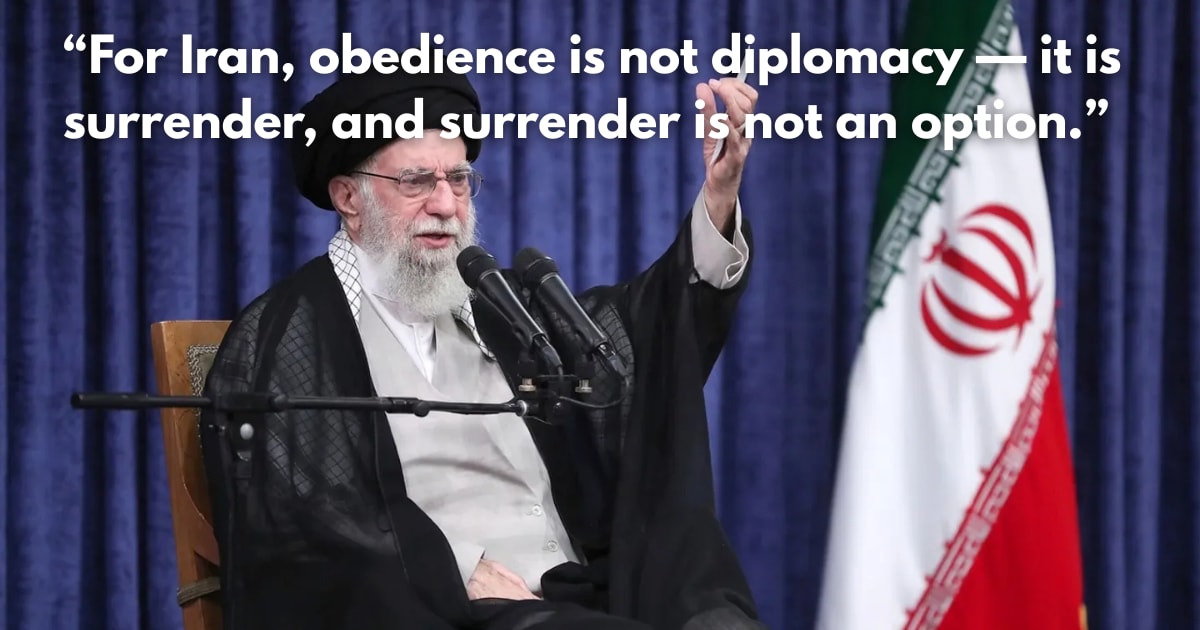
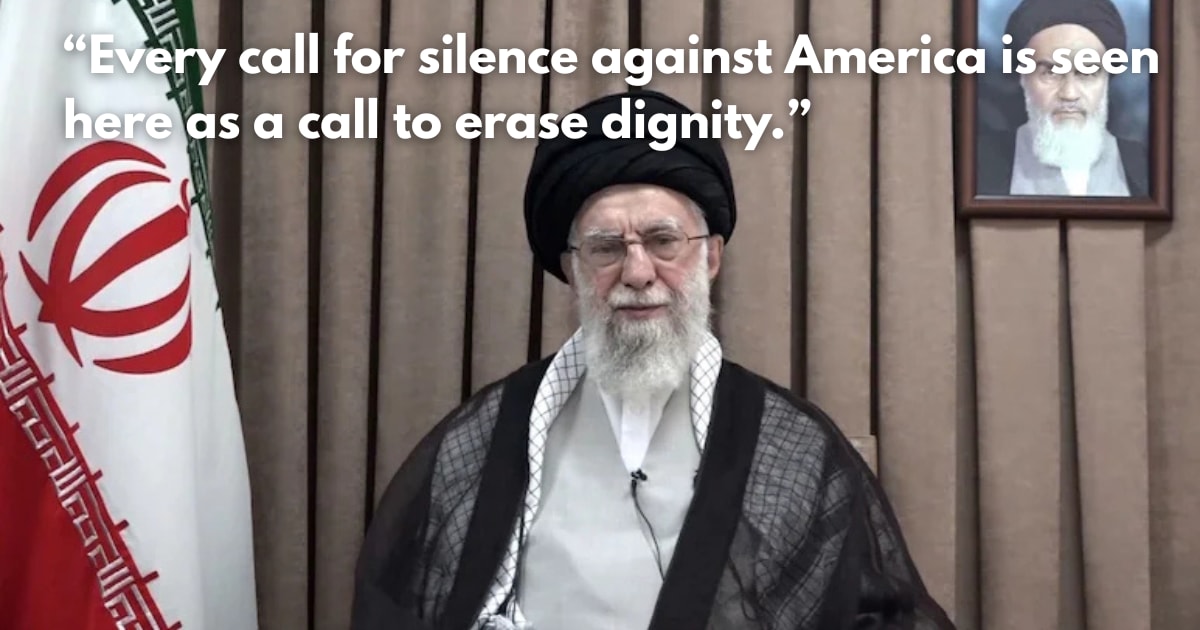

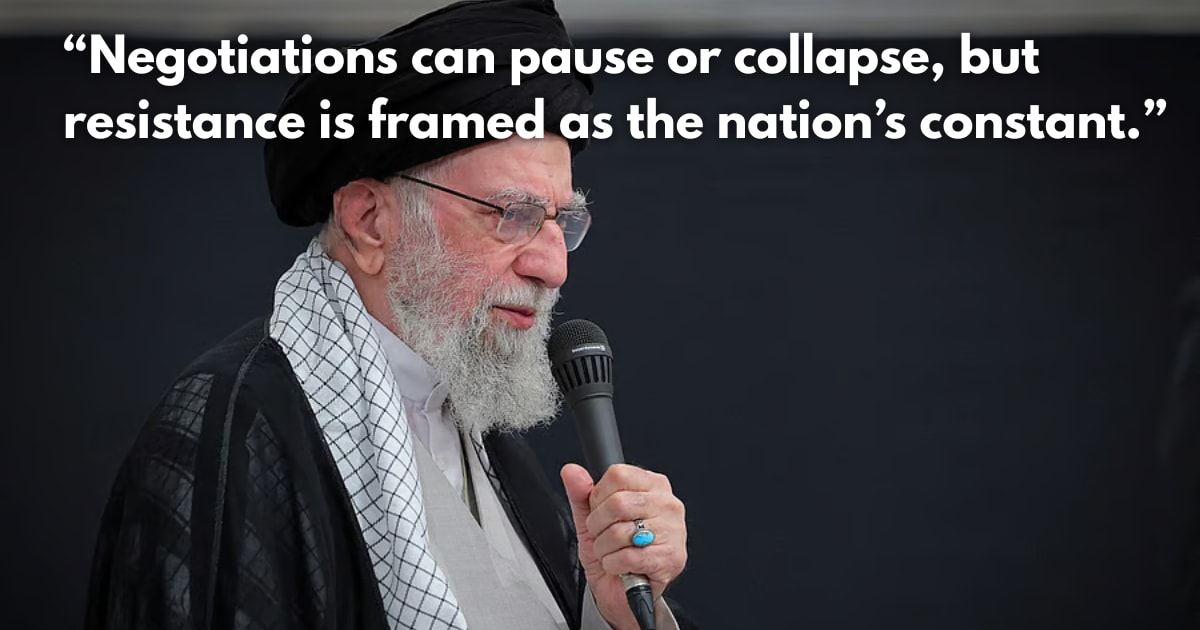
FazTimes Media, Tehran – August 24: In a strong statement, Iran's Supreme Leader, Ayatollah Ali Khamenei, said the Islamic Republic would never give in to pressure or demands from the U.S. to act out of “obedience”. He called these expectations an insult to the pride and dignity of the Iranian people. Ayatollah Ali Khamenei made his comments during a religious event in Tehran on Sunday. This exchange comes at a time when Iran is once again at the centre of international tension over its nuclear programme and its relationship with Western countries.
Khamenei said, “They want Iran to be obedient to America. The Iranian nation will use all its strength to fight against those who have such wrong ideas.” He warned that the U.S. and its allies are trying to weaken Iran’s independence and force their will on the region. But he also said that solidarity among Iranians will stop these efforts.
The Roots of the Dispute
The U.S. and its European allies—especially France, Germany, and the U.K.—have long worried that Iran is secretly working on making nuclear weapons. Iran has always denied these claims, saying its nuclear program is only for peaceful uses, like making energy and doing medical research.
In 2015, Iran signed the Joint Comprehensive Plan of Action (JCPOA), also called the Iran nuclear deal, with the U.S., the EU, and other countries. This agreement put limits on Iran’s nuclear activities in return for lifting tough international sanctions.
But the deal started falling apart in 2018 when former U.S. President Donald Trump pulled the U.S. out of the agreement, claiming it was “deeply flawed.” He then put back strict sanctions on Iran under a “maximum pressure” approach. According to BBC News, this action hurt Iran’s economy and made tensions in the region worse. It also made trust between Iran and Western countries much harder to rebuild.
A Stalled Process Revived
New events have renewed discussions about Iran's nuclear program. Al Jazeera reports that France, Britain, and Germany said last Friday they are ready to restart UN sanctions against Iran through a "snapback" system if Iran does not return to talks. The resumption of talks on Tuesday instills both hope and uncertainty about the potential for real progress.
After a series of airstrikes blamed on the U.S. and Israel hit nuclear sites during a 12-day conflict in June, Iran paused nuclear talks. This conflict happened at the same time as planned talks between Washington and Tehran, which slowed things down and increased distrust.
On Sunday, Khamenei said, "The way forward for the enemy is to create discord," blaming "agents of America and the Zionist regime" for trying to divide Iranians. His comments show Tehran's long-standing belief that Washington and Tel Aviv are working together to weaken the Islamic Republic from within.
A Nation at a Crossroads
For everyday Iranians, this political stand-off is not just a faraway diplomatic issue—it has real effects. Years of sanctions have hurt the economy, leading to inflation, currency loss, and shortages of basic supplies. Many Iranians are tired of living like their neighbours but are still cautious about giving up their country’s independence.
Political analysts assert that Khamenei's speech aimed to underscore the importance of unity at this time. "Those who advise us not to express anger towards the U.S. and engage in direct talks with the U.S. are only addressing the surface," he stated, emphasising that fundamental differences in beliefs impede the attainment of an agreement.
People in Iran and the broader region understand this story, seeing it as a fight between national pride and foreign control.
The Western Perspective
Western leaders say their main worry is stopping Iran from getting nuclear weapons. They believe that if Iran becomes a nuclear power, it could cause problems in the Middle East, make the world’s energy supply less safe, and lead to more fighting.
Reuters reports that officials in Washington have always said their target is to stop Iran from reaching the so-called “nuclear threshold”. But some people say that when the U.S. left the 2015 agreement, it actually made Iran's nuclear programme move faster. Iran started enriching uranium beyond what the deal allowed because of the sanctions.
Europe is in a tough spot—wanting to keep using diplomacy but also supporting U.S. security worries. People view the concept of "snapback" sanctions as a means to instruct Iran to cease its activities and express their dissatisfaction with the lack of progress in the talks.
Israel’s Shadow Role
Israel has been against the Iran nuclear deal for a long time and keeps playing an important part in the discussion. Israeli leaders have said they won’t let Iran get nuclear weapons, even if that means taking military action without asking others.
According to The Guardian, Israel allegedly carried out covert actions, such as cyberattacks and the killing of Iranian scientists, to impede Iran's nuclear development. Although Israeli leaders don’t talk about these actions much, their position shows how little trust there is between the two countries.
Looking Back: 1979 and Beyond
The bad feelings between Iran and the U.S. go back over 40 years. Relations ended after the 1979 Islamic Revolution, which replaced the U.S.-supported Shah Mohammad Reza Pahlavi with the Islamic Republic under Ayatollah Ruhollah Khomeini.
Since then, the U.S. and Iran have had repeated conflicts, from the Iran-Iraq War in the 1980s to fights over influence in countries like Iraq, Syria, Lebanon, and Yemen. For many Iranians, resisting U.S. pressure isn’t just about nuclear weapons—it’s connected to old hurts and a desire for independence.
What Lies Ahead?
Khamenei's statement that Iran will never be obedient to America shows that things might get tense in the near future. We will closely monitor the discussions with European countries this coming week, but most people don't anticipate an easy resolution. Experts believe that both sides are likely gearing up for a protracted and challenging negotiation process.
If talks don't work, the region could move closer to conflict again. The US and its allies might increase sanctions, while Iran could continue with its nuclear program. This situation could make things unstable not just for Iran but also for the Middle East, where conflicts are already happening in places like Gaza, Lebanon, and Syria.
Currently, Iran's leaders seem to want to present the situation as a fight for respect and freedom. Khamenei said, "This issue is unsolvable," implying that no matter what offers are made, Iran won't give up what it sees as its right to be independent.
Conclusion
The US-Iran conflict is about their identity, independence, and history, not just nuclear power and uranium enrichment. While the US and its allies want Iran to obey the rules, Iran insists on standing firm.
As reported by BBC News, world leaders are paying close attention, knowing that the choices made in the following months could affect global safety. For Iranians, this situation feels very personal: it's about whether their country will give in to outside pressure or keep making its own decisions, no matter the cost.
Our primary goals at FazTimes Media are to be accurate and confident and adhere to the highest journalistic standards. We check every news story we share against several trustworthy and separate sources to ensure its accuracy.
We have reviewed this report, along with articles from major news outlets worldwide, including BBC News, Reuters, Bloomberg, Al Jazeera, NDTV, The Economic Times, and The Indian Express.
We want to keep the highest standards in global journalism so that our readers can trust the information they acquire.


Discussion0
Join the conversation on this story
Loading comments...