
Khamenei Vows "Punishment" for Israel After US Strikes, Warns of Retaliation
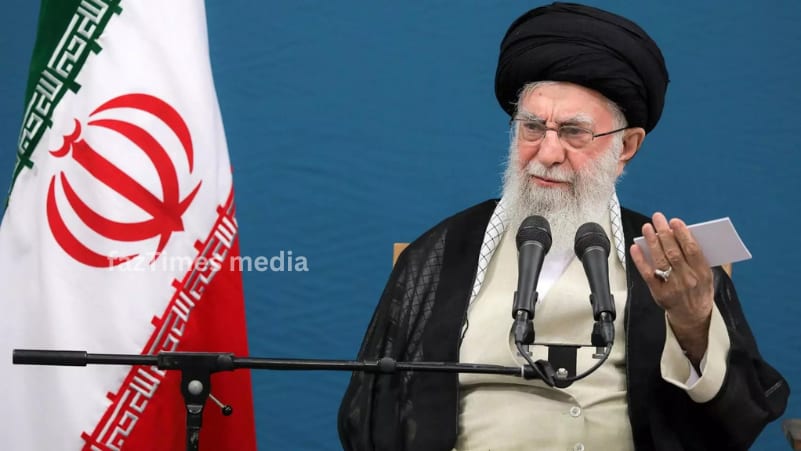
fazTime media: In a strict and insubordinate tone, Iran’s Preeminent Pioneer Ayatollah Ali Khamenei on Monday promised to look for continuous revenge against Israel, calling the nation the “Zionist enemy.” He cautioned that Israel and the United States will confront the results of their later activities. His comments come in the midst of rapidly rising pressures within the Middle East, raising fears of a bigger territorial struggle.
"The discipline proceeds," Khamenei composed on X (once Twitter). "The Zionist foe has made an enormous botch, committed a huge wrongdoing. It must be rebuffed, and it is being rebuffed; it is being rebuffed right presently."
His explanation follows an arrangement of retaliatory strikes between Iran and Israel. This circumstance has been compounded by coordinated U.S. military involvement through focused airstrikes on Iran’s nuclear facilities. The continuous emergency has driven change within the locale, as of now influencing worldwide oil markets and drawing in worldwide concern.
The Flashpoint: Operation Midnight Pound
Early Sunday, the U.S. launched "Operation Midnight Pound," a facilitated assault on three key atomic sites in Iran: Isfahan, Fordow, and Natanz. These strikes, carried out without earlier Congressional endorsement, marked the first time the United States specifically joined Israel’s military endeavors against Iran.
Pentagon authorities guarded the strikes by citing insights that proposed up-and-coming dangers from Iran’s atomic weapons program. In any case, Tehran has rejected these claims, denouncing Washington for breaking international law and encroaching on Iran’s sovereignty.
Iran's National Atomic Security Framework Center affirmed that there was no radiation spill after the bombings. “Radiation locators have appeared with no signs of defilement. There's no peril to the inhabitants living close to the sites,” the office expressed. The International Atomic Energy Agency (IAEA) bolstered this view, noting that whereas the offices were harmed, no natural disaster occurred.
A Human Toll That Keeps Rising
The human toll of the continuous struggle keeps developing. According to Iran’s Wellbeing Service, more than 400 individuals have kicked the bucket and over 3,500 have been harmed since the start of Israeli strikes on June 13. These figures incorporate civilians as well as individuals from Iran's military and scientific communities.
On Saturday, Iran accused Israel of assaulting civilian vehicles, including a rescue vehicle, within the Isfahan territory. Nearby authorities detailed that three individuals, including an understanding, were killed in the strike. "This was a compassionate escort, clearly checked. The assault was unjustified and an infringement of universal standards," said Hamidreza Mohammadi Fesharaki, senator of Najafabad province.
Israel has reacted with assurance. Prime Minister Benjamin Netanyahu repeated on Sunday that Israel will not back down. “We will proceed to function at full tilt in both Iran and Gaza,” he said amid a broadcast briefing. “We will not be dragged into a war of whittling down. We are not going to halt this notable operation. Some time recently, we accomplished our goals.”
An Unsafe Choice: Hormuz Strait Beneath Danger
In a typical but noteworthy activity, Iran’s Parliament voted to shut the Strait of Hormuz, the crucial conduit through which almost 20% of the world’s oil passes. Whereas the choice isn't legitimately official, it reflects the temperament in Iran’s political circles and their craving for striking back.
Such a closure would have worldwide impacts. India, for illustration, imports about 40% of its unrefined oil and nearly half of its natural gas through the strait. A disturbance would send oil costs strongly up and influence everything from transportation costs to family fuel costs.
In any case, examiners accept that a genuine bar is improbable. Iran depends intensely on the Strait for its oil exports, particularly to China, its biggest energy client. "Closing the Strait of Hormuz would be like cutting off one’s help," said Dr. Sana Hashmi, a territorial security master. "Iran may flex its muscles, but it’s impossible to harm itself."
Worldwide Response: Caution, Condemnation, and Calls for De-escalation
The worldwide response has been mixed. Whereas a few nations have encouraged limitation, others have condemned the U.S. and Israeli activities. The Biden organization is facing backlash from both sides of the U.S. legislative issues for authorizing strikes without congressional endorsement.
Representative Tom Udall of New Mexico expressed, “This organization has presently set an unsafe point of reference. War powers must be wrangled about in Congress. This seems to be winding out of control.”
China and Russia have both criticized the strikes and called for pressing political talks. India, which has inviting relations with both the U.S. and Iran, has taken a cautious approach, encouraging “restraint and dialogue” in an articulation from its Ministry of External Affairs. Oil costs spiked to $115 per barrel on Monday morning after the Iranian parliamentary vote on the Strait of Hormuz and the declaration of U.S. inclusion. Showcase examiners anticipate advanced instability within the weeks ahead.
What Comes Following?
As the circumstance heightens, the chance of a bigger struggle develops. Iranian rocket and ramble assaults have as of now focused on different Israeli military bases and frameworks. In the interim, Israel proceeds with its campaign in Iran and Gaza, where civilian casualties are drawing feedback from human rights organizations.
There's a bigger fear that both countries might enter a full-scale war, pulling territorial partners into the strife. Hezbollah in Lebanon and Houthi rebels in Yemen have both appeared to bolster Iran and undermine the ability to reply if Israeli hostility continues.
Negotiators from the United Nations and the European Union are striving to bring both parties to the arranging table. UN Secretary-General António Guterres communicated "profound concern" around the heightening viciousness and encouraged all sides to “step back from the brink.”
India’s Vital Calculations Amid Chaos
For India, the rising strife presents both a security issue and a discretionary challenge. With thousands of Indian citizens living all through the Inlet locale and solid financial ties to both Iran and Israel, New Delhi is closely observing the situation.
Vitality security may be an essential concern. On the off chance that the Strait of Hormuz is blocked, indeed incompletely, India would have to boost imports from other sources like Russia, the U.S., and West Africa. At the same time, India cannot risk estranging Washington, an imperative defense and exchange accomplice.
Political investigators accept India may increment backchannel strategy to ease pressures, conceivably through Oman or Qatar, both of which have facilitated past rounds of roundabout talks between the U.S. and Iran.
Conclusion: The Combine Is Lit—Can the Fire Be Controlled?
Ayatollah Khamenei’s solid words and the annihilation as of now seen demonstrate that the Middle East may be moving toward a perilous domain. The stakes are high, not just for Iran and Israel but for the whole world.
As worldwide powers watch and territorial players get ready for action, the question is now not in case the following move will happen, but how far each side is willing to go.
Almost the Creator:
The fazTimes media composed this article, committed to giving a solid, impartial, and comprehensive scope of worldwide events that influence our readers. Remain educated with fazTimes media, where realities matter.


Discussion0
Join the conversation on this story
Loading comments...