
General
Louvre Jewel Heist: How Thieves Stole Priceless French Crown Jewels in 4 Minutes
By Mohamed Areif Mubarack
Published: Oct 20, 2025, 06:06 AM


By FazTimes Media | October 20, 2025: In one of the most daring robberies in modern French history, a group of masked intruders carried out a lightning-fast jewel heist at Paris’s Louver Museum, escaping with eight priceless artifacts in under four minutes. The theft, executed in the early hours of Sunday morning, has prompted a full-scale manhunt and forced the world’s most-visited museum to close under what officials called “exceptional circumstances.”
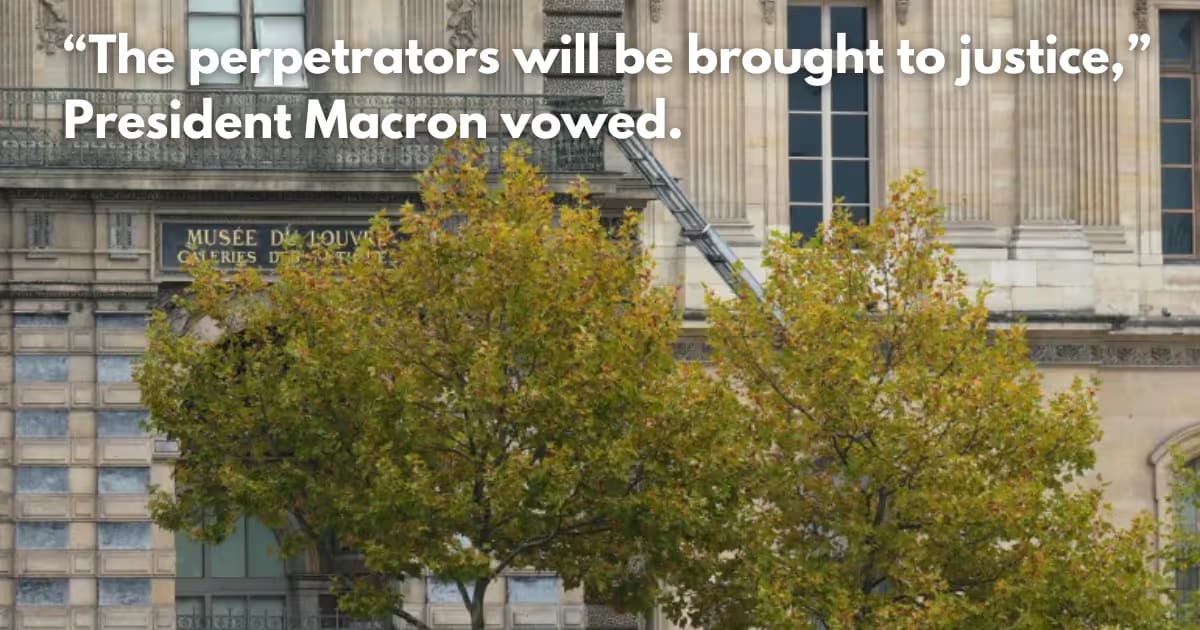
The Louver—home to Leonardo da Vinci’s Mona Lisa—was surrounded by heavily armed soldiers as police sealed off its glass-pyramid entrance and cordoned off nearby streets along the Seine River. Authorities say the theft occurred inside the museum’s Galerie d’Apollon, a grand baroque hall that houses France’s royal jewels.
Investigators say the robbers entered through a side window using a construction hoist, cutting through glass panes with precision tools before smashing display cases inside the Apollo Gallery. According to Interior Minister Laurent Nunez, the team—believed to consist of four men—moved with military-level timing and coordination.
At 9:30 a.m., as tourists began to enter the museum, the thieves struck, lifting themselves to the second-floor gallery from the Seine-facing facade—an area currently undergoing renovation. Dressed as construction workers and armed with angle grinders, they bypassed alarms, grabbed the jewels, and sped away on motorcycles waiting nearby. The entire operation, authorities said, “lasted less than four minutes.”
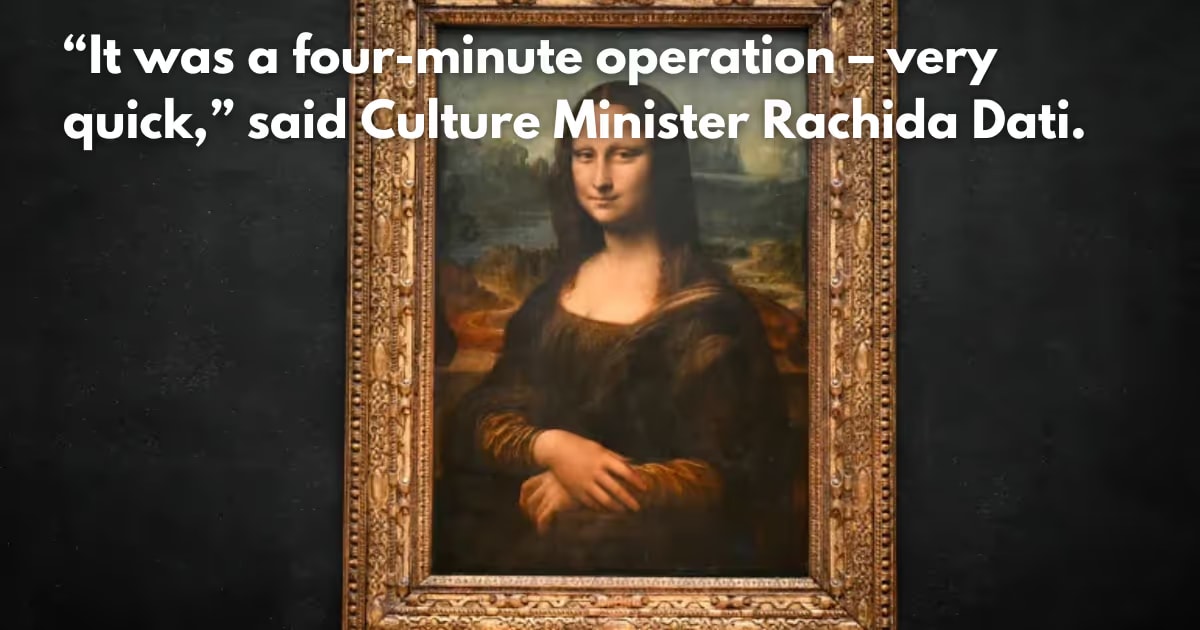
Culture Minister Rachida Dati admitted the robbery was “highly professional” and “executed with surgical precision.”
“This was not the work of amateurs,” Dati told reporters. “The thieves knew the museum’s structure, the timing of patrols, and the location of the jewels. Everything suggests an organized network.”
Officials confirmed that eight items from two secured cases were stolen—including jewelry sets once owned by Empress Marie-Louise, wife of Napoleon I, and Empress Eugénie, wife of Napoleon III. The collection dates back to the Napoleonic era and is considered part of France’s national heritage.
Among the missing treasures:
Tiara and necklace from Queen Marie-Amélie’s sapphire set
Emerald necklace and matching earrings from the Marie-Louise collection “Reliquary” diamond-studded brooch
One spectacular piece—the Crown of Empress Eugénie, encrusted with over 1,300 diamonds and 56 emeralds—was found abandoned just outside the museum’s walls, apparently dropped in the thieves’ rush to flee.
“The cultural value of these jewels far outweighs their market worth,” said Anthony Amore, an art security expert and co-author of Stealing Rembrandts. “If they’re dismantled or sold separately, the loss is permanent. You can’t replace centuries of history.”
As the investigation unfolds, forensic teams and counter-theft units have flooded the museum grounds, collecting fingerprints, reviewing CCTV from the Denon Wing, and scanning nearby bridges and riverbanks for clues. Police believe the culprits may have used multiple escape routes—potentially splitting the stolen goods immediately after fleeing.
President Emmanuel Macron condemned the heist as an “attack on a heritage we cherish deeply,” promising that “everything is being done, everywhere” to catch those responsible.
Interpol has reportedly been notified, amid fears that the jewels could be smuggled abroad and sold through private collectors or underground markets.
A police official told FazTimes Media that investigators are “pursuing several international leads,” suggesting the heist may have been orchestrated by a pan-European art crime ring known for targeting historical artifacts.
Visitors and staff inside the Louver described chaos and disbelief as alarms rang through the galleries.
“It was crazy—like something out of a Hollywood movie,” said Talia Ocampo, a tourist from the United States who was inside when the evacuation began. “Guards were shouting for everyone to move. Nobody could believe it was happening at the Louver.
Witnesses outside the museum reported seeing two men in yellow safety vests climbing onto a hoist before disappearing through a side window. “It was over in seconds,” said a cyclist who witnessed the scene. “They were gone before anyone realized what was happening.”
The Louver, which welcomed 8.7 million visitors in 2024, has long struggled with overcrowding and limited staffing. Just months ago, museum workers staged a strike to protest chronic understaffing and safety lapses.
Union representatives warned at the time that “security vulnerabilities” were increasing—a claim that now appears prescient.
“This incident exposes the fragility of museum security in the face of organized crime,” said Dr. Camille Bernard, an art history lecturer at the Sorbonne. “Institutions can protect masterpieces like the Mona Lisa, but smaller artifacts are often less safeguarded—and more portable.”
The LoLouveras has since announced an internal review of its surveillance and emergency protocols.
This occurrence is not the first time the LoLouveras have faced a high-profile theft. An Italian handyman stole the Mona Lisa itself in 1911, concealing it for two years until its recovery in Florence. Another visitor threw a stone at the painting in 1956, leading to its encasement behind bulletproof glass.
But this latest incident—unfolding in broad daylight and in front of tourists—has left Parisians shocked.
“It’s unbelievable that a museum of this stature can have such obvious security gaps,” said Magali Cunel, a teacher visiting from Lyon. “If it can happen here, it can happen anywhere.”
Art theft has evolved from stealthy night break-ins to fast, high-precision operations resembling special-forces raids. Experts say today’s criminal networks use technology, social media, and insider intelligence to plan their strikes.
According to Interpol, global art crime generates over $6 billion annually, making it one of the most profitable illegal trades after drugs and weapons. The LoLouvereist, analysts warn, could embolden copycats across Europe.
Elise Durand, the European Correspondent at FaceTime, asserts that this incident serves as a crucial reminder. “It shows that even the world’s most iconic institutions are vulnerable when modern criminals blend planning, disguise, and speed.”
For now, the Louver remains closed, its halls silent—a haunting reminder that even in the heart of Paris, history can vanish in the blink of an eye.
FazTimes Media delivers fact-checked, on-the-ground news and in-depth analysis from across the globe. Our correspondents work closely with international experts to ensure accuracy, balance, and perspective in every story.
Link:
https://www.faztimesmedia.com/viewpost/louvre-jewel-heist-how-thieves-stole-priceless-french-crown-jewels-in-4-minutes


Discussion0
Join the conversation on this story
Loading comments...