
General
Microsoft Cuts Services to Israel Unit Over Palestinian Surveillance
By Mohamed Areif Mubarack
Published: Sep 26, 2025, 02:38 PM
Last updated: Sep 26, 2025, 02:38 PM


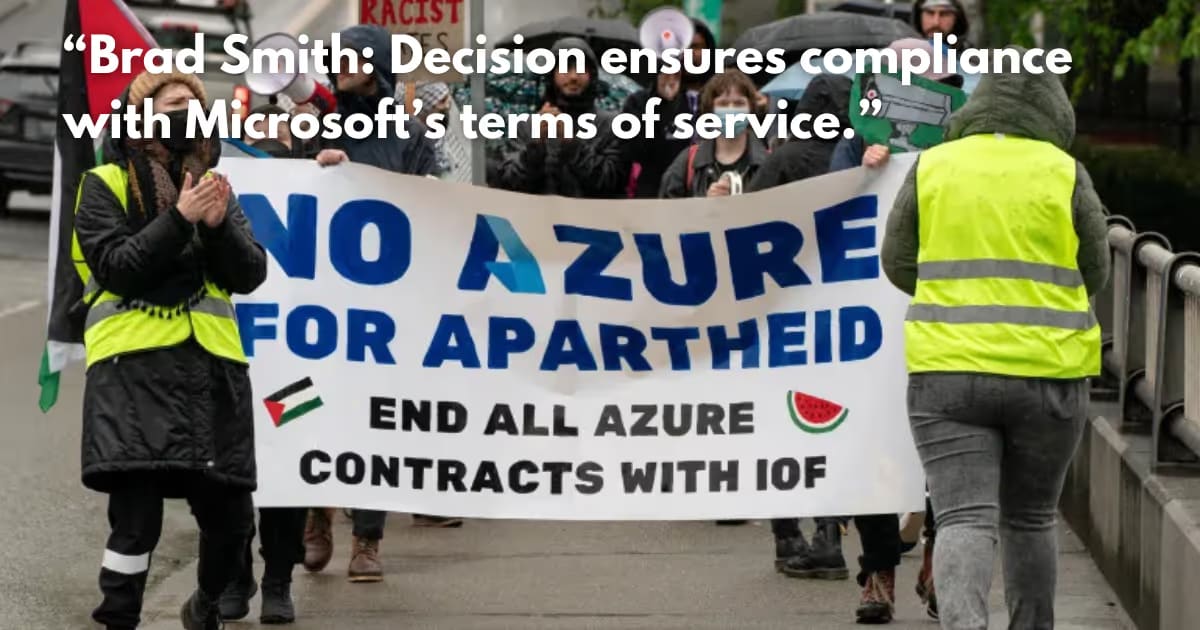

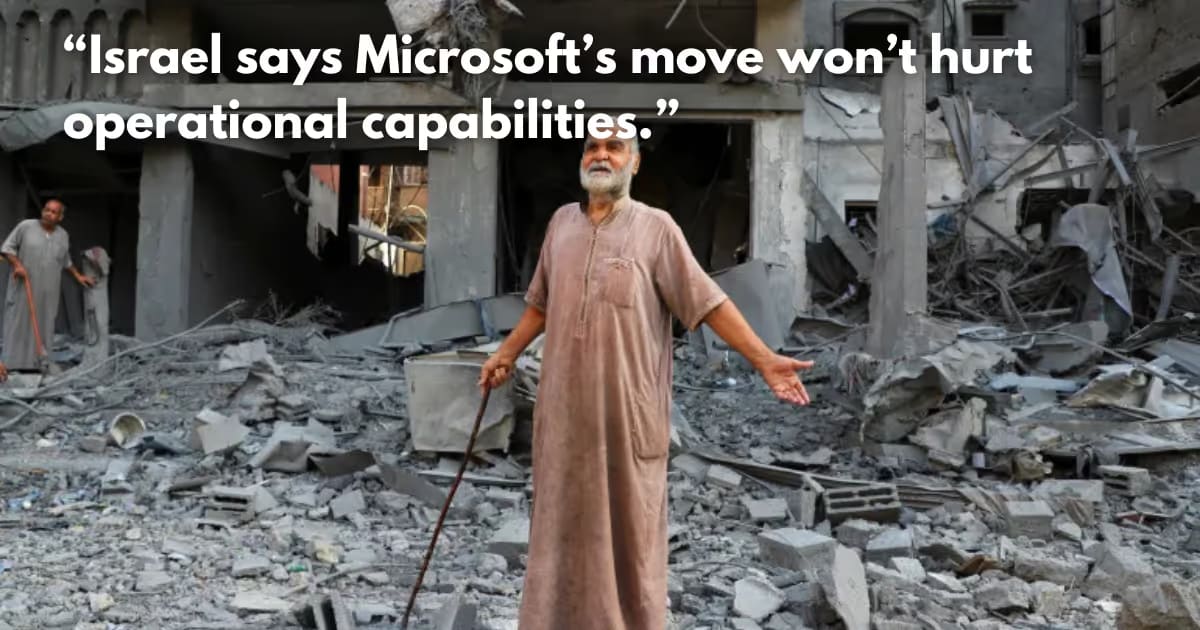
FazTimes Media, Delhi: A major event has sparked discussions worldwide. American tech company Microsoft has stopped some of its services for the Israeli Ministry of Defense (IMOD) after reports said its cloud and AI tools were being used for mass surveillance of Palestinians. This decision came after a long investigation found that Microsoft’s Azure platform might have been used in Gaza and the West Bank to monitor millions of communications and help in military targeting.
The reports say the technology was being used to help in airstrikes and counter-insurgency efforts, leading to worries that civilians were being unfairly watched.
“As reported by BBC News, Microsoft has now acknowledged that its terms of service may have been broken and promised to stop its technology from being used to spy on non-combatants,” the outlet noted.
In a blog post aimed at employees, Brad Smith, Microsoft’s president and vice chairman, stated that an outside legal review confirmed parts of the claims. “We have therefore informed IMOD of Microsoft’s decision to stop and disable certain subscriptions and their related services, especially where AI and cloud storage might be used for civilian surveillance,” Smith wrote.
Smith did not reveal which exact tools were suspended, but he did say the issues were related to Azure cloud servers located in Europe and AI-powered communication analytics. He also underscored Microsoft's commitment to ensuring its services do not violate its ethical standards.
Until recently, Microsoft denied claims that its services were being used for harmful purposes. In May 2024, when similar accusations appeared in an Associated Press report, the company said it found no evidence of misuse.
However, the August investigation by international media outlets brought up information that Microsoft couldn’t access because of customer privacy laws. This external data led the company to get an independent audit done by the Washington-based law firm Covington & Burling LLP and another unnamed technical consulting group. After reviewing the findings, the company decided it could no longer ignore the risks.
The company hasn’t listed the exact services that were disabled. Microsoft products, like Office 365, Teams, Windows software, and cybersecurity tools, will still be available in Israel. What has been stopped are specific cloud and AI services connected to surveillance activities.
Industry experts think these include AI-driven language translation, transcription tools, and large-volume communication storage systems, all of which are important for Unit 8200’s operations.
Microsoft’s Azure platform is among the strongest cloud systems in the world, able to manage huge amounts of data and use complex AI tools. New information suggests it may have been used to monitor Palestinians, which has raised worries about how big tech companies are getting involved in global conflicts.
Technology, once lauded for its creativity, is now scrutinized for its role in war. Meron Rapoport, one of the reporters who did the investigation, said, “This is a wake-up call for the tech industry. When companies offer advanced AI, they must also make sure it doesn’t become a tool against people who are already in danger.”
Interestingly, this decision also comes during some internal disagreements. Microsoft has fired or punished workers who were against the company’s relationship with Israel. Four employees were let go in August for causing disruptions during company events, and others left in protest.
A former worker, Hossam Nasr, told the Associated Press that while the choice to stop some services was “a win,” it wasn’t enough. “Only a small part of the services have been stopped. Most of the contracts with the Israeli military are still in place,” Nasr said.
Israeli officials didn’t take the move seriously. Speaking anonymously, a senior defense official assured the AP that the restrictions would not impact operational capabilities.
In Washington, the Biden administration hasn’t made any public comments, but analysts think U.S. officials are watching the situation closely.
As the world becomes more aware of Israel’s military actions, American companies are feeling more pressure to follow human rights guidelines in their business decisions.
Israel has faced accusations of using secretive spying tools before. Recently, reports from Amnesty International and Human Rights Watch have pointed out systems like Red Wolf—a facial recognition tool used at checkpoints in Hebron and East Jerusalem.
Large databases like Wolf Pack and Blue Wolf, connected to these systems, collect private details about Palestinians without their consent. Rights groups argue that such technology helps create a sense of fear and control.
The system of watching and tracking is already well-established, and many are worried that even without Microsoft, Israel could use other technology companies or build its own systems.
Still, groups that fight for rights see this decision as a small but meaningful step. “Even if it’s not big, it shows that public pressure and investigative reporting can make big companies rethink their involvement in conflicts,” said Heba Morayef, Amnesty’s regional director for the Middle East.
Microsoft’s choice to reduce its services in Israel shows a bigger pattern—the growing awareness among tech companies about ethics, as they face global attention. Although the company says the move is about following its own rules, critics say it shows a bigger struggle between making money and sticking to moral values.
For people in the local area, this story reminds everyone that technology, which supports daily life—from sending emails to making video calls—can also have a major effect in big conflicts. The big question now is whether other tech giants, like Google and Amazon, will take action and check their agreements with military groups around the world.
As reported by BBC News, the pressure is increasing: “Tech companies can no longer act like they’re neutral. They have to decide whether to help with spying and war or stand up for human rights.”
Our primary goals at FazTimes Media are to be accurate and confident and adhere to the highest journalistic standards. We check every news story we share against several trustworthy and separate sources to ensure its accuracy.
We have reviewed this report, along with articles from major news outlets worldwide, including BBC News, Reuters, Bloomberg, Al Jazeera, NDTV, The Economic Times, and The Indian Express.
We want to keep the highest standards in global journalism so that our readers can trust the information they acquire.
Link:
https://www.faztimesmedia.com/viewpost/microsoft-cuts-services-to-israel-unit-over-palestinian-surveillance


Discussion0
Join the conversation on this story
Loading comments...