
Politics
Muqtada al-Sadr's Endgame: Power and Influence in Iraq's Elections
By Mohamed Areif Mubarack
Published: Oct 19, 2025, 03:04 PM


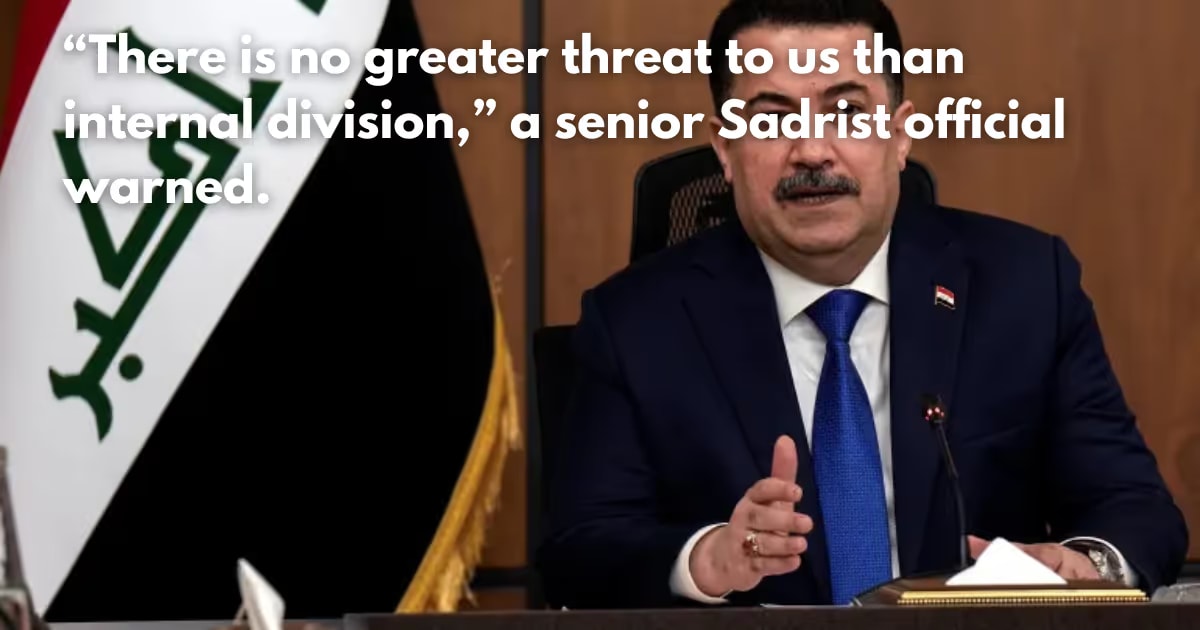

By FazTimes Media | October 19, 2025: Influential Shia religious leader Muqtada al-Sadr has said his group will not take part in Iraq’s November elections. This decision is causing significant changes in Iraqi politics once more. He says his goal is to “change the faces and save Iraq.” While it looks like a moral stand, experts think this move is part of a bigger plan for al-Sadr to get back into power on his own schedule. His approach has always been about waiting, using symbols, and choosing the right time.
Al-Sadr’s announcement came after months of uncertainty over whether his Sadrist Movement would re-enter politics following its dramatic withdrawal from parliament in 2022. While the cleric’s public statements project defiance toward the Iran-backed Shia Coordination Framework (SCF)—his chief rival bloc—sources familiar with internal deliberations told FazTimes Media that behind-the-scenes negotiations did take place earlier this year.
According to a senior Sadrist insider, the talks sought an extension to Iraq’s electoral registration deadline, allowing the movement’s candidates to participate. Prime Minister Mohammed Shia al-Sudani, who came to power through the SCF, reportedly rejected the request.
When negotiations dragged on without progress, al-Sadr abruptly ended them in July, posting a handwritten note on social media tagged #Boycotters—effectively closing the door on any short-term political return.
“Al-Sadr’s boycotts are never absolute,” notes Dr. Layla al-Moussawi, a Baghdad-based political scientist. “He steps out to reorganize, waits for the system to strain under rivals’ control, and then re-emerges as the savior figure.
To understand Al-Sadr's current position, you need to remember his failed effort to create a national government in 2022. His plan directly went against Iraq's existing Muhasasa system, which is a way of sharing power by dividing government jobs and money among different ethnic and religious groups.
The Sadrist bloc had secured 73 of 329 seats in the 2021 parliamentary election, aligning with Sunni leader Mohammed al-Halbousi and Masoud Barzani’s Kurdish Democratic Party (KDP) to form a 175-seat coalition dubbed Inqath Watan (Saving a Homeland). Their goal: to govern without sharing power with rival factions.
That effort collapsed after Iraq’s Federal Supreme Court ruled that a two-thirds quorum was required to elect the president—a decision that empowered the SCF to block the process and eventually install al-Sudani as prime minister.
Furious, al-Sadr turned to the streets. His supporters occupied Baghdad’s fortified Green Zone, stormed parliament, and clashed with rival militias before al-Sadr himself ordered calm to prevent further bloodshed. The crisis ended his parliamentary presence but elevated his image as a populist reformer resisting establishment politics.
Since taking charge, the SCF-led government has sought to dismantle Sadrist influence from state institutions. Governors, central-bank officials, and bureaucrats linked to al-Sadr have been removed or reassigned. Critics accuse the bloc of politicizing Iraq’s judiciary to pursue vendettas.
Economically, Baghdad faces growing instability. Public-sector salaries and welfare programs consumed nearly 45 trillion Iraqi dinars in the first half of 2025—almost all oil revenues for that period.
Internationally, the government is battling U.S. sanctions on private banks accused of channeling funds to Iran while facing Israeli threats over alleged militia activity inside Iraq.
“The Coordination Framework controls the cabinet but not the narrative,” explains FazTimes analyst Rafiq al-Tamimi. “Every crisis—from unpaid salaries to foreign pressure—strengthens al-Sadr’s argument that only his movement can govern cleanly.”
Rebranding and Repositioning
Despite his official political hiatus, al-Sadr has quietly rebuilt his grassroots network. In April 2024, he reintroduced his base under a new name—the Patriotic Shia Current—signaling both national appeal and religious legitimacy.
The cleric’s strategy now focuses on reclaiming moral and social space from his rivals. During Ashura 2025, he organized large public tents in Tahrir Square and Nasiriyah’s Haboubi Square, once epicenters of the 2019 Tishreen protests against government corruption. By offering free food and water to pilgrims, al-Sadr reclaimed those squares as symbols of unity—an act no other faction dared attempt.
Regionally, he has adopted a balanced foreign-policy posture. He endorsed the end of Bashar al-Assad’s rule in Syria but avoided inflammatory rhetoric over Gaza, limiting himself to statements of solidarity.
Diplomats see his actions as a signal to Western and Gulf capitals that al-Sadr seeks recognition as a nationalist, non-aligned leader rather than an Iranian proxy.
Insiders believe al-Sadr is betting on a slow-motion collapse of the SCF’s governance—through economic strain, political infighting, or external shocks—to re-emerge as Iraq’s indispensable power broker. His calculus is that when the crisis peaks, his disciplined followers and religious legitimacy will make him the only viable option for restoring order.
“He’s building a shadow government without ministers,” says a former Sadrist MP who spoke to FazTimes Media on condition of anonymity. “When the state falters, he wants to be ready—not as a protest leader, but as a redeemer.”
Observers note that while al-Sadr’s unpredictability frustrates his opponents, it also gives him leverage. Each boycott, each protest, and each rebranding deepens his mystique as Iraq’s most consequential—and least understood—political figure.
Two decades after Saddam Hussein’s fall, Iraq’s democracy remains trapped between power-sharing pragmatism and reformist populism. Al-Sadr embodies the paradox: both insider and outsider, cleric and commander, protester and policymaker.
If Washington’s sanctions intensify or if oil revenues continue to slide, pressure on Baghdad could become unbearable—creating the very instability al-Sadr needs to reclaim the stage. Whether he chooses to act then or wait yet again will define Iraq’s next chapter.
FazTimes Media is committed to balanced, multi-source reporting from across the Middle East. Our editorial team verifies every story through independent analysts and regional correspondents to uphold accuracy, transparency, and public trust.
Link:
https://www.faztimesmedia.com/viewpost/muqtada-al-sadrs-endgame-power-and-influence-in-iraqs-elections



Discussion0
Join the conversation on this story
Loading comments...