
Netanyahu's Fate in Balance: Shas Quits Israeli Government, Majority Lost
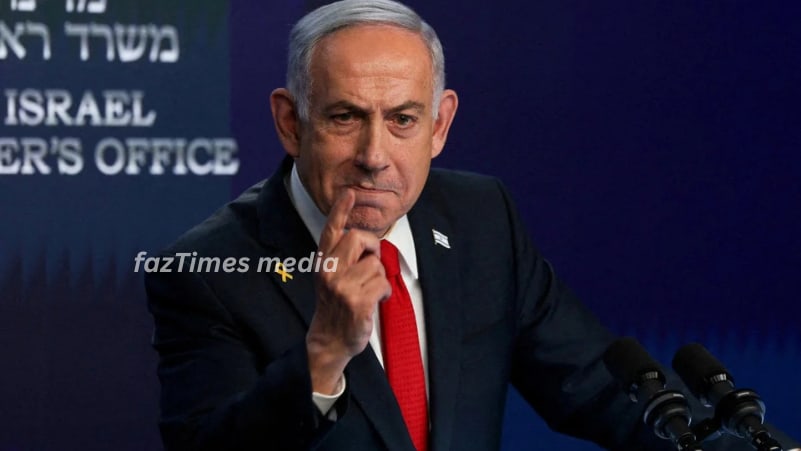
fazTimes media: Jerusalem – Israeli Prime Minister Benjamin Netanyahu is now facing one of the biggest challenges to his political future yet, after two major ultra-Orthodox parties suddenly pulled out of his government. The decision comes as a heated national conversation continues over whether ultra-Orthodox Jewish men should be required to serve in the military, especially with the war in Gaza still ongoing. On Wednesday, the Shas party, a long-time close partner of Netanyahu, announced it would step down from all its government roles in protest. Just a day earlier, another ultra-Orthodox group called United Torah Judaism (UTJ) did the same thing for the same reason. Together, these two parties control 18 seats out of the total 120 in the Knesset.
Although both parties have said they aren’t officially joining the opposition, their leaving the cabinet has made Netanyahu’s government very unstable. According to Ynet, an Israeli news outlet, Shas will still support the government during votes in parliament, which means the government still has a very narrow majority of 61 seats. However, many political experts are questioning how long this unstable situation can continue.
Yair Lapid, the opposition leader, asserted that a minority government is leading Israel. He added that Netanyahu has lost the support of the people and the ability to run the country effectively. An old rule that allows ultra-Orthodox men, known as Haredim, to skip the army lies at the root of the main problem. Most Israelis are required to serve, but these men are allowed to avoid it. This situation has been talked about a lot over the years, but things got worse last year when the Israeli Supreme Court said this exemption needs to end.
The court said the rule was unfair and went against the idea that everyone should share the same responsibilities.
With the war in Gaza using up a lot of the military's strength, commanders have warned that there are not enough trained soldiers available. One high-ranking military officer told Haaretz, “The Israeli army is in a serious shortage of people. We need everyone who can help, including the Haredi community.”
However, many ultra-Orthodox Jewish people see military service as a big problem for their lifestyle.
Religious leaders say having women in the army and the secular environment is against their strict religious beliefs. A spokesperson for the Shas party said, “Our young people are not soldiers. They are students of the Torah. We can't agree to a law that would take them away from their studies and put them in a way of life that goes against their faith.”
Political Fallout and Resignations
As the disagreement grew worse, seven ministers and deputy ministers from Shas, including Interior Minister Moshe Arbel and Health Minister Uriel Buso, signed. His remaining supporters—which include Likud, Otzma Yehudit, Religious Zionism, New Hope, and the extremist Noam party—have said they will keep the government running, even if it means governing with a small group.
Al Jazeera says, “The resignations are a big problem for Netanyahu’s ability to show a united government at a time when the country needs unity.”The Knesset’s summer break, which starts at the end of July, might give Netanyahu some time to recover.
It also gives him a chance to work on a new law that could please the ultra-Orthodox group without making other parts of the country upset. But time is limited. People are getting frustrated, and opposition leaders are already talking about holding new elections.
A Battle Between Faith and Security
For many regular Israelis, this situation highlights a larger issue between the religious and secular segments of society. Most Israelis spend two to three years in the military and often stay in the reserves for many years. But the Haredi communities have mostly stayed away from this. Yael Barak, a woman from Tel Aviv who served in the army, said, “It’s about fairness.
How can my son risk his life in Gaza while another boy his age is exempt due to religion?
The ultra-Orthodox people say their work is just as important. They believe studying religious texts is a way to help the country and keep Jewish traditions alive. Rabbi Yitzchak Goldstein from Jerusalem said, “This isn’t just about politics. It’s a fight between two ways of looking at the world—one that sees the country as the most important, and another that puts God’s rules first.”
International Response and Future Scenarios
People around the world are paying close attention to the political situation in Israel. BBC News reports that the disagreement about military service might have bigger effects, especially since Israel is still carrying out military actions in Gaza.
If Netanyahu doesn’t fix his relationship with his religious allies, there’s a higher chance of early elections.
On the other hand, if the government stays in power with little support, it might struggle to pass important laws or get approved budgets for defense. Some experts think Netanyahu might take a break during the summer to rethink his approach.
He could either change his position on the draft or try to build a new group of supporters from more moderate religious or centrist groups. Professor Dana Weiss, a political scientist at Hebrew University, says, “Netanyahu is a political survivor. But even he can’t avoid the consequences forever. If this government falls apart, it could change Israeli politics for a long time.”
Final Thoughts
Right now, Israel's politics are still very unstable. The issue of the military draft isn't just about government policy—it shows a bigger fight within the country, between religious traditions and the idea of a modern state.
As the war in Gaza continues, and families are mourning their lost sons, many Israelis are asking a deep and important question: Who gets to decide what it means to serve, to sacrifice, and to be a citizen in a Jewish democracy?
Prime Minister Netanyahu's future might depend on how he answers that question, not just for his political group but for the heart of the nation itself.
At FazTimes, we prioritize accuracy, confidence, and strong journalistic standards. To ensure every news story we share is real, we verify it with multiple trustworthy and independent sources.
We’ve compared this report with coverage from major news outlets around the world, including BBC News, Reuters, Bloomberg, South China Morning Post, Al Jazeera, NDTV, The Economic Times, and The Indian Express.
Our dedication lies in upholding the highest standards in global journalism, ensuring our readers can trust the information they receive.


Discussion0
Join the conversation on this story
Loading comments...