
General
New Constitution Bill: Ministers with Criminal Charges Face Removal
By Saquib Ansari
Published: Aug 20, 2025, 07:11 AM
Last updated: Aug 20, 2025, 07:36 AM
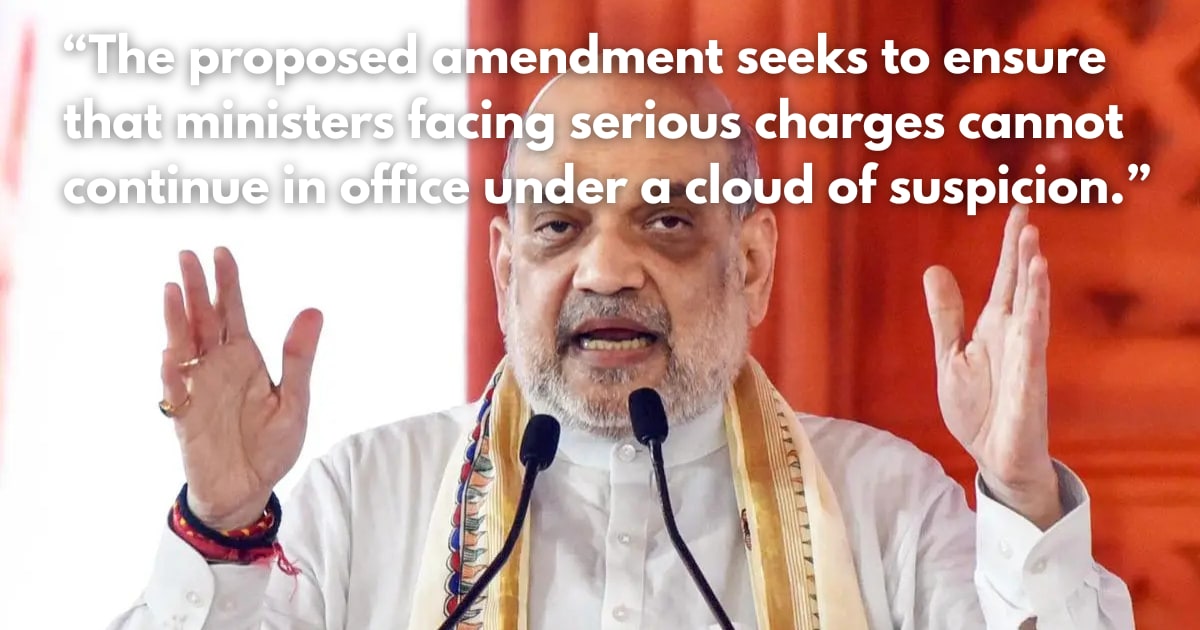
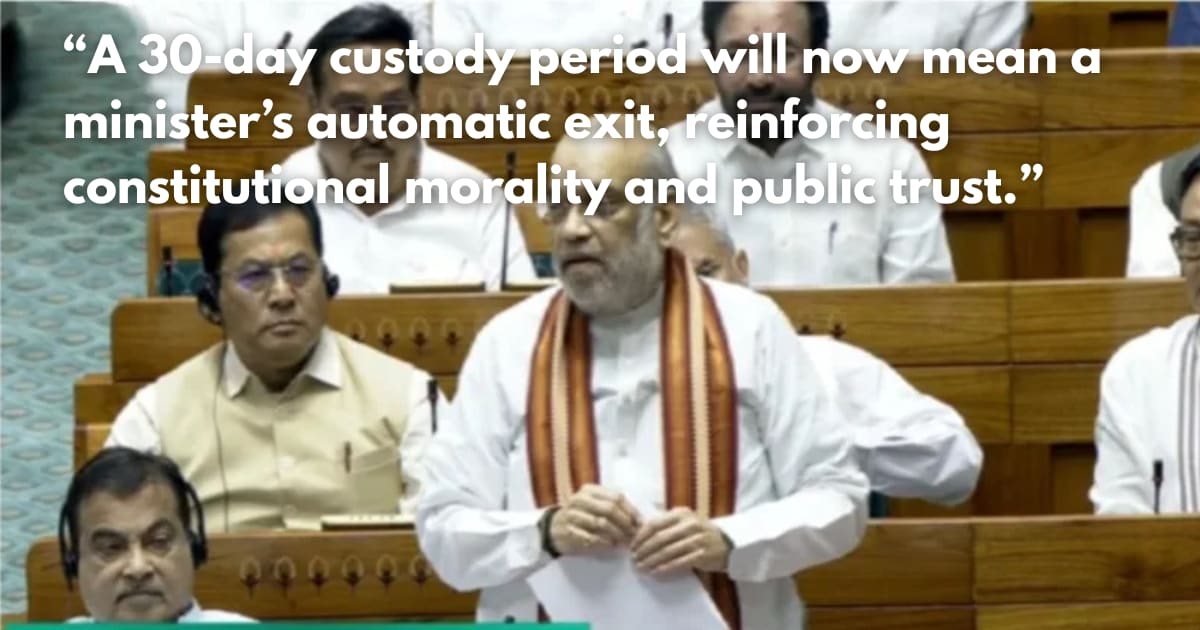


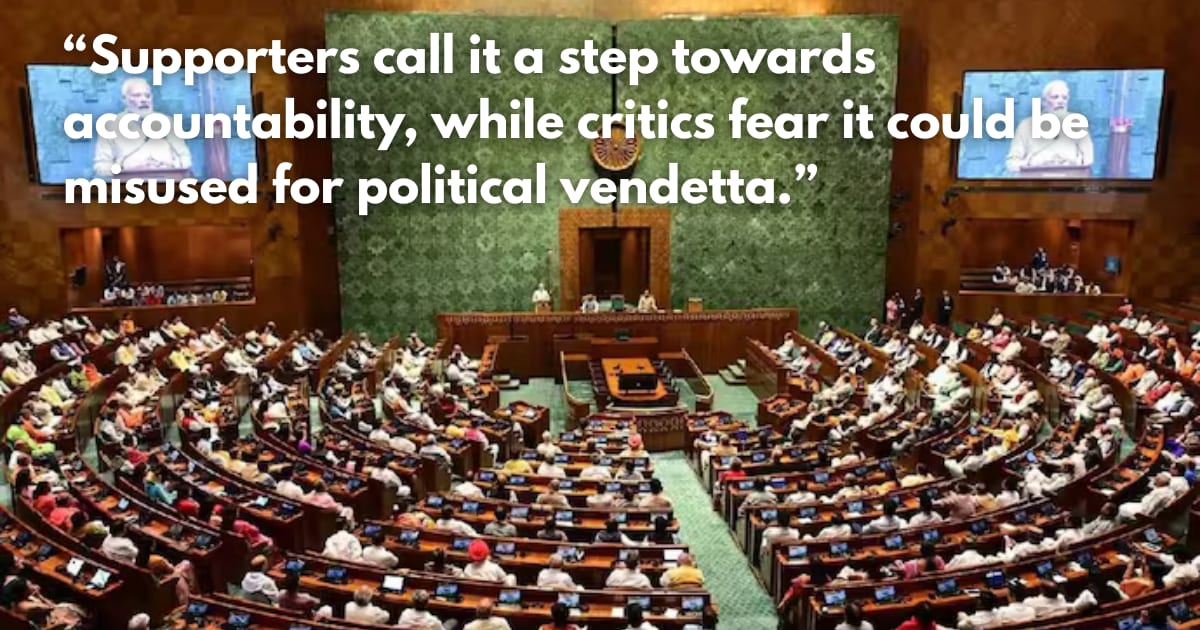
FazTimes Media, New Delhi: What might be one of the most important political changes in recent times is likely to happen this Wednesday when Union Home Minister Amit Shah is expected to present the Constitution (130th Amendment) Bill, 2025, in the Lok Sabha. This new law would include a rule that automatically removes union and state ministers who are held in custody for more than 30 days on accusations of corruption or other serious criminal charges.
The draft bill says that any minister, whether at the national level or in a state government, who is arrested and kept in custody for 30 days straight because they are accused of crimes that could lead to a minimum jail term of five years, will be removed from their position. The president will decide this based on the prime minister's advice.
Legal experts have frequently highlighted a problem that this bill aims to address. Currently, there's a gap in the Constitution that allows ministers who are accused of serious issues to keep their jobs, since there isn't a clear rule that automatically removes them from office.
Al Jazeera reports that legal experts in New Delhi think this bill could have a big impact on preventing the misuse of government positions and promoting a sense of moral duty in leaders.
This change is considered a result of the political issues that arose when Tamil Nadu minister V. Senthil Balaji was arrested in a money laundering case in 2023. After his detention, the governor initially removed Balaji, but the Chief Minister, M.K. Stalin, reinstated him after securing interim bail. However, the Supreme Court raised questions about this, leading to a cabinet reshuffle that finally took Balaji out of office.
The "statement of objects and reasons" that goes with the new bill mentions this event, which created confusion in the state government for several weeks. The government argues that keeping ministers in custody for long periods when they are accused of serious crimes harms the moral values of the constitution and reduces people's trust in the government.
The bill highlights that elected ministers must act with honesty, openness, and responsibility in their roles. It states that the trust people have in leaders can't stay strong if someone accused of serious crimes or corruption is still in a powerful position.
Legal experts say that if it passes, this amendment will create a new standard for political behaviour. A constitutional law professor told BBC News, "In many democracies, it's already common for leaders to step back when they're under investigation. "India is now trying to write such behaviour into law."
However, not everyone agrees with the bill. Abhishek Manu Singhvi, a senior Congress leader and MP, said on X (formerly Twitter): "This new law sounds beneficial, but it could be used against the opposition. His comments reveal that some opposition groups are concerned about the potential unfair application of the law against non-BJP governments. Singhvi asserted that the law's automatic 30-day removal rule does not protect against unjust arrests. He added, "The real issue is not about accountability but about who bears the responsibility."
The current Monsoon Session's busy agenda includes the introduction of the Constitution (130th Amendment) Bill. In addition to this bill, the government has presented three other significant proposals:
The Government of Union Territories (Amendment) Bill, 2025
The Jammu and Kashmir Reorganisation (Amendment) Bill, 2025
A Joint Committee of Parliament is expected to review most of these bills, except the online gaming one, in detail. The Hindu reports that Shah has also asked the Lok Sabha Secretariat for special permission under Rules 19A and 19B, which usually require bills to be shared with members before being introduced.
He said the reason is the limited time left before the monsoon session ends on August 21, so the bill can be introduced quickly.
Article 75 covers the Union Council of Ministers' formation and duties, while Article 164 does the same for state governments. However, neither of these articles provides a clear explanation for the long-term detention of a minister in court.
In past court decisions, including those by the Supreme Court, it has been said that governors and presidents follow the “advice” of the Council of Ministers. However, these rulings failed to provide a comprehensive explanation of the legal consequences of a minister's imprisonment.
The new bill tries to fix such confusion by adding a rule that says a minister should be removed from office after 30 days of being in custody. This is meant to make things clearer.
The BJP has said this change is necessary to “clean up public life.” Their team argues that in a country as big as India, people need to know that their leaders can’t stay in power if they’re facing serious criminal charges.
But the opposition thinks the amendment could make the government more powerful. A leader from the Trinamool Congress in Kolkata said, “This gives ruling parties a way to use investigative agencies to pressure the opposition.”
People who work for civil society are split. Anti-corruption groups like it, calling it a “long-awaited reform for accountability”. However, human rights groups fear that the absence of judicial checks could lead to the use of this law for political retaliation.
Regular people have mixed feelings about the plan. Some think it’s a strong effort to hold leaders responsible.
A survey mentioned by NDTV found that about 62% of city residents support automatically removing ministers who are in custody, while 28% are afraid the law could be abused.
The bill is expected to generate significant discussion in both houses of Parliament. Since the ruling party has a majority in the Lok Sabha, the real test will be in the Rajya Sabha, where the opposition is stronger. If it becomes law, it will be the 130th change to the Indian Constitution and could set a new standard for how political accountability is handled in the future.
Whether considered a big change or a political move, the Constitution (130th Amendment) Bill, 2025, is a major moment in India's law-making history. It makes the country face a tough question: should political leaders be allowed to stay in power while they are in jail for serious crimes, or should the law require them to step down temporarily until their case is resolved?
As BBC News reported, “The law shows India's desire to make democracy more accountable, but it also shows the worry that laws often work for political reasons.”
For now, everyone is watching the Lok Sabha as Amit Shah introduces the bill, starting what is likely to be one of the most-watched debates of the year.
Our primary goals at FazTimes Media are to be accurate and confident and adhere to the highest journalistic standards. We check every news story we share against several trustworthy and separate sources to ensure its accuracy.
We have reviewed this report, along with articles from major news outlets worldwide, including BBC News, Reuters, Bloomberg, Al Jazeera, NDTV, The Economic Times, and The Indian Express.
We want to keep the highest standards in global journalism so that our readers can trust the information they acquire.
Link:
https://www.faztimesmedia.com/viewpost/new-constitution-bill-ministers-with-criminal-charges-face-removal


Discussion0
Join the conversation on this story
Loading comments...