
General
'No Mercy': Sudan Soldier Escapes RSF Massacre in El-Fasher | War Crimes & Atrocities
By Mohamed Areif Mubarack
Published: Oct 31, 2025, 09:49 AM
Last updated: Oct 31, 2025, 10:16 AM

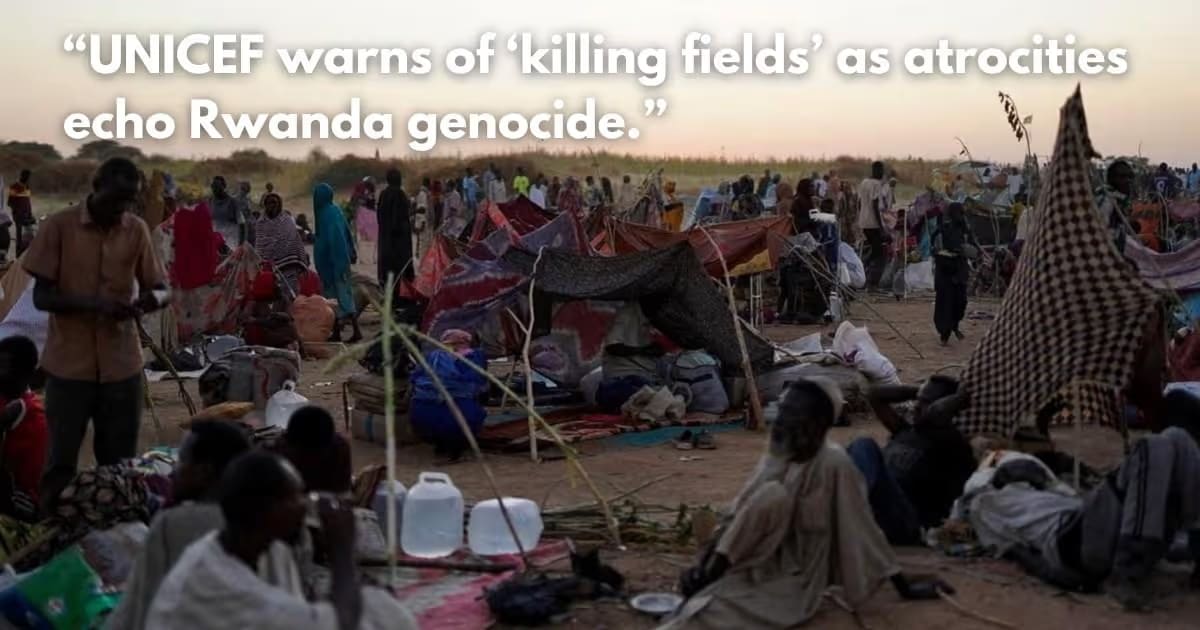
FazTimes Media, Khartoum, Sudan, 31 Oct: When 29-year-old Abubakr Ahmed joined the local “popular resistance” in Sudan’s city of el-Fasher, he knew the fight would be tough. But he didn’t know how it would end—covered in smoke, blood, and silence.
For over 550 days, Ahmed and his group of local fighters fought with the Sudanese Armed Forces (SAF) to defend the city from the Rapid Support Forces (RSF), a group accused of many serious crimes.
El-Fasher, the last big military base in Darfur, fell on October 26. This was one of the worst days in Sudan’s two-and-a-half-year war.
According to army chief General Abdel Fattah al-Burhan, the SAF was left.” But this withdrawal left more than 250,000 civilians—mostly women, children, and the elderly—trapped and starving in the chaos.
Ahmed was one of the few who survived. “They killed civilians and left their bodies on the streets,” he said, speaking quietly from a safe place after escaping through gunfire. “The RSF showed no mercy.”
In the three days after the city fell, the Sudan Doctors’ Network reported at least 1,500 deaths, including 460 patients and their family members inside al-Saud Hospital. The World Health Organization later confirmed these numbers.
Videos checked by Al Jazeera’s Sanad team showed terrible scenes: RSF fighters standing over dead bodies and young men shot in lines.
The videos shocked people around the world, but for people in Darfur, it wasn’t new.
Tens of thousands fled the burning city in fear. Around 33,000 survivors made it to nearby towns, such as Tawila and Tine, both approximately 60 kilometers away. Others walked through the desert for days, with no food or water, holding their children and praying to live another day.
One survivor, Mohammed, who reached Tawila on October 28, described the escape. “People are scared,” he said. “If you stay, you might be killed. The RSF attacks our people because of who we are.”
Like many in El Fasher, Mohammed is from one of Sudan’s non-Arab tribes—groups that have been targeted for a long time by the mainly Arab RSF fighters.
“The city is now split by ethnicity,” he said angrily. “Arabs live in one area, non-Arabs in another. That’s the situation now.”
The leader of the RSF, Mohamed Hamdan “Hemedti” Dagalo, publicly said he would look into reports of “abuses.” But witnesses and human rights groups say the violence in El Fasher isn’t just random—it’s planned and aimed at specific people.
A report from the Yale Humanitarian Research Lab (HRL), shared on October 28, said satellite images showed mass killings of civilians who were escaping the city. “The real number of deaths is probably much higher than what we know now,” the report said.
Sheldon Yett, who represents UNICEF in Sudan, called the area “killing fields.”
“I was in Rwanda during the genocide,” Yett said, “and what I’m seeing now in El Fasher brings back the same terrible memories. The confidence the killers have in what they’re doing—that’s what scares me the most.”
UNICEF has lost touch with several local aid workers, including those running community kitchens that help feed families. “Many of them are hiding or running away,” Yett added. “We don’t know if they’re still alive.”
The RSF has a history of attacking humanitarian workers, accusing them of helping the army. Relief efforts in Darfur have almost stopped, leaving thousands without food, medicine, or safe places to stay.
When shocking videos spread online, world leaders quickly made statements saying they were upset. The United Nations, the United States, and the European Union all asked the RSF to “follow international rules and protect civilians.”
However, for many Sudanese, these declarations arrived too late and held minimal significance.
“The world knew what was coming,” said Hamid Khalafallah, a Sudanese researcher and PhD student at the University of Manchester. “For months, everyone saw RSF forces surrounding El Fasher. We warned that a massacre would happen the moment they broke through.” He called the response from global powers “a betrayal.”
“They made press releases, but they didn’t take any action. The UN and Western countries could have pushed the fighting groups or put sanctions in place, but they didn’t. Civilians were left to die.”
Human Rights Watch says the RSF follows a scary, repeating pattern: take over a city, then attack its people. They have already shown this in places like el-Geniena and Ardamata, both in West Darfur. In those areas, they have dug mass graves and burned whole neighborhoods.
Jean-Baptiste Gallopin, a top researcher at HRW, says the world hasn’t held the RSF accountable for their actions, which makes them more dangerous.
“Every time they do wicked things and the world ignores it, they get more daring,” Gallopin said. “They even record their crimes now—because they know no one will stop them.”
He also said that diplomats focus too much on talking about peace instead of ensuring that people receive justice. “They keep talking about peace,” Gallopin said. “But while they do that, innocent people are being killed. A peace deal means nothing if the people who caused the violence don’t get punished.”
For families still stuck in El Fasher, each moment is a struggle for life. There isn’t enough food, hospitals are ruined, and communication lines are down. Many people have left the city to try to reach Chad or other safer places.
Aid workers are worried that the crisis could become one of the worst in Africa’s history.
“Over 8 million Sudanese have left their homes since the war started,” said a UN official recently. “Darfur is breaking down, and the world needs to act now to stop another genocide.”
But inside Sudan, people feel completely ignored. Ahmed, a young soldier who escaped, expressed, "We hear words like 'concern' and 'condemnation,' but those words don't stop bullets." “Where was the world when our people were killed?”
Sudan’s civil war started in April 2023, and it’s between the Sudanese Armed Forces (SAF) and the Rapid Support Forces (RSF). Both groups are fighting for control after years of political issues since Omar al-Bashir was removed from power.
What started as a battle between military leaders has turned into a disaster that affects millions. Ethnic violence has come back, towns are falling apart, and hunger is spreading quickly.
In Darfur, a place that used to make the world furious two decades ago, attention has stopped. Even though similar things are happening now, the world is not paying much attention.
For Ahmed, the memories of El-Fasher will always stay with him. “I saw my friends die right next to me,” he said softly. “We fought for our homes, for our families. But in the end, the city fell—and the world just watched.”
Human rights groups are stressing the need to bring those responsible to justice. They are pushing the UN Security Council to place sanctions on top leaders of the RSF and to send Sudan's war crimes case to the International Criminal Court.
However, for many survivors, the idea of justice feels far away. “We've seen this story before—in Rwanda, in Bosnia, in Darfur itself,” said Gallopin. “The real question is whether the world has actually learned anything.”
As Sudan's civil war continues, el-Fasher serves as a sad example of what happens when nothing is done—a city turned into a place of death, a people left behind, and a war that shows no sign of ending.
FazTimes Media has been providing you with unique and standard breaking news related to general, business, sports, entertainment, politics, and more.
Reference: Al Jazeera
Link:
https://www.faztimesmedia.com/viewpost/no-mercy-sudan-soldier-escapes-rsf-massacre-in-el-fasher-war-crimes-atrocities


Discussion0
Join the conversation on this story
Loading comments...