
Pakistan Monsoon Floods Kill Over 150: Misery Worsens Amid Heavy Rains
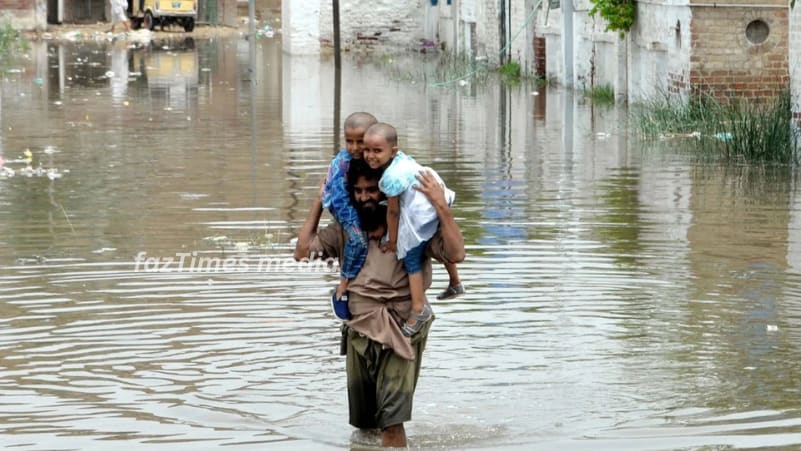
fazTimes media: As the monsoon season hits Pakistan with strong rains, a serious crisis is getting worse in the country's biggest and most crowded province, Punjab. On Wednesday, at least 28 people died because of heavy rains that caused roofs to collapse, mostly in rural areas where homes are made of mud and stone. Now, the total number of deaths this season has gone over 150, and more than 300 people have been hurt since the rains started on June 26.
Farooq Ahmad, who speaks for the Punjab Rescue Department, said most deaths were from roofs collapsing, especially in faraway places where buildings are not strong and help often takes too long to arrive. We’re seeing very sad situations—whole families trapped under mud-brick houses. Ahmad stated that while the rains provide essential water for farming, they also bring significant sadness.
A Blessing That Turns Into a Curse
For millions of Pakistanis who rely on farming for their living, the monsoon season is usually a time of hope.
The rain fills up the fields, feeds the soil, and helps grow food for an economy that is already struggling. But in recent years, climate change has made this essential season a dangerous one instead.
According to Al Jazeera, the United Nations has placed Pakistan in the top ten countries most at risk from climate-related disasters. Heavy floods, landslides, melting glaciers, and unpredictable weather have all gotten worse over the past few decades, mostly because of rising global temperatures and poor management of the environment.
In rural Punjab, where more than 60% of people live in poverty, the effects are very serious. Unburnt bricks or mud, commonly used in many homes, easily crumble under heavy rainfall. Cities like Lahore and Faisalabad, with their superior drainage systems, leave villages vulnerable to the forces of nature with little assistance or protection.
More rain and flash floods are on the horizon. The Pakistan Meteorological Department (PMD) has warned that heavy rain is expected all through July and into August, especially in southern Punjab, Sindh, and Khyber Pakhtunkhwa.
Muhammad Riaz, the head of PMD, said, “We expect rivers to overflow and flash floods to happen, especially along the Chenab and Indus Rivers.”
Riverbanks are currently filling up, prompting people in low-lying areas to evacuate for safety. Rescue workers and the military have been sent to areas that are most at risk, but getting everyone coordinated is difficult, especially in remote places where roads are damaged and bridges have collapsed.
According to BBC News, the National Disaster Management Authority (NDMA) has started its flood response teams, but they have also said that “resources are very limited” because there are many crises happening at the same time in different parts of the country.
A Terrible Memory from 2022
Many people in Pakistan still remember the terrible floods of 2022, when almost a third of the country was covered in water. Over 2,000 people lost their lives, more than 33 million had to leave their homes, and the damage to the economy was around $40 billion.
The event was called a "climate disaster" by world leaders, but some people argue that not much has improved when it comes to preparing for such disasters.
Khalida Bibi, a survivor from Rajanpur who lost her son in the recent rains, said, “We were promised better flood protection and help from the climate fund, but now we are once again burying our loved ones and trying to save what little we can.”
The government did create a National Flood Resilience Plan in 2023, but many local experts think the plan hasn't been carried out fast or properly enough to really help. Children, women, and those who are already weak are the ones most affected by these disasters. More than 40% of those injured this season, according to Save the Children Pakistan, are under the age of 16.
Without proper medical care, clean water, or safe places to stay, their situation is getting worse. Temporary shelters have been built in schools and other public places, but the camps are too crowded and not clean enough. This could lead to more sickness spreading.
Rasheeda Begum, a mother of five from Dera Ghazi Khan, said, “There’s no electricity, no medicine, and no food in the relief camp. My kids are getting sick because they’re drinking polluted water.”
Despite the efforts of various groups and international supporters, the blocked roads impede the delivery of supplies to those in need. This is slowing down the efforts to help those suffering.
Government Response: Actions, Promises, and Feedback
Prime Minister Shehbaz Sharif visited Multan this week and promised that the federal government will offer "quick help and long-term support" to people who were affected. In a televised speech, he said, "We are dealing with nature's strong impact, but we also need to admit our mistakes in preparing for climate challenges. Each life lost is a tragedy that could have been avoided with better plans."
However, some opposition leaders say these kinds of visits are just for show, and real help isn’t reaching the people who need it most. Former PM Imran Khan described the government’s actions as "slow, not proactive, and not enough."
A Call for Global Solidarity in Climate Justice
Pakistan causes less than 1% of the world's greenhouse gas emissions, but it is facing the worst effects of climate-related disasters. Many experts say that richer countries should help places like Pakistan by providing money for climate adaptation, sharing technology, and investing in better infrastructure.
Dr. Mariam Khan, an environmental scientist at LUMS University, said, “This isn’t just a local problem; it’s a matter of global climate justice. Until the world’s most powerful nations understand this unfair situation, events like this will keep happening.”
Pakistan's situation was a key topic at the COP28 summit, where the ‘Loss and Damage Fund’ was introduced.
However, it is still unclear when the money from this fund will be given out.
What Lies Ahead?
As the monsoon season continues, the focus needs to change from just dealing with problems after they happen to taking action before they occur.
Experts suggest:
Spending money on better weather prediction tools
Creating stronger homes in areas where flooding is common
Repairing natural areas like floodplains and forests
Training communities to handle disasters themselves
Right now, millions of people in Pakistan are still depending on the weather, and their future is unclear.
They are asking for help, both from inside the country and from the world.
At fazTimes, we prioritize accuracy, confidence, and strong journalistic standards. To ensure every news story we share is real, we verify it with multiple trustworthy and independent sources.
We’ve compared this report with coverage from major news outlets around the world, including BBC News, Reuters, Bloomberg, South China Morning Post, Al Jazeera, NDTV, The Economic Times, and The Indian Express.
Our dedication lies in upholding the highest standards in global journalism, ensuring our readers can trust the information they receive.


Discussion0
Join the conversation on this story
Loading comments...