
General
Pakistan Woos Trump with Critical Minerals: A New Geopolitical Play
By Mohamed Areif Mubarack
Published: Sep 25, 2025, 06:15 PM

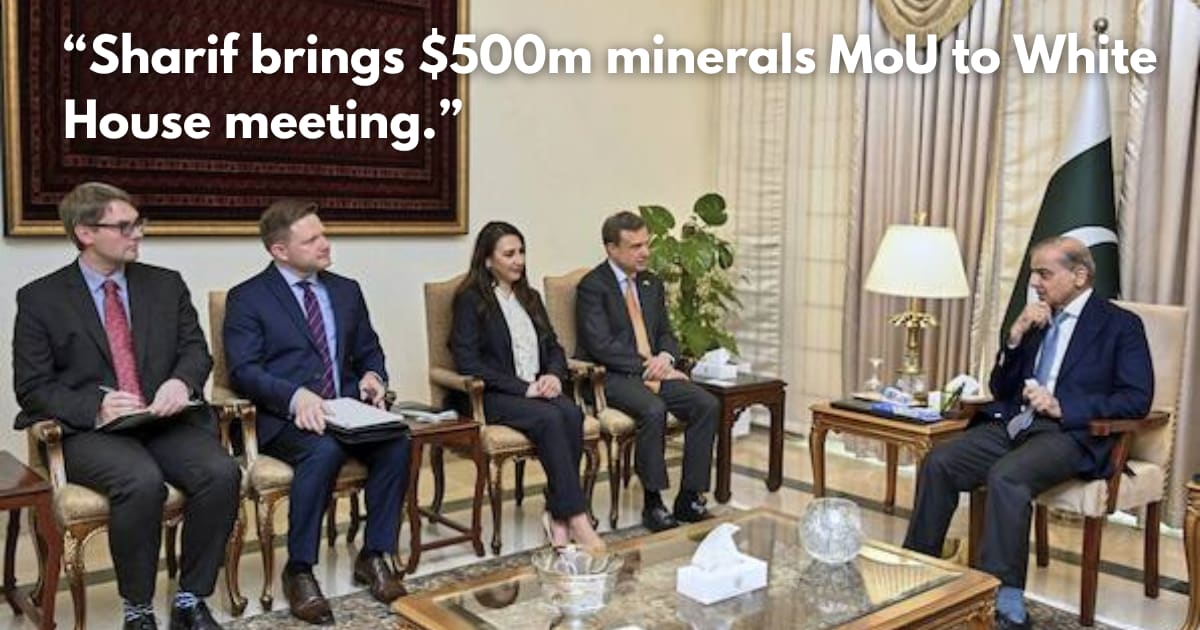


FazTimes Media: Islamabad is trying a new way to connect with Washington—not through military work, but by offering rare earths and important minerals. People view Prime Minister Shehbaz Sharif's upcoming meeting with U.S. President Donald Trump at the White House as a significant shift. Pakistan is showing itself as a possible supplier of resources that the U.S. sees as essential for its industries, defense, and move towards clean energy.
This meeting marks a big change from the past when Pakistan’s importance to the U.S. was mainly about security issues, from the Soviet war in Afghanistan to the post-9/11 “war on terror.” That story ended when there were accusations of being dishonest, especially after U.S. forces found Osama bin Laden in Abbottabad.
Now, Islamabad is hoping that minerals could be the new base for being relevant in Washington’s eyes.
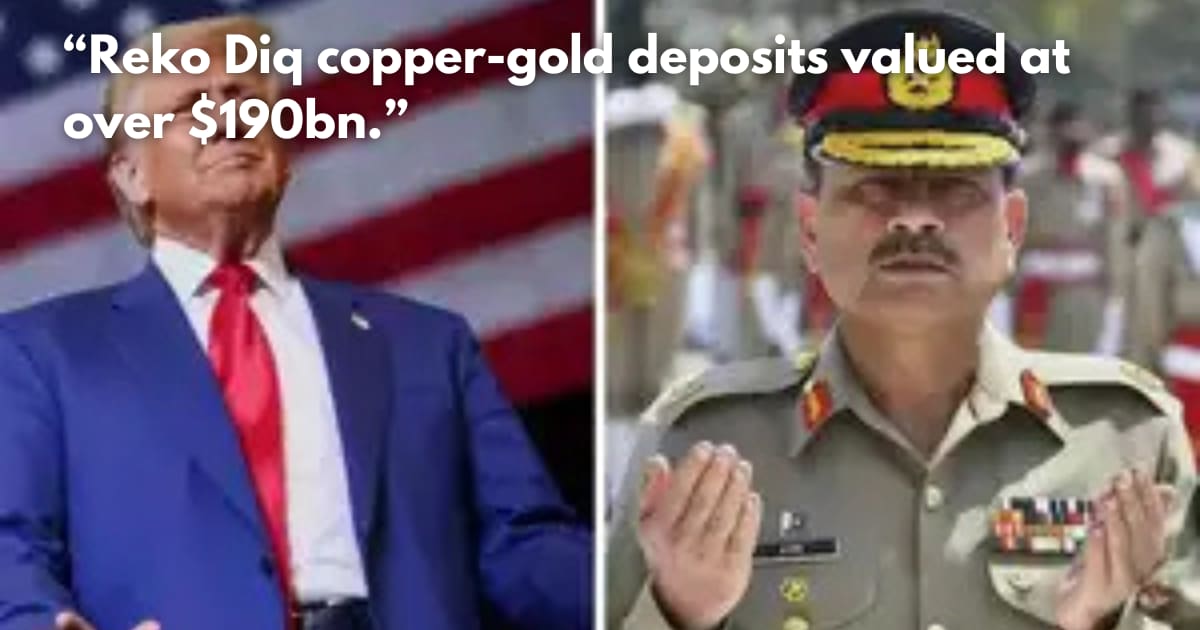
Earlier this month, Sharif held a high-profile signing event in Islamabad with Pakistan’s army chief, General Asim Munir, and top American officials. Two memoranda of understanding (MoUs) were signed, with the most important one about supplying critical minerals to the U.S.
The agreement came after Trump’s July promise to work with Pakistan to use its “vast oil reserves,”—a statement that was surprising given Pakistan’s limited crude oil resources. However, unlike previous exaggerated promises, this MoU includes a U.S. company agreeing to invest $500 million in Pakistan’s minerals sector.
According to Al Jazeera, Washington’s interest is clear: to spread out sources of minerals away from China, which controls most of the global supply chains. For Pakistan, which is struggling under nearly $130 billion in external debt, this deal offers both symbolic value and possible help.
While critical minerals and rare earths may appear technical, they play a crucial role in numerous everyday items. They are part of electric vehicles, mobile phones, semiconductors, wind turbines, and defense systems. Control over these materials often means control over strategic power.
The U.S. Geological Survey lists 54 “critical minerals,” including cobalt, copper, and nickel. Pakistan was not traditionally on this list. But geologists say that areas like Balochistan, Khyber Pakhtunkhwa, and Gilgit-Baltistan have untapped deposits that could, if properly developed, help in global supply chains.
As one retired Pakistani general told Al Jazeera, the issue is not just about “rocks in the ground” but about “who controls tomorrow’s building blocks.”
The main Pakistani partner in the agreement is the Frontier Works Organization (FWO), a military-owned company involved in engineering and mining. On the American side, the partner is United States Strategic Metals (USSM), a Missouri-based firm that specializes in recycling metals from used batteries.
The first phase of the MoU involves exporting “readily available” minerals such as copper, antimony, tungsten, and gold. In the medium term, the plan includes establishing refining facilities in Pakistan to produce value-added goods for the U.S. market.
Mining is a long-term endeavor. “From discovery to production, projects can take 5–15 years,” said a senior Pakistani geologist who is familiar with the agreement. He added, “The MoU shows intention but does not guarantee results.”
Areas known for instability host a significant portion of Pakistan's mineral potential.
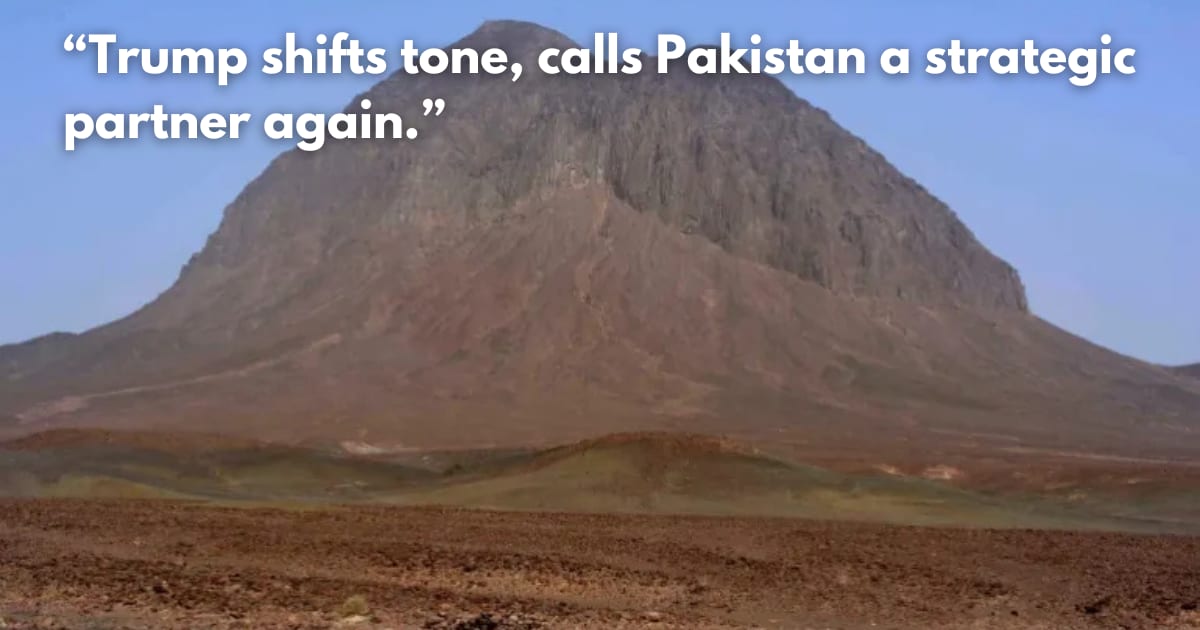
Balochistan: The Saindak copper mine, which is operated in partnership with Chinese companies, generated more than $842 million in exports last year. Canada’s Barrick Gold is currently working on Reko Diq, one of the world’s largest undeveloped copper-gold deposits. Estimated reserves encompass 15 million tonnes of copper and 26 million ounces of gold.
Khyber Pakhtunkhwa: It is believed to have antimony and other minerals, but the region is affected by militancy that has spread from Afghanistan.
Gilgit-Baltistan: Despite its challenging terrain and promising geological potential, the area has already granted several exploration licenses.
Officials suggested the existence of "game-changing" reserves just last year, but they have yet to confirm them.
Analysts warn that making bold claims without delivering results can damage Pakistan’s image as an attractive destination for investors. “If Islamabad fails to turn MoUs into tangible outcomes, the perception of inefficiency will only deepen,” said Uzair Younus, a Washington-based analyst.
The mineral sector also requires careful management. Over the past ten years, Pakistan has relied heavily on China through the $62 billion China-Pakistan Economic Corridor (CPEC). Chinese companies are dominant in mining activities in Balochistan, including Saindak and parts of Reko Diq.
The presence of Chinese companies has caused frustration among local communities, who claim that foreign firms are taking resources without giving back to the people. Insurgent groups have frequently attacked Chinese workers. Since 2021, these attacks have led to the deaths of nearly 20 Chinese citizens.
The arrival of U.S. investment may complicate this situation. However, some analysts suggest it could also bring stability. “If Americans enter the sector, rebels might find themselves facing not only Pakistan and China, but also the United States,” said Younus.
Trump’s recent approach toward Pakistan is surprising, considering that in 2018, he accused Islamabad of “lies and deceit.” However, since his return to the presidency, his attitude has become more lenient.
In March, he praised Pakistan in a speech to Congress for its cooperation in counterterrorism efforts.
Pakistan publicly supported Trump for a Nobel Peace Prize in June after he used mediation to resolve a border issue with India.
Our primary goals at FazTimes Media are to be accurate and confident and adhere to the highest journalistic standards. We check every news story we share against several trustworthy and separate sources to ensure its accuracy.
We have reviewed this report, along with articles from major news outlets worldwide, including BBC News, Reuters, Bloomberg, Al Jazeera, NDTV, The Economic Times, and The Indian Express.
We want to keep the highest standards in global journalism so that our readers can trust the information they acquire.
Link:
https://www.faztimesmedia.com/viewpost/pakistan-woos-trump-with-critical-minerals-a-new-geopolitical-play


Discussion0
Join the conversation on this story
Loading comments...