
Russia First to Officially Recognize Taliban Government in Afghanistan
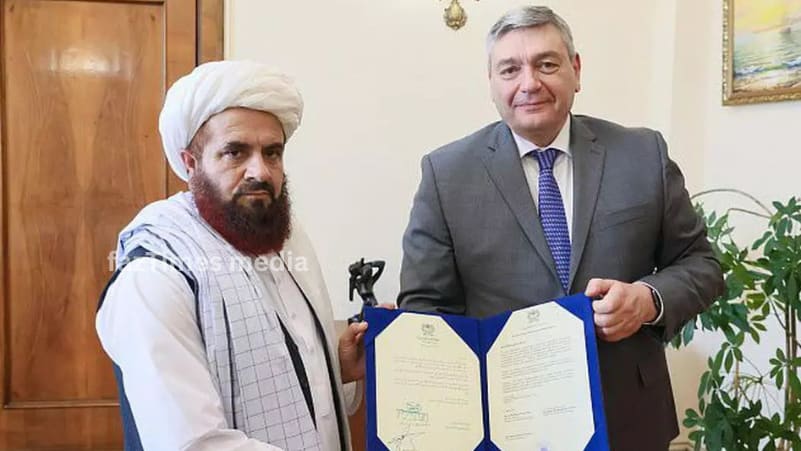
fazTimes media: Moscow— In a big and debated step, Russia has become the first country globally to officially recognize the Taliban government in Afghanistan. This move is a major change in the region's diplomacy and beyond. The announcement was made on Thursday when Moscow accepted the credentials of Afghan Ambassador Gul Hassan Hassan, who was officially appointed by the Taliban-led government in Kabul. This decision comes almost three years after the Taliban took control of Afghanistan in August 2021, following the quick departure of U.S. forces.
The U.S. and NATO troops swiftly left Afghanistan. Since then, the group has had a difficult time getting official recognition from other countries. Many governments have been cautious about supporting a regime that is known for its strict version of Islamic law and has been accused of human rights abuses, especially against women and minority groups.
A Diplomatic First: From Pariah to Partner
In a statement from the Russian Foreign Ministry, officials called the move a step toward building “productive bilateral cooperation” with Afghanistan. The ministry stated that recognizing the Taliban government would assist with economic, security, and humanitarian efforts while also increasing Moscow's influence in South and Central Asia.
“Russia’s decision is not just symbolic; it shows a new phase in regional diplomacy,” said Alexei Karpov, a political analyst at the Russian Academy of Sciences. “Moscow is acting as a practical player who works with whoever is in real power on the ground.”
The Taliban’s Foreign Minister, Amir Khan Muttaqi, welcomed the move, calling it “a positive step and a beneficial example for other countries to follow.” According to Al Jazeera, he hopes Russia’s recognition will encourage other nations to act similarly, ending what the Taliban sees as an unfair political bloc.
Recognition After Rebranding
Recognition came after the Russian government removed the Taliban from its list of banned groups earlier this year. This was a legal step needed before any official diplomatic ties could start again. The change also occurs as Russia becomes more involved in regional security issues, especially through the Shanghai Cooperation Organization and other meetings between countries.
Dmitry Zhirnov, Russia’s ambassador to Afghanistan, told state TV that the recognition was decided by President Vladimir Putin, following advice from Foreign Minister Sergey Lavrov. He said, “This shows Russia’s sincere intention to build full-fledged relations with Afghanistan. Our focus is on peace, stability, and development.”
Russia kept its embassy in Kabul even after the Taliban took over but had not officially recognized them until now. The Kremlin had earlier worried about terrorism, drug trafficking, and people fleeing Afghanistan. But now, it has taken a more cooperative approach.
Global Reactions: Surprise, Skepticism, and Silence
Global reactions to the situation have been a mix of surprise, doubt, and quietness. To date, no other country has officially recognized the Taliban government; however, some nations, including China, Iran, Qatar, and the UAE, have maintained some level of contact and have even welcomed representatives from the Taliban. The United Nations still calls the Taliban the “de facto authorities” and hasn’t directly spoken about Russia’s actions.
However, they have reminded the world that there needs to be fair leadership and protection for everyone, especially women and girls in Afghanistan.
According to BBC News, U.S. officials are worried about Russia deciding this on its own. They think it might make the Taliban feel more powerful and less likely to change their strict rules, like the ban on girls going to high school and women working in public.
Heather Barr, who leads the Women’s Rights Division at Human Rights Watch, stated, “If a country recognizes the Taliban without requiring them to change their ways, it could reinforce their unjust practices.
The Reality in Afghanistan: Gender Apartheid and Isolation
Even though the Taliban once promised to be more moderate, they have quickly brought back many of the strict rules that were in place from 1996 to 2001. Women are not allowed to work in most jobs, can't go into parks, gyms, or public baths, and must be accompanied by a male relative if they want to travel.
The biggest issue is the ban on girls attending school beyond the sixth grade. This has been criticized by international human rights groups, Islamic scholars, and even some people who support the Taliban because they believe education is important for the country's future.
Zubaida Akbar, a former Afghan civil society leader who now lives in exile, said, “There’s no way to call this anything but gender apartheid. Any country that recognizes this government must also accept the pain and harm it is causing.”
Why now? Russia’s Strategic Calculus
Russia’s actions aren’t just about Afghanistan—they also show how Moscow is changing its overall plan for dealing with other countries, especially since the West has imposed sanctions and pushed it away from Europe, and it’s focusing more on Asia and the Islamic world. Afghanistan is right in the middle of Central Asia and South Asia, which gives Russia a good position to influence things.
Being the first country to officially engage with the Taliban gives Russia a significant advantage in gaining access to natural resources, advancing important infrastructure projects, and collaborating on counterterrorism efforts. Experts say Russia sees keeping Afghanistan stable as key to protecting its southern borders, especially with countries like Tajikistan and Uzbekistan, where Russia has military bases.
Dr. Zahid Hussain, a regional security expert in Islamabad, concurred, stating that this is fundamentally realpolitik. Russia doesn’t have to like the Taliban’s ideas—it just needs to make sure they don’t spread.
What Comes Next?
Now that the recognition is official, the focus will shift to how the decision affects the economic and humanitarian relationship between the two countries. Afghanistan is currently going through a serious humanitarian crisis, with more than 28 million people—two-thirds of its population—depending on aid, according to the United Nations Office for the Coordination of Humanitarian Affairs (OCHA).
Russia has already sent some humanitarian aid and has shown interest in investing in areas like mining, farming, and building infrastructure, especially since Western donors and organizations are blocked by international sanctions.
However, this recognition brings up several questions:
Will other countries start following Russia’s example?
Can working together economically lead to changes within the Taliban?
Will Moscow exert pressure on the Taliban to safeguard women's rights?
And how will this impact Moscow’s relationships with the West and the Islamic world?
Conclusion: A Risky Move with Big Effects
Russia's decision to recognize the Taliban government is a bold but dangerous move. It gives the Taliban a major win on the international stage, but it also brings them under close watch from people who care about human rights and from other countries that worry about supporting a government with a troubling history.
Right now, Russia is acting differently from many others, choosing to stay involved instead of pulling away. Whether this choice leads to more peace and cooperation in the region or makes things worse is still uncertain.
One thing is clear: Afghanistan has once again become a key part of the big game of international politics, and Russia has made its move.
At FazTimes, we prioritize accuracy, confidence, and strong journalistic standards. We ensure every news story we share is real by verifying it with multiple trustworthy and independent sources.
We’ve compared this report with coverage from major news outlets around the world, including BBC News, Reuters, Bloomberg, South China Morning Post, Al Jazeera, NDTV, The Economic Times, and The Indian Express.
We are dedicated to maintaining the highest standards in global journalism so our readers can rely on the information they get.


Discussion0
Join the conversation on this story
Loading comments...