
Saudi Crown Prince & Iranian FM Meet to Boost Ties Post-Israel Conflict
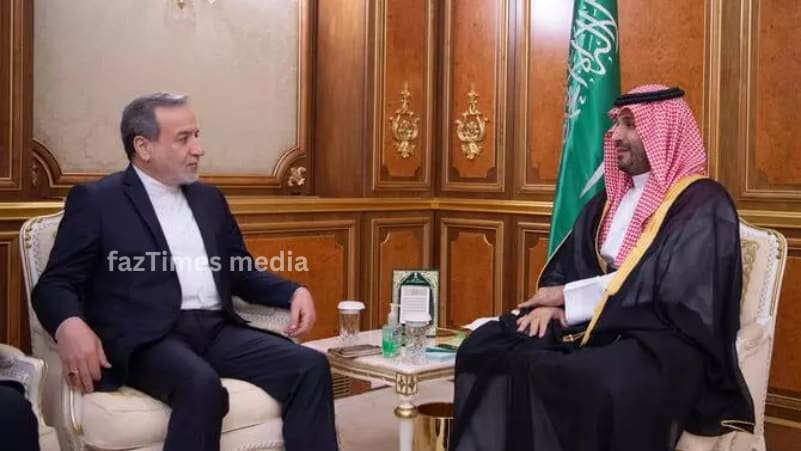
fazTimes media reported that Saudi Crown Prince Mohammed bin Salman met with Iranian Foreign Minister Javad Zarif and his team on Tuesday at Al-Salam Palace in Jeddah, according to the Saudi Press Agency. This high-level talk happened during a tense period when there was a fragile ceasefire between Iran and Israel. It shows that both countries, which have been rivals for a long time, are showing some hope for better relations.
The conversation included topics like their relationship with each other, current issues in the region, and plans for security and economic work together in the Gulf and other areas.
Neither side shared specific results of the meeting, but experts say the fact that they are talking is a big change in how they approach each other diplomatically. For many years, Saudi Arabia and Iran have been on opposite sides in most major regional conflicts, such as in Yemen, Syria, Lebanon, and Iraq. Their differences include religious beliefs, political rivalries, and opposing ideas. However, after a 2023 agreement that helped normalize relations, things have started to change, and diplomacy is moving forward.
Al Jazeera reports that this recent meeting is part of both Saudi Arabia and Iran's efforts to build on the 2023 deal and create a more stable and predictable relationship, especially as big world powers are shifting their focus away from the Middle East.
A Rewarming of Cold Relationships
Crown Prince Mohammed bin Salman, who is often called MBS, has been pushing for Vision 2030, a plan to make Saudi Arabia's economy more diverse and less dependent on oil. Better relations with neighboring countries, like Iran, are considered important for long-term peace and economic growth in the region.
“Welcome the chance to have serious talks with Iran,” Prince Mohammed said during the meeting, as reported by SPA. “A peaceful region helps everyone and lets us focus on growth and development.”
Prioritize regional stability and a ceasefire.
The meeting occurs just a few weeks after Iran and Israel reached a weak ceasefire following a period of intense fighting. While the specifics of the peace agreement remain unclear, it's widely believed that Qatar and the United States played a significant role in bringing the two sides together. MBS told Araghchi that he hopes the ceasefire could be a “big change” for a larger regional plan that focuses on peace instead of fighting.
Even though Saudi Arabia has usually stayed out of the Iran-Israel situation, its position as a leader in the Arab world makes it an important player in finding a solution. “We support all efforts to reduce tensions,” Prince Mohammed said, stressing that talking things out—not fighting—should be the first step in dealing with conflicts.
Iran’s Foreign Minister, Abbas Araghchi, shared similar thoughts, saying that Tehran “sees a chance for better understanding” and is “determined to improve relations with all its neighbors.”
Symbolic Setting, Important Conversations
The place where the meeting happened—Al-Salam Palace in Jeddah—had a special meaning. It used to be mainly for ceremonies, but recently, it has hosted important talks between countries, showing that Saudi Arabia is becoming more active in its international relations. On the Saudi side, besides Prince Mohammed, there were other top officials: Prince Khalid bin Salman, the Defense Minister; Prince Faisal bin Farhan, the Foreign Minister; and Musaed bin Mohammed Al-Aiban, the National Security Advisor.
These are all important people who help shape the country’s foreign plans. Earlier that day, Araghchi also met with Prince Faisal bin Farhan in Makkah, a city with deep spiritual significance.
According to the Saudi Press Agency, the two countries discussed improving their relationship, enhancing economic ties, and collaborating for peace and stability in the region.
Challenges Ahead
Even though relations are getting warmer, experts say big problems still exist. Iran's support for groups like Hezbollah in Lebanon and the Houthis in Yemen worries Saudi Arabia. At the same time, Iran remains uncertain about Saudi Arabia's friendly relationships with Western countries and Israel.
BBC News says the process of full friendship will probably take a long time and may face many difficulties.
Dr. Lina Hassan, a Middle East expert in Dubai, said, “This isn’t full friendship yet—it’s still diplomacy moving forward. But the attitude has changed. The words have gone from threats to talks.”
Wider Consequences
The meeting isn't just about improving ties between Saudi Arabia and Iran—it's about changing the power balance in a region that has been full of conflict for a long time. If Riyadh and Tehran work together more, it might help reduce problems in places like Syria, Iraq, and the Gulf. It could also lead to security deals made by regional countries, not just by foreign powers.
This development also brings up key questions about the future of relations between Arab countries and Israel, especially as Saudi Arabia tries to manage its position between the US, Israel, and Iran. As Saudi Arabia becomes a bigger player in regional diplomacy and Iran tries to end its isolation, the coming months will be crucial.
We’ll have to wait and see if this meeting marks a real change or just a short break. For now, there is significant optimism in the Middle East.
At FazTimes, we prioritize accuracy, confidence, and strong journalistic standards. We ensure every news story we share is real by verifying it with multiple trustworthy and independent sources.
We’ve compared this report with coverage from major news outlets around the world, including BBC News, Reuters, Bloomberg, South China Morning Post, Al Jazeera, NDTV, The Economic Times, and The Indian Express.
We are dedicated to maintaining the highest standards in global journalism so our readers can rely on the information they get.


Discussion0
Join the conversation on this story
Loading comments...