
General
Slovakia Adopts Anti-LGBTQ+ Constitutional Change & 'Two Genders'
By Mohamed Areif Mubarack
Published: Sep 26, 2025, 04:44 PM

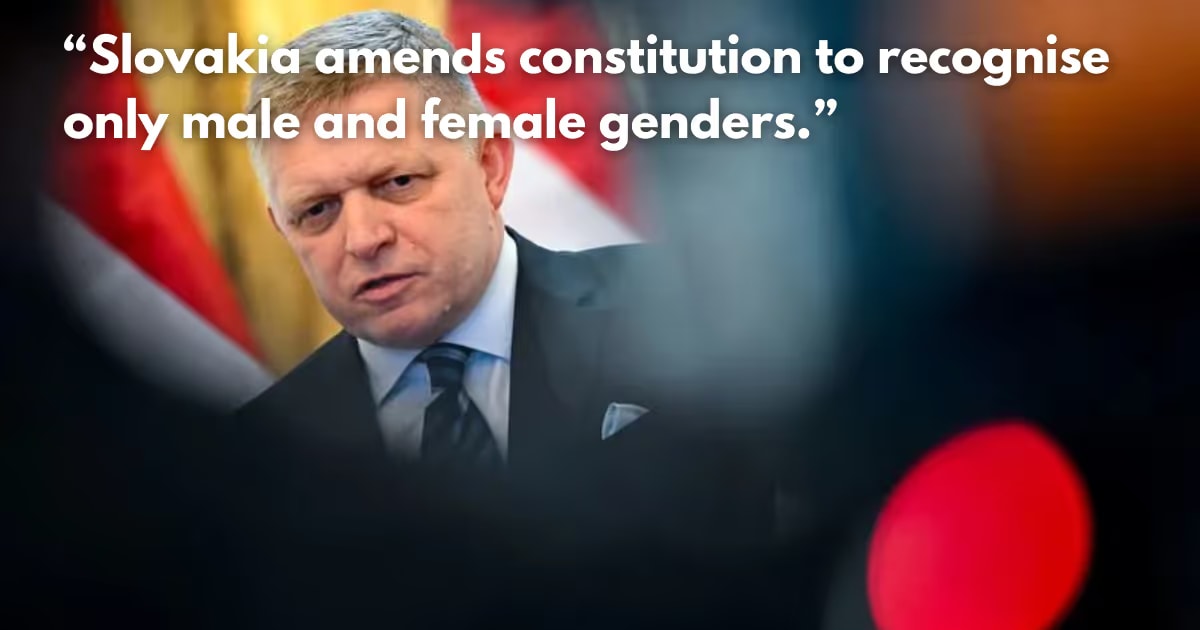


FazTimes Media, Bratislava/New Delhi: Slovakia has become a big topic around the world after its parliament passed a change to the country’s basic law. This new law clearly says that a person can only be male or female, as decided at birth, and it includes the idea of “national identity” in the main law of the country.
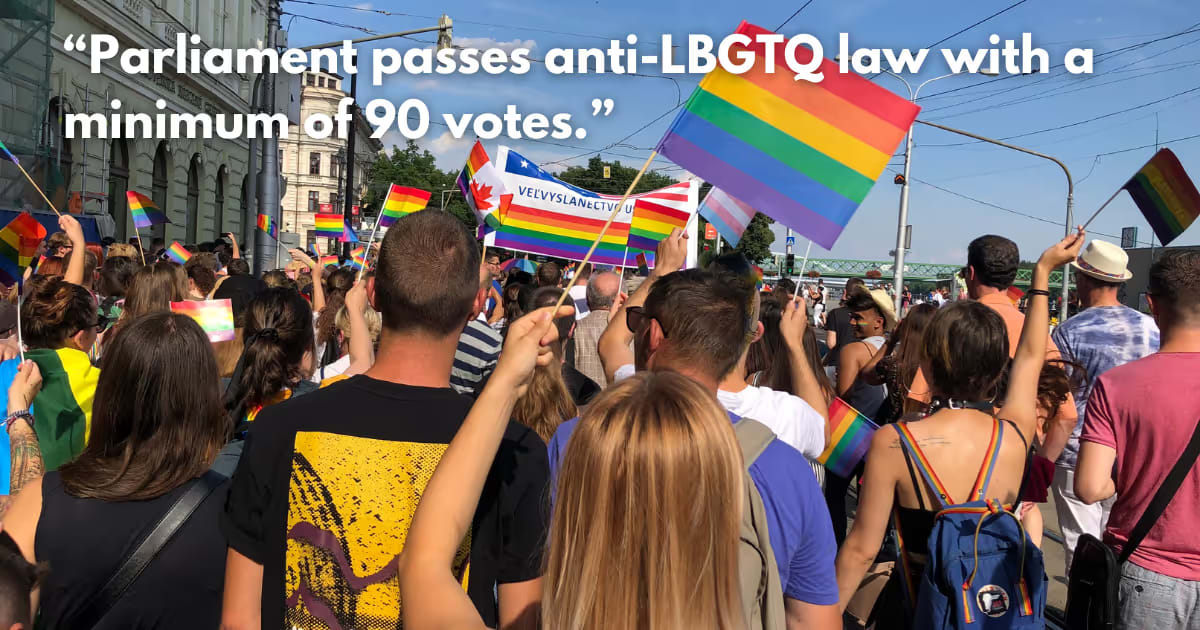
The law was approved with 90 votes out of 150 in the parliament. It has caused a lot of discussion in Europe. Prime Minister Robert Fico says the change is meant to protect Slovakia from too much change, but many people, both in Slovakia and elsewhere, are worried that this law could make the country less connected with the European Union and hurt basic human rights.
The new law, which needed a big majority to pass, says:
Only two genders exist: male and female, as determined at birth.
School lessons should follow the cultural and ethical ideas set out in the constitution.
Only married couples can adopt children, with very few exceptions.
The country’s own views on culture and ethics are more important than EU rules.
This change comes after another law from 2014 that said marriage is only between a man and a woman.
Al Jazeera reports that those who support the new law believe it helps protect Slovakia’s cultural and spiritual traditions. However, others argue that this law goes against the human rights promises that Slovakia has made on the international stage.
Prime Minister Fico, a nationalist leader who came back to power after being out of government for a long time, sees the amendment as a way to preserve Slovakia’s traditional values.
He said in parliament, “We are creating a constitutional wall against progressive ideas.” “There are only two genders—male and female. That’s simple logic. We need to protect the values of our ancestors.”
His statements are similar to what many conservative leaders around the world say, including former U.S. President Donald Trump, who, in his 2017 speech, talked about going back to what he called “traditional values.”
Fico also connected the issue to national control, saying Slovakia shouldn’t have to follow “liberal Western policies” from Brussels.
The amendment has faced a lot of backlash at home. Michal Šimečka, leader of the opposition party Progressive Slovakia, said the vote was “a step backward for our people and our place in Europe.”
“This amendment will hurt regular people, hurt Slovakia’s image, and cause problems with EU institutions,” Šimečka said after the vote.
Human rights groups are worried too. Amnesty International Slovakia called the change “devastating news.” In a statement, its director, Rado Sloboda, said:
“Instead of protecting LGBTI+ people, women, and children, parliament has passed a law that puts our constitution in direct conflict with international law.”
Slovakia, a part of the EU, adds complexity. Normally, European laws take priority over national laws. But by saying that sovereignty in cultural and ethical issues is more important than EU law, Slovakia has challenged this idea.
The Council of Europe’s Venice Commission, which offers expert advice, warned before the vote. It said, “A strict definition of sex as only male or female shouldn’t be used to justify discrimination.” According to BBC News, the Commission also warned that a narrow view of “national identity” could lead to violations of people’s rights.
This disagreement could affect the EU money given to Slovakia and cause problems with other European countries.
Slovakia is not the only country in the region taking steps against LGBTQ+ rights. Nearby Hungary, led by Prime Minister Viktor Orbán, has passed laws that limit LGBTQ+ content in schools and media. Poland has also seen local governments declare areas as “LGBT-free.”
Political experts suggest that Slovakia’s Prime Minister, Fico, might be following a similar path. He is trying to win over conservative voters by portraying LGBTQ+ rights as a foreign issue pushed by Western countries.
“Fico is presenting this campaign as a fight for national independence against Brussels,” explained political scientist Katarina Kusa. “But in truth, it could widen the gap in Slovak society and weaken support for minority rights.”
For the 5.4 million people living in Slovakia, the new law could have serious effects. Same-sex couples are still not allowed to marry and now face more challenges when trying to adopt children.
The new definition of “sex at birth” could make it harder for them to change their legal gender or get medical treatment to transition.
Human rights groups say these changes will lead to more stigma and discrimination. Rainbow Pride Bratislava, a local advocacy group, said in a statement, “This law sends a message that LGBTQ+ people are not accepted in their country. It permits you to hate.”
Although human rights organizations have condemned the move, Slovakia’s allies in Russia have welcomed it. Fico is one of the few EU leaders who openly support Russia, and since he came back to power in 2023, he has gotten closer to Moscow.
Experts believe that aligning with nationalist views on identity is part of Fico’s plan to resist what he calls “Western influence.”
At the same time, officials in Brussels are looking into the constitutional change. While the EU can’t just change a country’s constitution, it can use tools like cutting funding or starting legal procedures to pressure countries that break democratic or human rights rules.
Fico’s government has faced several protests since last year, with thousands of Slovaks joining demonstrations against his policies.
Besides LGBTQ+ issues, his critics say he is also trying to control the media. His team has replaced leaders of major cultural groups and labeled independent reporters as “hostile.”
For many Slovaks, this constitutional change isn’t just about gender and sexual identity—it represents a larger battle between liberal democracy and nationalist politics.
In cities like Bratislava, younger voters held small protests with rainbow flags and shouted, "We are Slovak too." However, in rural areas, where old traditions are still strong, many people supported the amendment because they see it as protecting family values.
EU bodies, the Council of Europe, and human rights organizations will probably watch Slovakia closely. At home, opposition parties are saying they will not let the issue go away. They caution that this could potentially impact Slovakia's standing in Europe and its ability to receive crucial EU funding.
Amnesty International has pointed out that this law could influence other countries that want to restrict rights in the name of national identity.
Our primary goals at FazTimes Media are to be accurate and confident and adhere to the highest journalistic standards. We check every news story we share against several trustworthy and separate sources to ensure its accuracy.
We have reviewed this report, along with articles from major news outlets worldwide, including BBC News, Reuters, Bloomberg, Al Jazeera, NDTV, The Economic Times, and The Indian Express.
We want to keep the highest standards in global journalism so that our readers can trust the information they acquire.
Link:
https://www.faztimesmedia.com/viewpost/slovakia-adopts-anti-lgbtq-constitutional-change-two-genders


Discussion0
Join the conversation on this story
Loading comments...