
SpaceX Starship Explodes in Texas Test: What Happened?
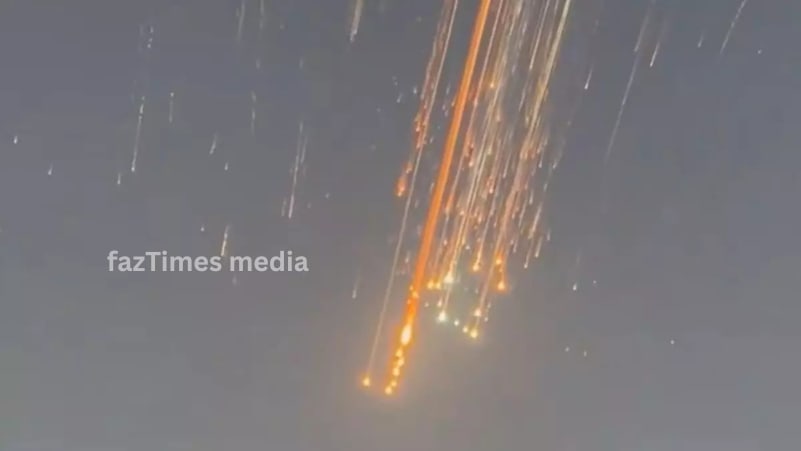
fazTimes media: Austin, Texas. A SpaceX Starship rocket detonated amid ground testing at the company’s Starbase office in southern Texas on Wednesday night. The blast lit up the sky and raised new concerns around the security and stability of the world’s most capable rocket framework. A company articulation uncovered that the rocket “experienced a major anomaly” at around 11:00 p.m. local time while it was on the test stand, planning for what would have been its tenth flight test. Luckily, there were no wounds, and SpaceX affirmed that all staff were secure.
This red-hot occurrence includes an arrangement of misfortunes for the Starship program, which SpaceX CEO Elon Musk is creating for future missions to the Moon, Defaces, and the past.
Blazes Over the Texas Skyline
Inhabitants close to the Boca Chica shoreline in southern Texas, where SpaceX’s Starbase dispatch location is, reported seeing a gigantic fireball and hearing a boisterous boom reverberate over the Inlet coastline.
Recordings rapidly spread on social media, showing the night sky lit up in orange and ruddy hues. The blast was so huge that individuals in Brownsville, about 20 miles away, may have seen it. Numerous local people at first thought it was an impromptu dispatch.
“There was a shining streak, and after that a shockwave,” said Julia Ramos, a 34-year-old inhabitant of Harbour Isabel. “It looked like a dawn within the center of the night. The windows shook.”
SpaceX recognized the blast on its social media account X, already known as Twitter. The company clarified that the occurrence happened amid a scheduled motor fire-up test ahead of its next planned flight. SpaceX assured the public that a security edge was kept up around the location, so there were no dangers to adjacent communities.
A Design of Unstable Difficulties
This occurrence is the fourth major incident for Starship models this year.
January 16: A Starship rocket broke apart midair, scattering burning flotsam and jetsam. SpaceX called it a “rapid unscheduled disassembly.”
Walk 6: SpaceX lost contact with another Starship amid flight. The vehicle crumbled over
Florida, with flotsam and jetsam falling into the Atlantic.
Walk 27: A Starship propelled but tumbled out of control and fizzled to convey its derided disciple payload due to a flawed bringing forth, smashing into the Indian Ocean in what SpaceX named a “hard landing.”
These disappointments are a portion of what SpaceX portrays as an iterative testing approach, which points to learning quickly by testing early and frequently. In any case, as open examination develops and timelines slip, faultfinders are addressing how numerous “learning opportunities” are worth some time recently, and a total overhaul is required.
Elon Musk’s Vision and the Weight to Provide
Elon Musk has repeatedly situated Starship as the vehicle that will carry humankind past Earth’s orbit on an expansive scale. At 403 feet (123 meters), it is planned to be completely reusable and the tallest rocket in history. Starship is anticipated to carry up to 150 metric tons of cargo to space, counting gear, satellites, and inevitably individuals.
NASA has, moreover, chosen it to return space explorers to the Moon under the Artemis program, set for late 2026. This includes weight, since each test disappointment endangers the potential dispatch windows for Artemis.
In spite of the mishaps, Musk remains cheerful. Taking after the Walk disappointments, he called the dispatches “valuable progress” and guaranteed to extend the recurrence of tests, saying that “a Starship will fly every three to four weeks” from now on.
Nearby Concerns Mount
Whereas SpaceX has picked up commendation for its strong vision and readiness to face dangers, nearby inhabitants close to the Starbase location are developing progressive concern around the frequency and severity of disasters.
“This is now not fair rocket science; it’s an open security issue,” said Tomás Alvarez, an instructor in Brownsville. “Every time there’s an explosion, we stress. One day, that fireball might come down on our homes.”
Naturalists have also raised concerns about the effect on adjacent natural life, which incorporates territories for imperiled species like the Kemp's ridley sea turtle and the piping plover, both of which settle within the range.
Whereas SpaceX is working with the Federal Aviation Administration (FAA) and neighborhood authorities, backing bunches contend that administrative oversight has been too lenient, centering more on financial benefits than on environmental and community security.
What Happens Another?
After Wednesday night’s blast, SpaceX must yield a point-by-point occurrence report to the FAA. Depending on the discoveries, it might delay future tests or require extra security measures. The company has expressed that it will analyze the information, alter equipment and programs, and continue testing as long as possible.
Specialists note that dangerous disappointments are not exceptional in exploratory rocketry, but the recurrence and scale of the issues with Starship may imply more profound design or framework integration issues.
“These tests are not fair hiccups,” said Dr. Karen Lin, an aviation builder at MIT. “When your rocket detonates while stationary or loses control in flight more than once, you have got to consider whether your foundational frameworks are solid.” Still, she included that advancement of this size seldom comes without high-stakes trial and error. “SpaceX is building a long run of space transportation in full open view. That’s an unsafe and yearning undertaking.”
Open Response: Energy Meets Weakness
On social media, responses extended from wonder at the display to dissatisfaction over yet another fizzled test. Hashtags like #StarshipBoom and #SpaceXExplosion rapidly trended, with clients sharing memes, recordings, and talking about SpaceX's future.
A few lauded the company’s straightforwardness and intensity, whereas others addressed the security of working with such effective innovation close to populated zones. For the present, SpaceX says it is collaborating closely with neighborhood specialists and will make overhauls as examinations proceed.
Conclusion:
The blast of a Starship rocket within the Texas night sky speaks to another sensational moment in SpaceX’s travel to rethink space exploration. It highlights the noteworthy specialized challenges and genuine dangers included in creating a shuttle capable of carrying cargo and people remotely past our planet.
For Elon Musk and his group, the stakes may not be higher. With contracts from NASA, consideration from the worldwide scientific community, and open interest at an all-time high, the following steps for Starship will be closely monitored, not just for logical advancement but for security, responsibility, and the potential for a modern time in human spaceflight.
Follow fazTimes media for progress in the scope of space investigation, aviation advancement, and vital science news.



Discussion0
Join the conversation on this story
Loading comments...