
Strait of Hormuz at Risk? Israel-Iran Conflict Threatens World's Key Oil Chokepoint
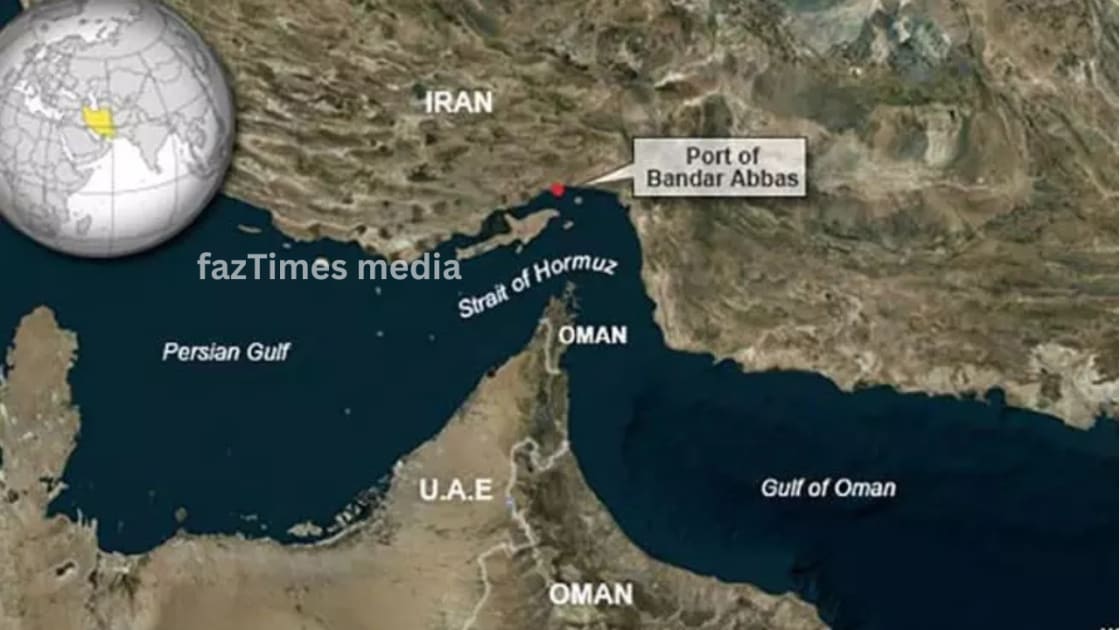
Faztimes Media: Dubai/Tehran The geopolitical temperature of the Middle East has reached a boiling point. As the Israel-Iran conflict comes into a more dangerous phase, global attention is now being focused on one of the most strategically sensitive maritime passages on the planet: the Hormuz Strait.
Located between Iran and Oman, this narrow waterway connects the Persian Gulf to the Arabian Sea, and through it flows almost 20% of the world's oil. For decades, the Sound has been a flashpoint more threatened than affected, but now, with rising hostility, Iran has once again seized the opportunity to block the route in response to Israel's intensified military campaign, including recent attacks on Iran's oil and energy infrastructure. The question now about the heads of decision-makers, economists, and oil dealers all over the world is simple but sober: Will Iran act on its threat, and what happens if it does?
Why the Hormuz Strait means something
The Strait of Hormuz is only 33 kilometers wide at the narrowest point, but it carries almost 17 million barrels of oil every day, according to the U.S. Energy Information Administration. The waterway is crucial not only for Iran but also for Gulf nations such as Saudi Arabia, Iraq, Kuwait, Qatar, and the United Arab Emirates, all of which rely on it to export oil and gas.
Oil that passes through the Sound fuels economies from Asia to Europe, with China, India, Japan, and South Korea among the largest importers. Any disturbance, even temporary, can send oil prices up such steps, trigger load fracture fields, ripple through global supply chains, and push up inflation in economies that are already fighting with energy coloniality. In the words of Dr. Sami al-Badri, a Gulf-based energy analyst, "The Hormuz Strait is the jugular vein in the global energy economy." If it is pushed, the whole world feels the shock."
Military restrictions: Can Iran close the Strait?
Technically, Iran has the military ability to temporarily disrupt shipping in the Hormuz Strait using speedboats, sea mines, anti-ship missiles, and drone swarms. It has performed such exercises lately and shows that it can harass or delay oil tankers and even sink a vessel if it chooses to do so.
However, a complete, long-lasting blockade is unlikely to be sustainable. According to a recent report from the Center for Strategic and International Studies (CSIS), while Iran can cause temporary disorders, the US Navy's Fifth Fleet and other allied forces stationed in the Gulf can respond quickly to keep shipping paths open. "Iran knows that if it is pushing too far, a military response would be both immediate and international," said Commander Rohan d'Souza, a retired Indian naval strategist. "That's why these threats are often put out, but they still mean something, because the markets react to the fear."
Alternative oil routes: Can golf cope?
In anticipation of such risks, Saudi Arabia and the UAE have invested in alternative export routes that bypass the Hormuz Strait. Saudi Aramco operates the east-west pipeline, which can carry up to 7 million barrels per day from the eastern oil fields to the harbor of the Red Sea in Yanbu.
The UAE has a pipeline from the Fujairah oil fields, which are outside ChokePoint. This line can handle around 1.5 million barrels per day. However, these routes are not immune. In 2019, ships that were closed near Fujairah were targeted in sabotage attacks that were largely attributed to Iranian-affiliated groups and were vulnerable to even alternative channels.
And most importantly, even with these pipelines, not all Gulf exports can be redirected. The majority of the oil still needs the Hormuz Strait to reach the global market.
Diplomatic fallout: A wider regional collapse?
The current tensions have already triggered diplomatic paralysis throughout the region. The US-Iran nuclear conversations planned in Oman were abruptly canceled, and the Saudi-French summit at Gaza Officer to address Palestinian statehood was also exposed. Experts believe Israel's extended strikes, especially in Iran's energy sector, can be a conscious attempt to derail diplomacy and force the conflict into a "non-return zone."
"This strategy plays well with hardliners in Israel," said Dr. Leena Farooq, a political analyst in the Middle East. "By beating oil goals, Israel invites Iran to escalate, and it justifies a more aggressive Israeli attitude while placing moderates on both sides."
Global economic consequences
So far, oil prices have risen by 12% and reached levels not seen since the early 2020s. Shipping insurance premiums for tankers passing through the Gulf have more than doubled in the past week. India, which imports more than 80% of the oil, already feels the pinch. Domestic fuel prices have risen, and the rupee is facing extra pressure due to the increasing costs of energy imports.
"The threat to Hormuz is not just a problem in the Middle East; it's a global one," said Dr. R.K. Mehotra, an economist with India Energy Outlook. "If this continues, developing countries will suffer the most."
Final thoughts: Keeping the world at sea
The Hormuz Strait has long been the pressure valve to the Gulf policy. Now, with Israel and Iran escalating attacks and nuclear rhetoric in the background, the possibility that it becomes a choke point both literally and metaphorically has returned. Currently, Iran rattles the cage but does not yet lock the door. Whether it chooses to escalate further may depend not only on Israel's next move but also on the diplomatic dance among the world powers in the coming days.
With the words of a Gulf diplomat, the "Hormuz Strait is not just a route for oil; there is a route for peace or war."
For more updates on global energy, regional conflicts, and security development, follow the fazTimes Trusted News With Perspective.


Discussion0
Join the conversation on this story
Loading comments...