
General
Syrian President Al-Sharaa Meets US General Who Arrested Him
By Saquib Ansari
Published: Sep 23, 2025, 05:39 PM
Last updated: Sep 23, 2025, 05:46 PM
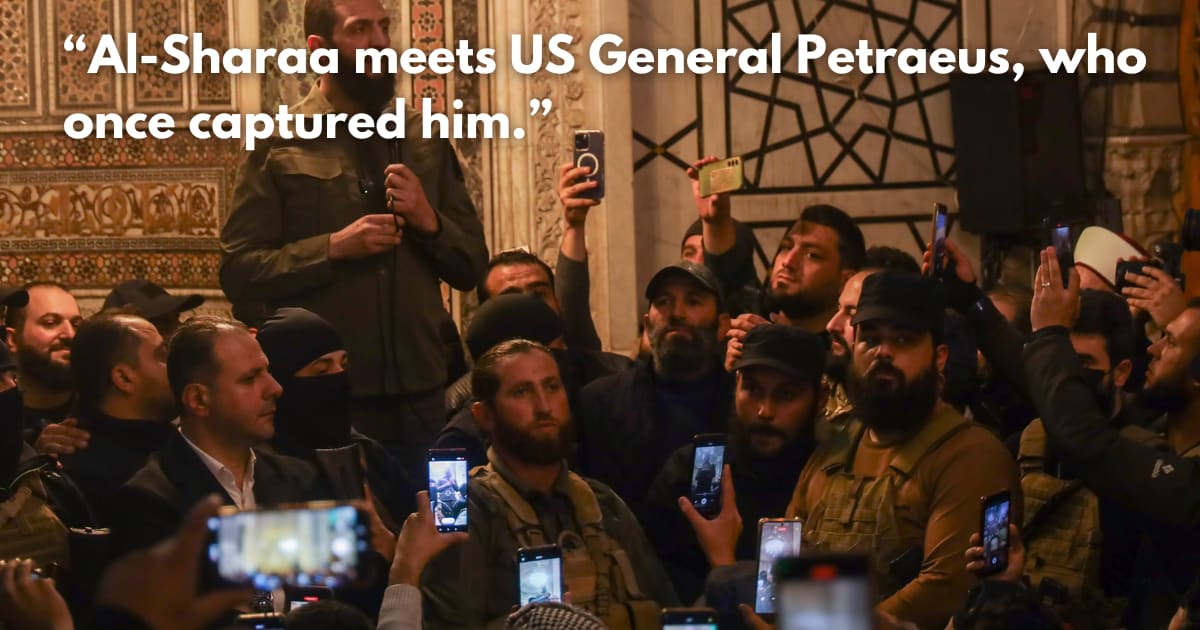
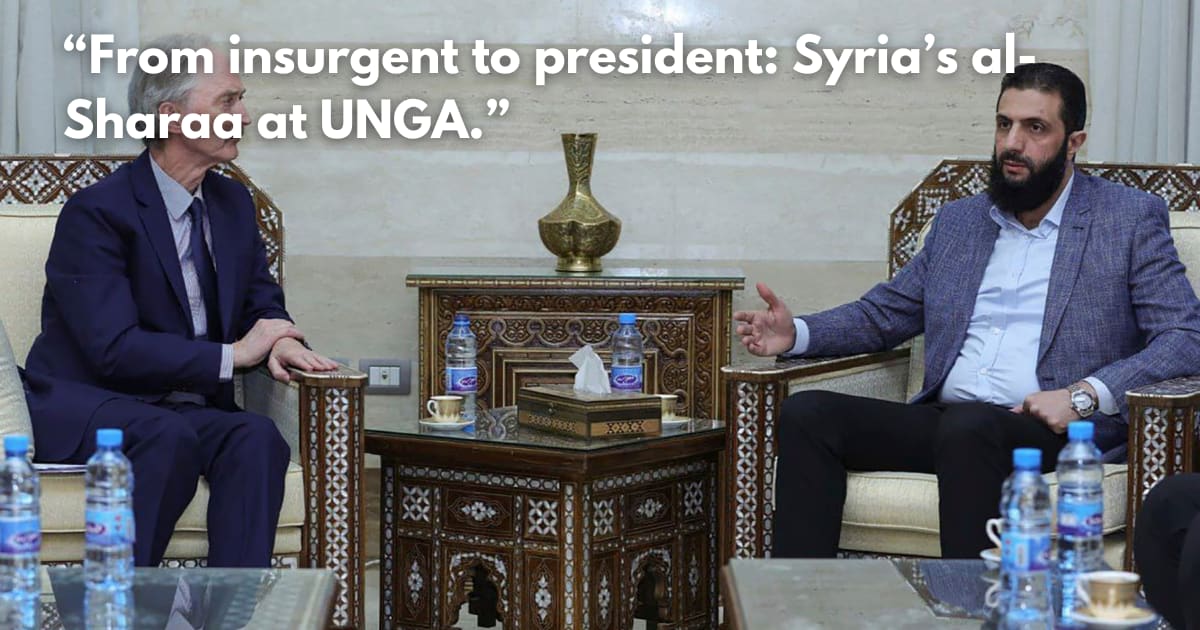
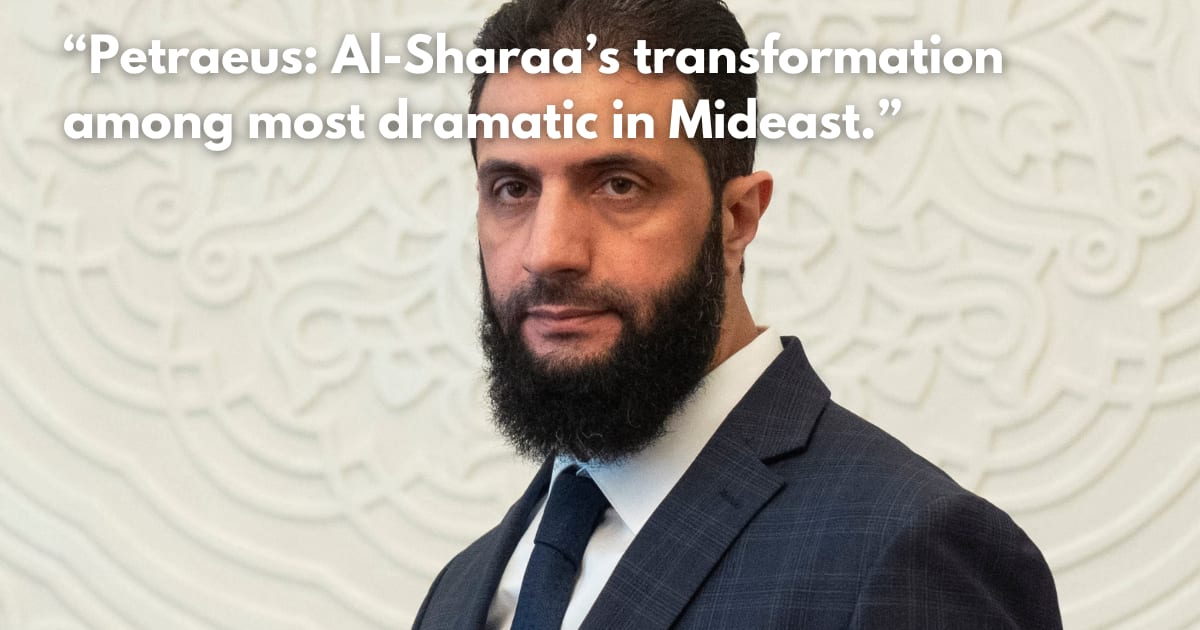


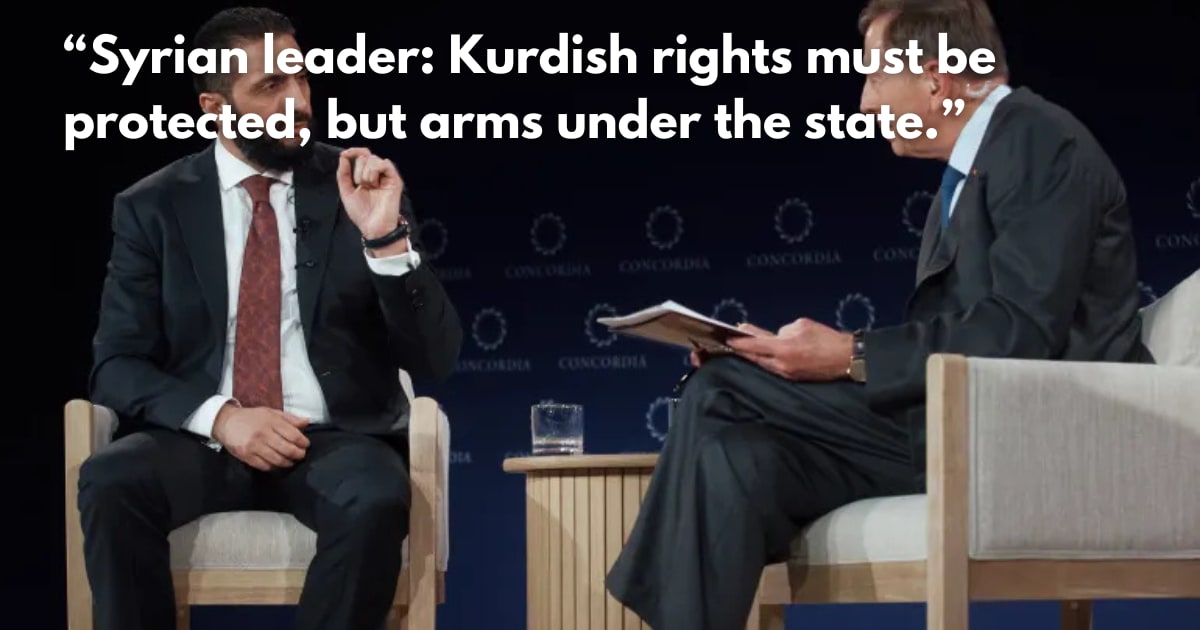
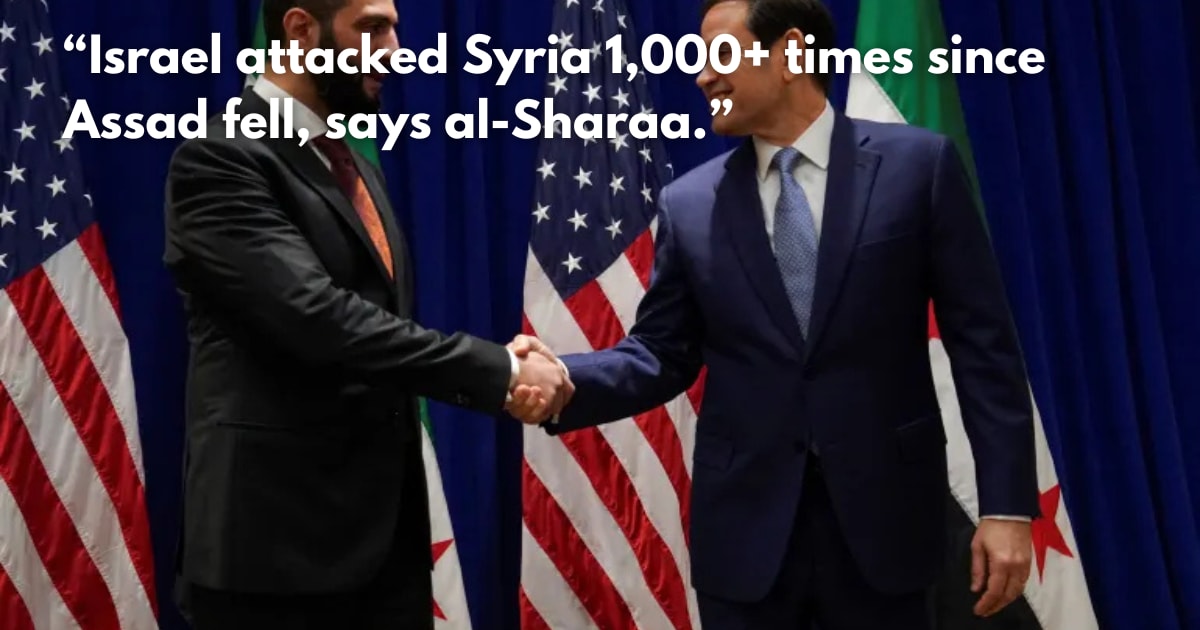
FazTimes Media, Syria: In one of the most unusual moments in recent Middle Eastern diplomacy, Syrian President Ahmed al-Sharaa had a public interview in New York City with retired US General David Petraeus — the very same man who had captured and imprisoned him almost twenty years earlier.
This unexpected meeting happened at the 2025 Concordia Annual Summit, a major global affairs event that took place with the United Nations General Assembly. For many watching, it was almost unbelievable to see the Syrian leader and the former American general sitting together—showing how quickly and unexpectedly history can change.
Al-Sharaa’s story is different from that of most current world leaders. In the mid-2000s, he was a young fighter working against the US-led invasion of Iraq. He was captured in 2006 by American forces led by Petraeus and spent five years in US custody before being freed in 2011.
Instead of disappearing from public life, al-Sharaa became one of the most important figures in Syria’s conflict. In 2012, he started the al-Nusra Front, which was initially linked to al-Qaeda but later changed its direction to focus more on national issues. By 2017, his group had become Hayat Tahrir al-Sham (HTS), the strongest armed group in Syria opposing the government.
For years, the US called him a terrorist and offered a $10 million reward for his capture. But in December of last year, after the fall of Bashar al-Assad’s government, the US quietly removed his designation as a terrorist. This allowed al-Sharaa to become president in January.
According to Al Jazeera, the US decision showed an understanding that after Assad’s government fell, Syria needed new political leaders and ideas, even if it meant talking to people from the past.
Al-Sharaa's arrival in New York this week was a big deal. It was the first time in almost 60 years that a Syrian president has been at the UN General Assembly. His visit demonstrated the renewed perception of Syria as a member of the international community.
During his time there, al-Sharaa met with top officials, including US Secretary of State Marco Rubio, and spoke at several side events. But the most talked-about moment was his conversation with Petraeus.
Al-Sharaa smiled as he said, “At one time, we were fighting each other in combat. Today, we are here in dialogue.” He explained that we can't judge the past by today's standards and can't judge today by the past.
Petraeus admitted to the audience that it felt strange to be on the same stage as his former enemy, but he praised al-Sharaa's journey from an insurgent to a leader.
“He has one of the most amazing political paths in modern Middle Eastern history,” Petraeus said. He even called himself a “fan” of al-Sharaa, showing worry about his health and asking if he was getting enough rest.
This kind of praise from a former CIA director and a former enemy showed just how much the world's view of al-Sharaa has changed.
When asked about his past as a commander linked to al-Qaeda, al-Sharaa said, “Maybe there were mistakes. But today, the only thing that matters is protecting the Syrian people and bringing back stability.”
He said that bringing people together and rebuilding the economy are his government’s main goals. Parliamentary elections are planned for October, and he hopes they will help make Syria's new government more accepted.
Regarding the recent violence between groups, al-Sharaa took responsibility. “All sides made mistakes, including parts of the government,” he admitted. He mentioned a new group that will look into crimes and bring those responsible to justice.
He also asked the US to remove the Caesar Syria Civil Protection Act of 2019, which has hurt Syria's economy with sanctions. “Our people deserve a chance to rebuild without heavy restrictions,” he said.
Al-Sharaa discussed the different groups living in Syria, including ethnic and religious minorities. He stressed that he is committed to making sure that Kurds, Christians, Druze, and others have their rights protected within Syria.
But he was clear about the Kurdish groups in the north. He said the government must be the only one allowed to have weapons. Even though he promised to protect their rights through the constitution, he stressed that no armed group can act on its own, separate from the Syrian army.
People watching the situation noticed that his message was trying to make minorities feel safe while also showing that the government in Damascus is still the main authority in a country that has been torn up by war.
The Syrian president also spoke about the situation with Israel. Israel has reportedly carried out over 1,000 airstrikes in Syria since Assad's removal from power, primarily targeting groups associated with Iran.
Al-Sharaa admitted there is a lot of tension, but he said Damascus is focusing on rebuilding and wants to avoid another war. He mentioned that secret security talks are happening, trying to bring back the ideas from the 1974 agreement that was helped by the US after the Yom Kippur War.
"Peace doesn't happen quickly, but talking is better than destroying things," he stated.
Even though there is still doubt, the fact that al-Sharaa was standing with Petraeus was important. According to BBC News, this meeting was planned to show that the US is open to working with the new Syrian leaders, even if they have a complicated history.
For many Syrians, the main question is whether this new openness will mean real help, like lifting sanctions, getting aid for rebuilding, and being recognized diplomatically.
Syria’s future is still very uncertain. The country is still dealing with the damage from years of war, religious conflict, and a collapsed economy. Millions are still without homes, and trust between Syria and the world will take time to rebuild.
Yet, for the first time in a long while, there is some cautious hope. Al-Sharaa’s government is saying they want to bring in reforms, help the economy grow, and protect minority groups. His efforts to reach out to both nearby countries and old enemies show that he is using a practical, realistic way to lead.
He said during the interview, “War has taught us the importance of peace. Now our job is not to seek revenge but to build a Syria that belongs to all its people.”
The picture of Ahmed al-Sharaa—who was once a prisoner in the US, was later called a terrorist, and now is the president of Syria—sitting next to the American general who captured him, is a big and historic moment. It shows how politics in the Middle East can change quickly and how peace might be possible even after many years of fighting.
It's not clear if this moment starts real peace or is just another part of Syria's difficult history. But one thing is certain: the world is paying close attention, and history is changing as we speak.
Our primary goals at FazTimes Media are to be accurate and confident and adhere to the highest journalistic standards. We check every news story we share against several trustworthy and separate sources to ensure its accuracy.
We have reviewed this report, along with articles from major news outlets worldwide, including BBC News, Reuters, Bloomberg, Al Jazeera, NDTV, The Economic Times, and The Indian Express.
We want to keep the highest standards in global journalism so that our readers can trust the information they acquire.
Link:
https://www.faztimesmedia.com/viewpost/syrian-president-al-sharaa-meets-us-general-who-arrested-him


Discussion0
Join the conversation on this story
Loading comments...