
General
Taliban Rejects Trump's Bagram Air Base Proposal: A Geopolitical Standoff
By Saquib Ansari
Published: Sep 21, 2025, 01:51 PM
Last updated: Sep 21, 2025, 04:52 PM
FazTimes Media, Jalalabad – September 21: The Taliban government has firmly rejected former U.S. President Donald Trump’s call to re-establish American military presence at Bagram Air Base, reigniting debate over Afghanistan’s sovereignty, Washington’s foreign policy, and the broader regional power dynamics that continue to evolve four years after the dramatic U.S. withdrawal.
Trump, speaking recently at a political rally, suggested that a return to Afghanistan’s most strategically important airfield could serve U.S. security interests, particularly given rising instability across the Middle East and the renewed global contest with Russia and China.
Taliban’s Strong Response
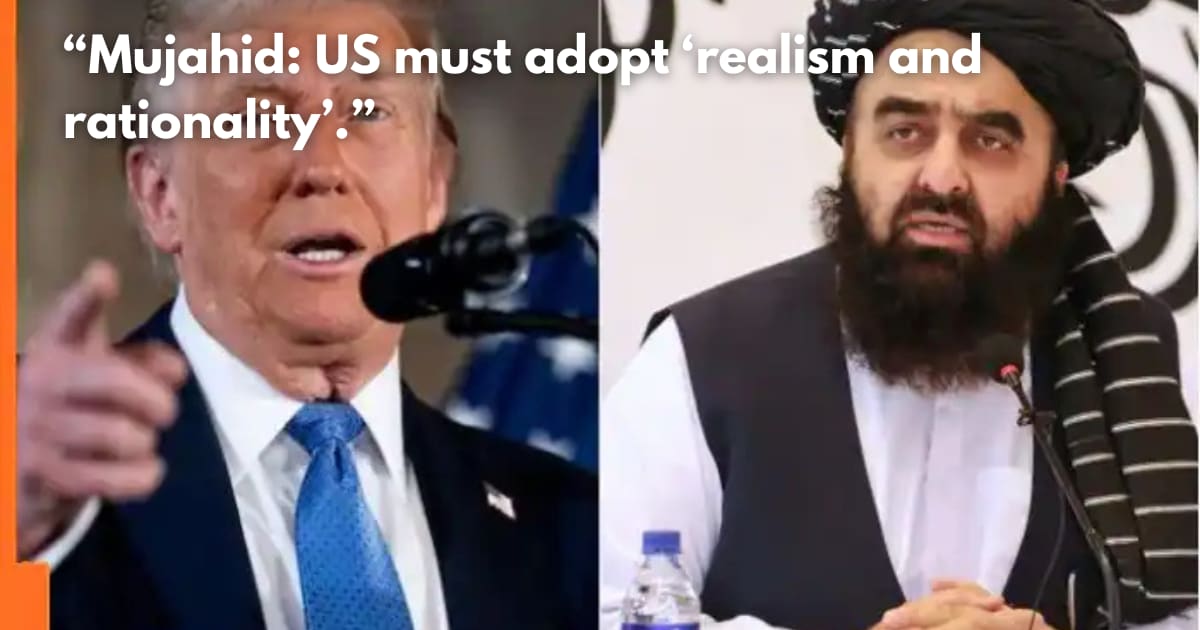
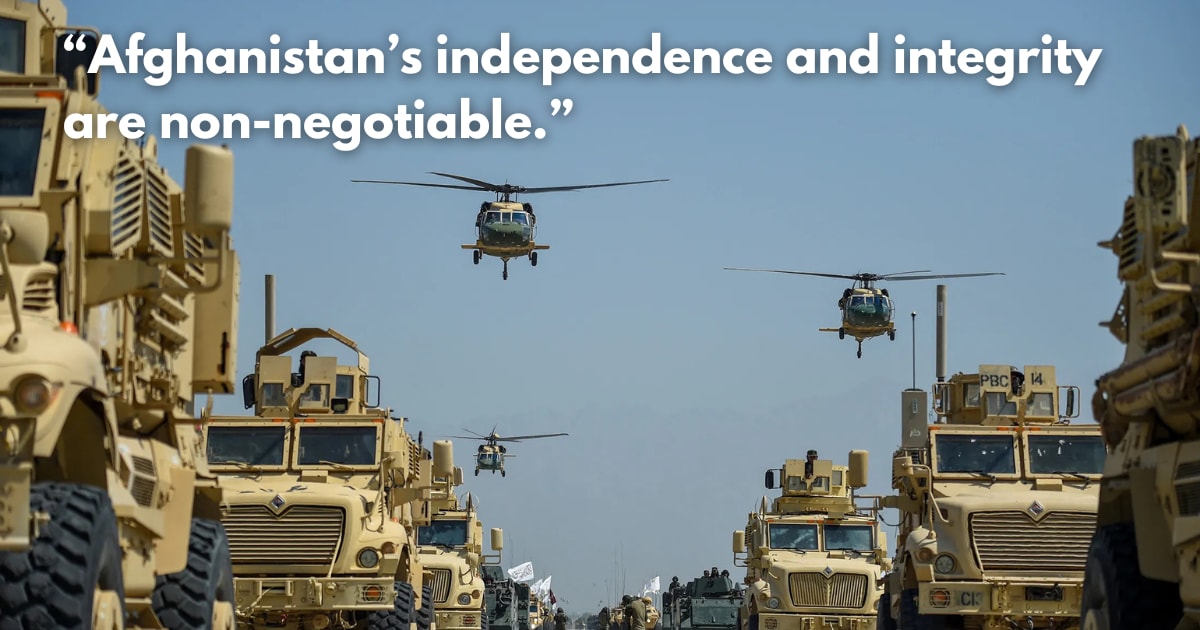
Zabihullah Mujahid, the chief spokesperson for the Taliban, took to X (formerly Twitter) to make his government’s position clear. He described Trump’s comments as “baseless” and insisted that Afghanistan’s independence was not negotiable.
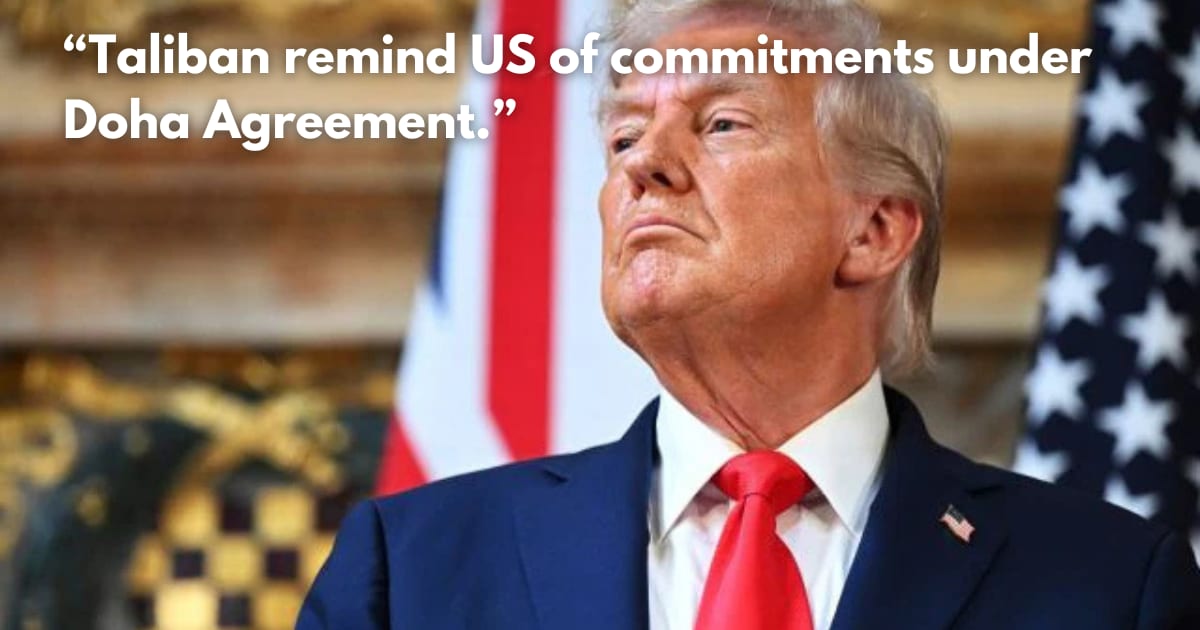
“Afghanistan follows an economy-driven foreign policy and seeks constructive ties with all countries based on equality and mutual respect,” Mujahid wrote. He further reminded Washington of its obligations under the 2020 Doha Agreement, which required the United States to withdraw all forces and refrain from interfering in Afghanistan’s internal affairs.
Al Jazeera reported that Mujahid consistently communicated Afghanistan's sovereignty and territorial integrity to the United States during past negotiations. The Taliban, he stressed, have no intention of reversing the symbolic victory they achieved when U.S. forces departed and the Afghan government collapsed in August 2021.
Bagram: A Symbol of Victory and Loss
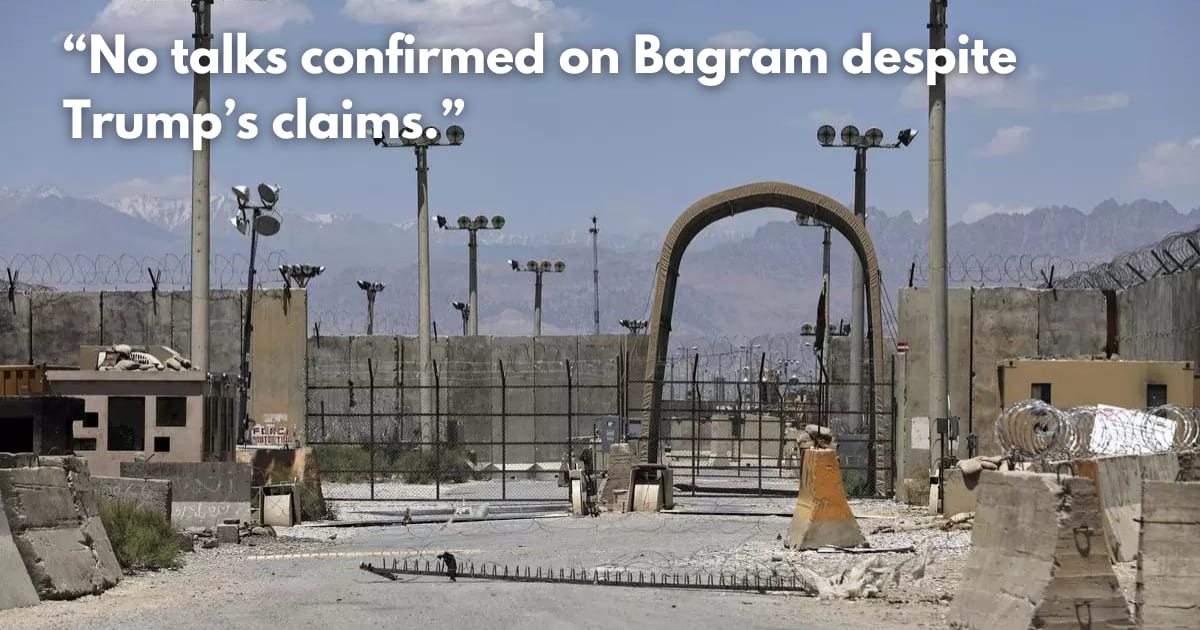
Bagram Air Base is not just any military base—it is the biggest airfield in Afghanistan. It was the centre of America’s 20-year war, hosting thousands of soldiers, fighter planes, drones, and intelligence teams. For Afghans, Bagram became a symbol of the U.S. presence, and for many Taliban fighters, it was the main goal after years of fighting.
When the U.S. forces left the base in July 2021, just before the Taliban took over Kabul, they left behind a lot of military gear, vehicles, and even planes. The Taliban later used some of this equipment in big shows to celebrate their victory. BBC News reported that the Taliban used Bagram for a big military display to mark the third anniversary of their takeover, showing how they had won.
For the Taliban, losing control of Bagram would mean less power and weaken their story of defeating the strongest military in the world through hard work and sacrifice.
Trump’s Calculations
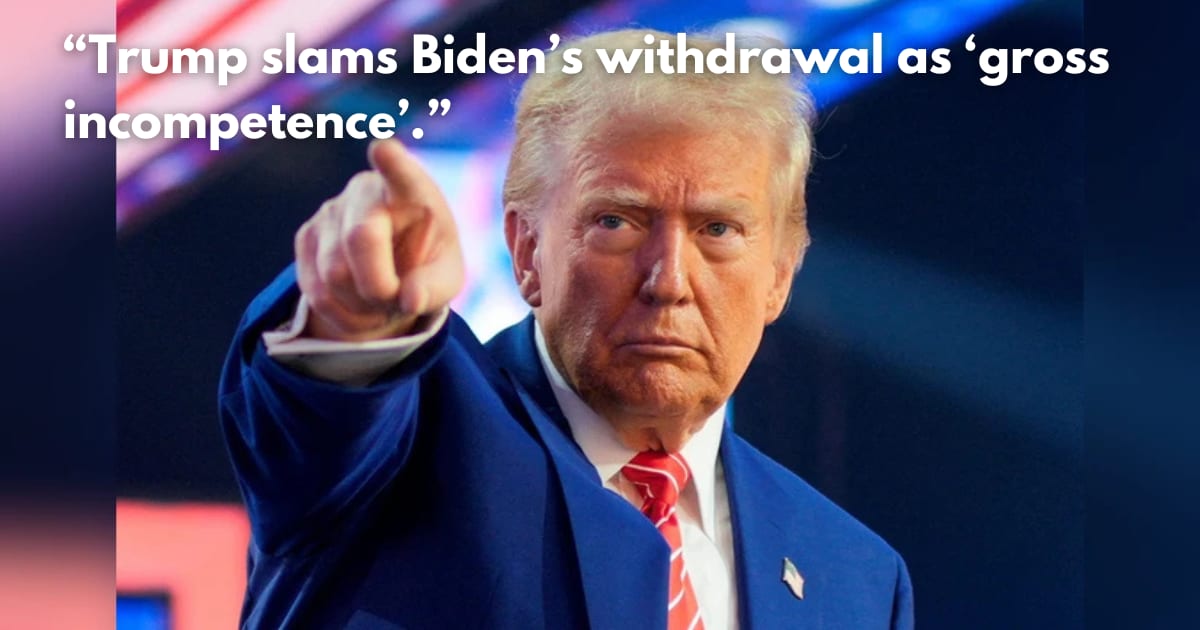
Donald Trump has always criticised his successor, Joe Biden, for the messy withdrawal in August 2021. The world still remembers the images of Afghans struggling to board planes at Kabul airport. Trump claims his administration would have handled the exit better and pointed to Bagram as a key asset that should not have been left behind.
In recent comments, Trump suggested that Afghanistan's economic problems and the Taliban’s lack of international support might lead to talks. “They need us more than we need them,” Trump reportedly said.
But experts in the region say Trump might be wrong about how willing the Taliban is to give up control for short-term help. “For the Taliban, being recognised by the people is tied to resisting foreign control. Letting U.S. forces back would hurt their standing at home,” explained Dr Ahmed Rashid, a South Asia analyst.
A Fragile Afghanistan
Since regaining control, the Taliban have faced challenges in reviving the Afghan economy, which was previously reliant on foreign aid before 2021. At the same time, the Taliban face threats from opposing militant groups, especially the Islamic State–Khorasan Province (ISKP), which has launched deadly attacks in Kabul and other cities.
In this context, Trump might have believed that U.S. financial incentives, in exchange for access to Bagram, would tempt the Taliban.
Mujahid's statement implies that the leadership perceives any such agreement as a betrayal of their hard-earned authority.
Washington’s Dilemma
According to The Associated Press, U.S. officials have not directly commented on Trump’s proposal, focusing instead on humanitarian aid and counterterrorism efforts from outside Afghanistan. Nevertheless, Trump’s comments have sparked discussions about the potential impact of a second Trump presidency on U.S.-Afghan relations. Might he sincerely support the reoccupation of Bagram, or is this simply political manoeuvring to underscore perceived weaknesses in Biden's approach?
Regional Implications
The Taliban’s refusal also holds regional significance. Beijing has invested in mining and infrastructure projects, while Moscow views Afghanistan as a key element in its regional strategy. “Any return of U.S. forces would worry both China and Russia, who regard Afghanistan as part of their broader security domain,” said Professor Gulnaz Rahimi, a Kabul-based political scientist. “The Taliban are aware of this and will use regional partnerships to resist American pressure.”
The Taliban’s Long-Term Strategy
Their current foreign policy focuses on trade with neighbouring countries, integration into regional projects such as China’s Belt and Road Initiative, and careful diplomacy with Gulf nations.
In practice, their position means the Taliban are unlikely to give up Bagram—or any other strategic base—under any conditions. “They are open to discussing trade, aid, and recognition, but not sovereignty. That is their non-negotiable stance,” Rahimi noted.
Conclusion: A Battle of Narratives
As Afghanistan deals with economic collapse, internal instability, and fragile regional relationships, the Bagram issue highlights the deep-seated mistrust that defines U.S.-Taliban relations. For now, Mujahid’s message is clear: the era of foreign military bases on Afghan soil has come to an end. Whether Trump or any future U.S. leader can change this reality remains uncertain.
Our primary goals at FazTimes Media are to be accurate and confident and adhere to the highest journalistic standards. We check every news story we share against several trustworthy and separate sources to ensure its accuracy.
We have reviewed this report, along with articles from major news outlets worldwide, including BBC News, Reuters, Bloomberg, Al Jazeera, NDTV, The Economic Times, and The Indian Express.
We want to keep the highest standards in global journalism so that our readers can trust the information they acquire.
Link:
https://www.faztimesmedia.com/viewpost/taliban-rejects-trumps-bagram-air-base-proposal-a-geopolitical-standoff


Discussion0
Join the conversation on this story
Loading comments...