
Terrifying Near Miss: Air India Flight Plunges 900 Ft Post-Ahmedabad Crash
fazTimes media: New Delhi— Just 38 hours after the terrible crash of Air India flight AI-171 near Ahmedabad, which killed almost 270 people, the country was shocked again. Air India’s Boeing 777 flight AI-187, flying to Vienna, lost about 900 feet in altitude shortly after taking off at 2:56 AM from Delhi. The loss of altitude caused several cockpit warnings and led to a serious emergency. As reported by the Times of India, the pilots received stall alerts, GPWS “Don’t sink” warnings, and a strong stick-shaker, which is a scary signal that the plane might stall.
Even though the crew was able to take control again and finish the nine-hour flight to Vienna without any more problems, the incident has made people look more closely at Air India’s safety rules.
Breakdown of the Incident
Flight AI-187, with the registration VT-ALJ, climbed into rough weather over Delhi. The plane faced strong thunderstorms, and its arrival came at a time when the aviation industry was on high alert after the recent accident in Ahmedabad. As the plane was climbing, it suddenly dropped about 900 feet in altitude. Inside the cockpit, warning alarms went off, showing how quickly a normal flight can become dangerous.
An airline source said, “The stall warning came once, and the GPWS caution came twice." They added that the crew handled the situation well and managed to bring the plane safely to Vienna. The pilots, who are now off duty while an investigation takes place, followed the correct procedure by informing the DGCA. The DGCA then immediately called the airline's head of safety.
An Echo of Ahmedabad
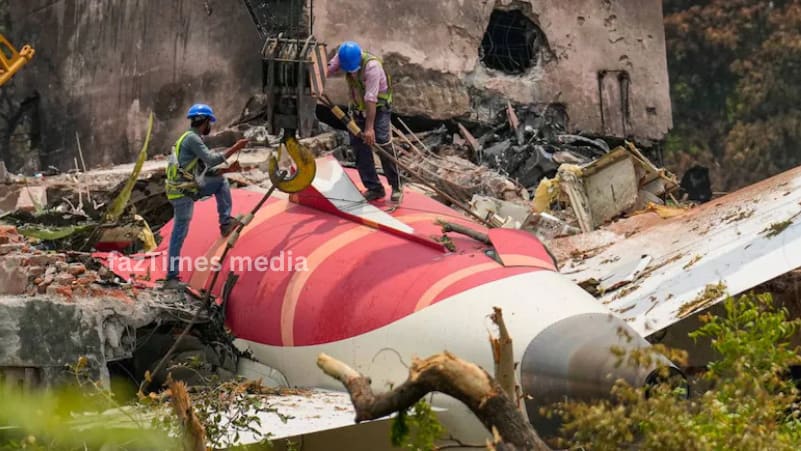
This close call reminded people of the terrible crash of AI-171, an Air India Boeing 787 Dreamliner that crashed near Ahmedabad on June 12.
It killed 241 people on board and about 19 on the ground, with just one person surviving. This tragedy led to a nationwide safety check, which grounded all Dreamliners and started safety inspections at Air India’s main hub in Gurugram. Currently, another close call has raised significant concern: if the weather or a technical issue had been slightly different, AI-187 could have ended up like AI-171.
India's aviation watchdog is handling the situation quickly:
The aviation watchdog has placed the pilots on hold until they complete their investigation.
We have summoned the head of safety for an urgent meeting.
We are checking flight data recorders to determine the cause of the stall, altitude, and engine performance issues.
An annual audit is happening at Air India's operations.
Airlines and airports are conducting additional checks to identify any significant issues.
The DGCA is looking at more than just Flight AI-187.
Because of the Ahmedabad crash, they started a detailed review and found some serious issues: problems with maintenance, not fixing repeated problems, and wrong storage of safety items like life vests.
Air India's aircraft fleet is facing criticism. On June 23, an audit at the Gurugram operations center looked closely at how flights are planned, how pilots are scheduled, and how safety rules are followed. The DGCA found several problems, like repeated mistakes in maintenance, defects that come back again and again, tires that are worn out, and problems with how the flight simulators work.
According to new information, the disaster resulted in the cancellation of approximately 66 Dreamliner flights. At least eight more planes are now grounded because of crucial checks on major routes. The agency is also looking into other airlines and airports, including those in Delhi, Mumbai, and Kolkata.
Air India Answers
A representative for the airline said that as soon as the pilots informed them about the problem, they told the DGCA and started looking at the data recorder right away. The inquiry has put the pilots on leave, and the head of safety is working closely with the authorities.
Air Asia and other airlines have also started temporary safety checks on similar planes like the Boeing 787 and 777 to make passengers and regulators feel more confident.
The Human Factor
For passengers, especially early-flight students, business people, and migrant workers, the near crash was very unsettling.
One Delhi passenger, waiting at the airport for a later flight, said:
“We’ve already lost trust after Ahmedabad. Now, even taking off feels frightening.” Among people who know about aviation, there are questions: Did the weather, the pilot's actions, or an unfixed mechanical issue primarily cause the stall? Will the stress from past near misses keep pilots alert or make them too careful?
Broader Aviation Lessons
Experts say this incident serves as a double warning, showing the need for quick fixes and lasting changes:
We must establish strong and clear maintenance rules, as we cannot tolerate repeated problems that remain unfixed.
Pilot work hours and schedules need close monitoring to avoid fatigued pilots.
Systems for checking and tracking must be digital, automatic, and open.
We must rebuild public trust by promptly disseminating information and demonstrating tangible safety enhancements.
With plans to increase from 74 to almost 400 airports by 2047, India is quickly becoming the world’s third-largest aviation market. We can’t afford to ignore safety.
What’s Next?
The DGCA has set specific deadlines:
Preliminary report on AI-187: expected within 30 days
Comprehensive audit findings: due in the next two weeks
We will complete the reinspections for all Dreamliners and 777s by early July.
The regulator has issued a warning, threatening to enforce strict measures such as flight bans and executive suspensions until they restore a safe working culture.
Conclusion
Flight AI‑187’s sudden and frightening drop shows how swiftly air travel can change from normal to dangerous.
The loud alarms at high altitudes make pilots, regulators, airlines, and passengers act quickly.
For travelers from Delhi and other places, it reminds everyone that careful attention, excellent technology, and staying alert are needed at every step, whether on the runway, in the hangar, or in the air.
At FazTimes, we prioritize accuracy, credibility, and journalistic integrity. Every piece of news we publish is thoroughly verified through multiple trusted and independent sources.
This report has been cross-referenced with coverage from globally recognized news organizations, including BBC News, Reuters, Bloomberg, South China Morning Post, Al Jazeera, NDTV, The Economic Times, and The Indian Express, and we are committed to upholding the highest standards in global journalism to ensure our readers receive reliable and fact-checked information.


Discussion0
Join the conversation on this story
Loading comments...