
TN Fishermen Strike Enters Day 8 Over Sri Lankan Navy Arrests

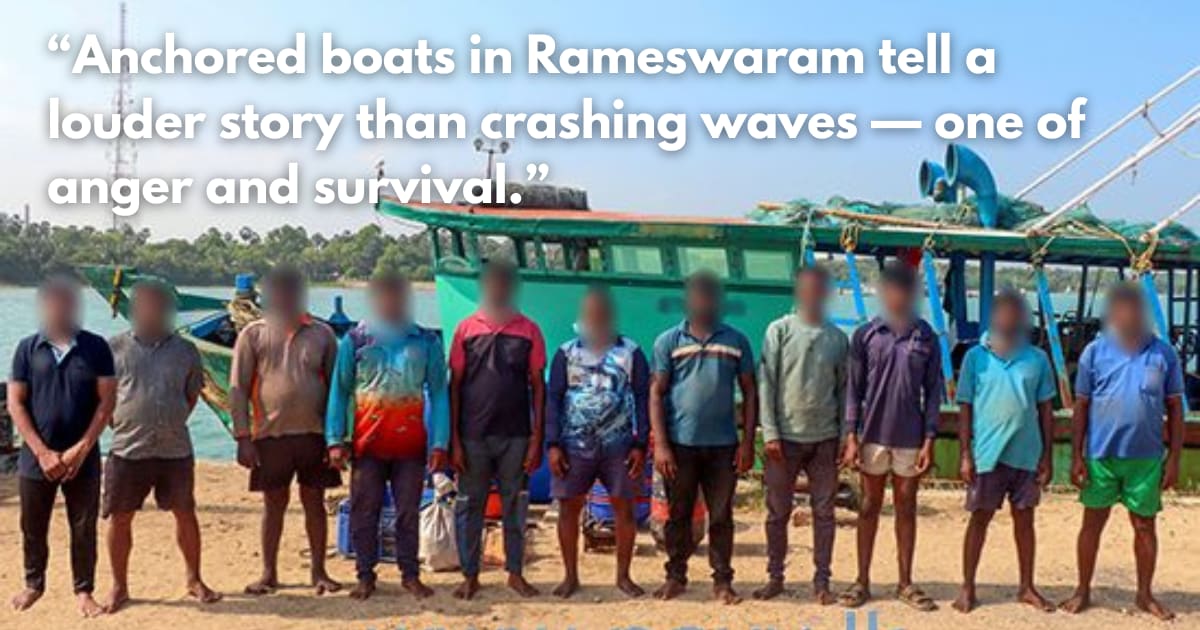

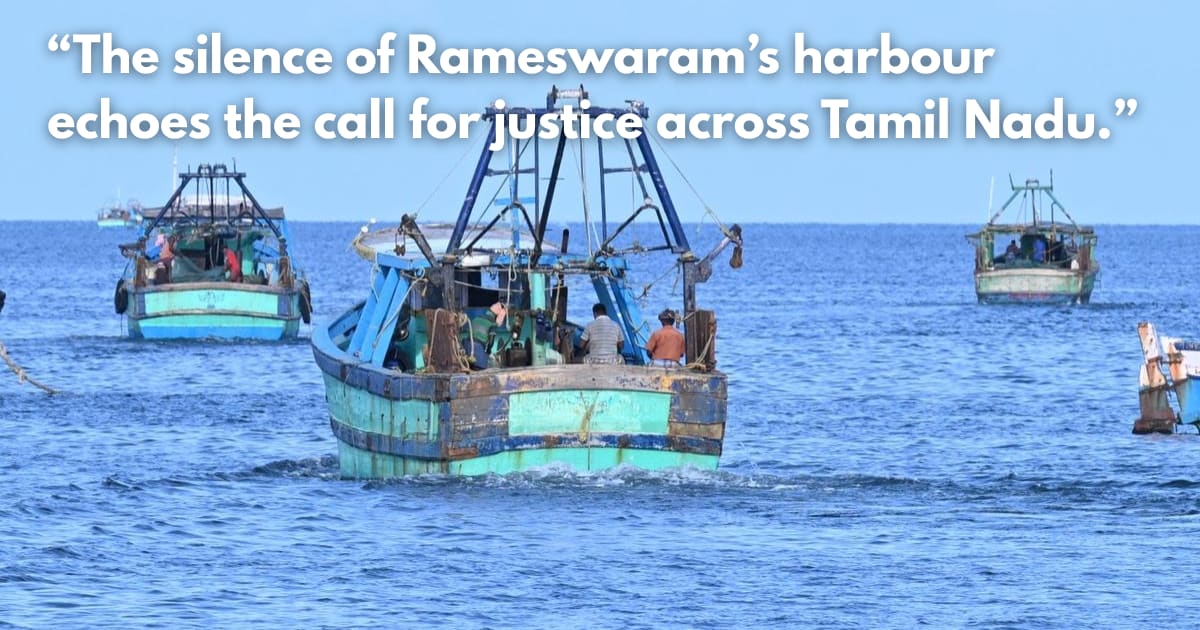

FazTimes Media, Rameswaram, Tamil Nadu – The coastal town of Rameswaram is now completely quiet, a stark contrast to its usual busyness filled with the sounds of auctioneers, the smell of freshly caught fish, and the noise of fishing boats returning with their daily catch. For the past eight days, fishermen have kept their boats anchored in protest against the frequent arrests made by the Sri Lankan Navy. They are asking for a permanent solution to a problem they say has been going on for decades.
What started as a local protest on August 11 has grown into a bigger movement, causing a lot of disruption to the fishing-based economy in the area. Fishermen’s groups say the strike has already caused a loss of more than ₹7 crore. This disruption has affected not just the fishermen but also exporters, transporters, and people who earn money from daily work.
A Dispute That Has Been Going On For A Long Time
The Palk Strait, a narrow body of water between Tamil Nadu and northern Sri Lanka, has always been a place where tensions are high. The Sri Lankan Navy says that Indian fishermen are entering its waters without permission, which is illegal. But Indian fishermen say they are being punished for using traditional fishing methods and relying on these waters for a long time.
According to Al Jazeera, Sri Lanka claims that trawlers from Tamil Nadu are harming the marine environment and endangering the lives of local fishermen in the north. However, local leaders in Rameswaram say that the waters nearby are now not as rich as they used to be, forcing fishermen to go into disputed areas to make a living.
“Fishermen have been working these waters for generations,” said Murugan, a 45-year-old fisherman who hasn’t gone to sea since the protest started. “Our fathers and grandfathers fished here long before anyone talked about borders. Now, we’re being treated like criminals.”
The Trigger for the Current Strike.
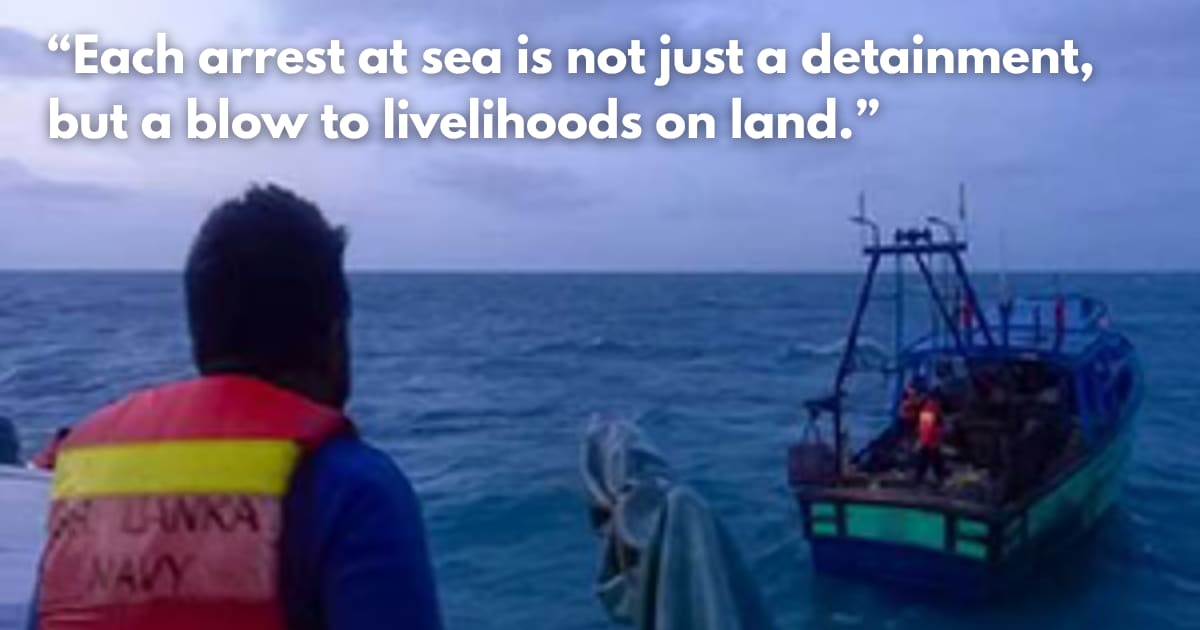
Earlier this month, tensions escalated when the Sri Lankan Navy arrested several fishermen from Tamil Nadu and took their boats. This event deeply upset the people of Rameswaram, where fishing boats are often the main way families earn a living.
According to BBC News, more than 200 boats from Tamil Nadu have been taken by Sri Lanka in recent years, and many are still held by the country. Each of these boats, costing between ₹25 and ₹40 lakh, is a major investment for a family. Losing one means not only losing the owner’s livelihood but also leaving many workers unemployed.
“Many of us are willing to risk our lives at sea, but we can’t keep losing our boats and our brothers to arrests,” said Arulappan, president of a local fishermen’s group. “This strike is not just about money. It’s about dignity, safety, and survival.”
A Town Brought to a Standstill
The impact on the economy is clear in Rameswaram. Auction houses close, ice factories cease operations, and seafood exporters suffer significant losses in the absence of fresh fish. Workers in related jobs, like boat repair, net weaving, and transport, are also struggling without wages.
Local restaurants and markets that usually rely on daily catches of prawns, crabs, and fish are now having a challenging time. “I used to sell almost 50 kilograms of fish every morning,” said Lakshmi, a fish seller at the Rameswaram market. “Now, there is nothing. People come asking, but I have nothing to sell.”
The situation has also affected consumers, as seafood prices in nearby areas have gone up because of the shortage.
The Political and Diplomatic Angle
This isn’t the first time Tamil Nadu fishermen have gone on strike to ask the government for help. For many years, both the state and the central government have struggled to find a balance between helping the fishermen and dealing with the diplomatic issues with Sri Lanka.
The fishermen want India to get their detained people and boats back and to negotiate fishing rights in areas they have used for a long time. Chief Minister M.K. Stalin recently asked the central government to take strong action.
However, fishermen’s groups don’t trust promises anymore. “Every time, we hear about talks, but nothing happens. Our people get arrested, our boats are taken, and our lives are ruined,” said Arulappan.
Calls for Compensation and Protection
As the strike continues into its second week, the fishermen are asking the Tamil Nadu government for quick financial help to deal with their losses. They also want a lasting agreement to stop more arrests from happening.
Some activists have talked about looking into other options, like deep-sea fishing, which the Indian government supports with money. However, many fishermen argue that deep-sea fishing is too expensive and cannot be successful without significant financial assistance and training from the government.
According to The Hindu, some fishermen also want Indian Coast Guard ships to patrol dangerous areas to stop foreign navies from interfering. “We need protection while we are at sea. Only then will our families feel safe sending us out again,” said Murugan.
The human cost of the conflict
Rani, whose husband was arrested last year and is still in Sri Lanka, cried while talking to reporters. “Every day, my children ask when their father will come back. What can I tell them?”
Possible Ways Forward
Experts think that without a lasting and long-term solution, the pattern of arrests, protests, and talks between governments will continue.
Our primary goals at FazTimes Media are to be accurate and confident and adhere to the highest journalistic standards. We check every news story we share against several trustworthy and separate sources to ensure its accuracy.
We have reviewed this report, along with articles from major news outlets worldwide, including BBC News, Reuters, Bloomberg, Al Jazeera, NDTV, The Economic Times, and The Indian Express.
We want to keep the highest standards in global journalism so that our readers can trust the information they acquire.


Discussion0
Join the conversation on this story
Loading comments...