
Trump Hints at Sparing India from Russian Oil Sanctions

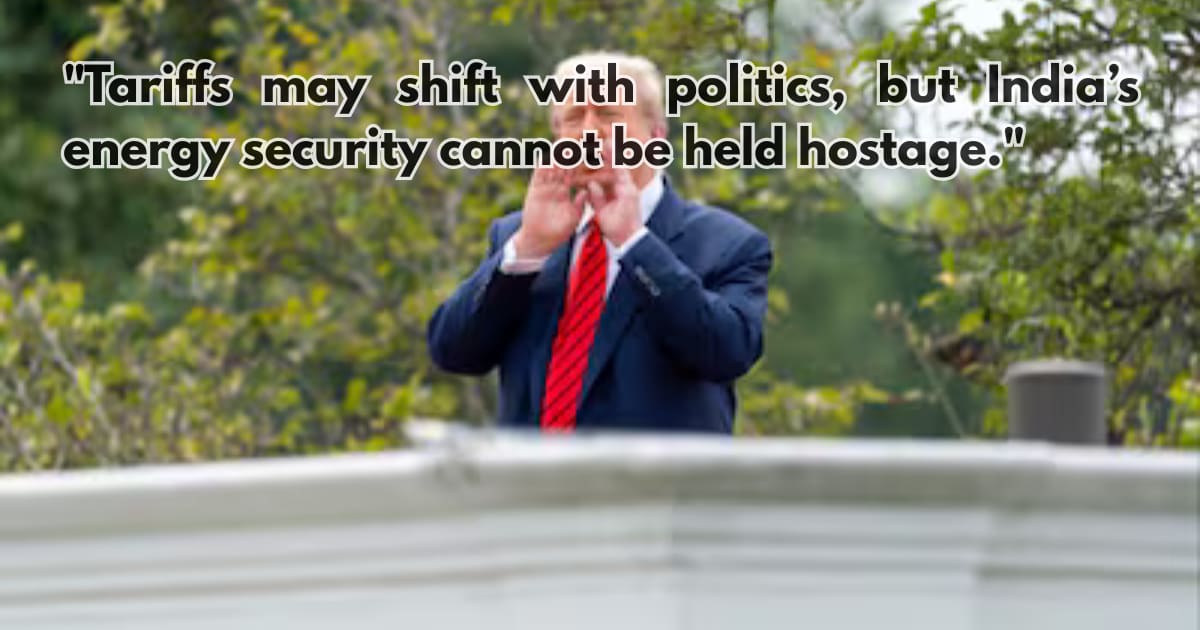


FazTimes Media, New York – U.S. President Donald Trump has suggested that India may not face additional taxes for continuing to buy crude oil from Russia, a situation that is being closely monitored by officials, energy specialists, and financial markets throughout Asia. His comments have led to cautious hope in New Delhi, which has been trying to manage its economic requirements while dealing with rising political tensions.
The remarks were made during a Fox News interview while Trump was aboard Air Force One. This happened just a few hours before he arrived in Alaska for a high-profile meeting with Russian President Vladimir Putin. Although the discussions did not result in any specific agreement to stop the ongoing conflict in Ukraine, Trump’s comments have started conversations about how Washington intends to deal with allies who are maintaining relationships with Moscow.
Trump’s Balancing Act
During the interview, Trump expressed concerns that the United States might target India with secondary sanctions. “Well, Russia lost an oil customer, which is India—they were doing almost 40 percent of that trade. China is taking a lot, too… And if I imposed what’s called a secondary sanction or a secondary tariff, it could be awful for them. If I have to do it, I’ll do it. But maybe I won’t have to.”
According to BBC News, Trump’s tone showed both hesitation and careful thinking. His administration still wants to apply pressure on Russia, but he seems cautious about pushing India too hard, since India is an important friend and partner for the U.S. in the Indo-Pacific region.
What Are Secondary Sanctions?
Secondary sanctions or tariffs are penalties that go beyond just punishing a country under direct sanctions.
They also target other countries or businesses that deal with them. In this case, they would punish India for buying cheap Russian oil despite Western rules.
Al Jazeera says such measures can hurt global supply chains, money movements, and international relationships. For India, this could mean higher costs for energy and more economic problems, especially since it relies a lot on oil imports.
The proposal aims to achieve this by fostering a cautious optimism, although this was tempered by comments from U.S. Treasury Secretary Scott Bessent earlier in the week. Bessent warned Bloomberg that India could face harsher penalties if Trump's discussions with Putin in Alaska "do not go well."
“We expected President Putin to come to the table more constructively,” Bessent noted. Should that not occur, secondary tariffs on India's purchases of Russian oil could escalate. Sanctions can be adjusted—they can rise, they can ease, and occasionally they continue indefinitely.
This firm stance contrasted with Trump’s more flexible approach, leaving analysts questioning the consistency of U.S. policy in the coming months.
India Pushes Back
In New Delhi, the Ministry of External Affairs (MEA) responded strongly, calling any targeting of India “unjustified and unreasonable”.
A spokesperson emphasised:
“Like every major economy, India will take the necessary steps to protect its national interests and economic security. India considers affordability, accessibility, and national priorities when making decisions regarding energy sourcing.
Energy analysts argue that India has little choice but to continue buying discounted Russian crude. “Russian oil offers significant cost advantages,” said Dr Priya Menon, an energy economist based in Mumbai. “Cutting it off under pressure from the U.S. would mean higher inflation at home, which is politically and economically unsustainable.”
Strategic Stakes for the U.S.
The proposal aims to serve as a central point in the global competition, particularly regarding China, and the U.S. cannot afford to alienate Delhi. “India is viewed as a key ally in countering China's growing influence,” stated Michael Roberts, a senior fellow at the Atlantic Council.
“By avoiding secondary tariffs on India, the U.S. is indicating that it values the broader geopolitical partnership over energy disagreements.” As reported by The Guardian, American officials also acknowledge that pressuring India to comply could drive New Delhi closer to Moscow and Beijing—an outcome that Washington is actively trying to prevent.
Domestic Politics at Play
Some analysts suggest that domestic U.S. politics could also influence Trump's remarks. With elections approaching, Trump faces pressure to appear strong against Russia while preserving strong international alliances.
Prof. Arvind Kumar, a political scientist at Jawaharlal Nehru University, explained that Trump is balancing multiple priorities. “On one hand, he needs to seem tough on Putin. On the other hand, he must ensure U.S. alliances remain strong. India is crucial to this balance.”
India’s Energy Reality
India is the world’s third-largest consumer of crude oil, importing almost 85% of its total needs. With domestic production unable to meet demand, international sources are essential. Russian crude has become especially appealing since Western buyers reduced imports after Moscow invaded Ukraine.
India has secured oil at lower prices and managed to diversify its suppliers while keeping inflation in check.
“As reported by Reuters, Indian refiners have been purchasing Russian oil for both economic and energy security reasons.
Without these purchases, India’s domestic prices could have risen sharply,” said Ramesh Joshi, a Delhi-based commodities analyst.
The Road Ahead
The coming weeks will be critical in determining whether Trump’s hints lead to real policy changes. Much will depend on how relations between Washington and Moscow develop and whether the Alaska summit allows for further discussions.
For India, the challenge will be to continue managing its delicate balancing act—maintaining strong ties with the West while protecting its long-standing defence and energy partnerships with Russia. The proposal aims to provide temporary relief, but uncertainties remain. The tension between U.S. diplomacy and India's national interests continues to persist. As one Indian official remarked privately, "Every word from Washington matters to us right now. But at the end of the day, we cannot run our economy on political statements—we need affordable oil."
Whether Trump’s cautious assurance becomes a firm commitment, only time will tell. Currently, India is confronted with the challenge of managing its energy requirements amidst one of the most intricate geopolitical rivalries of the 21st century.
Our primary goals at FazTimes Media are to be accurate and confident and adhere to the highest journalistic standards. We check every news story we share against several trustworthy and separate sources to ensure its accuracy.
We have reviewed this report, along with articles from major news outlets worldwide, including BBC News, Reuters, Bloomberg, Al Jazeera, NDTV, The Economic Times, and The Indian Express.
We want to keep the highest standards in global journalism so that our readers can trust the information they acquire.


Discussion0
Join the conversation on this story
Loading comments...