
Trump's Israel Stance Sparks 'Betrayal' Accusations & Calls to Drop Support
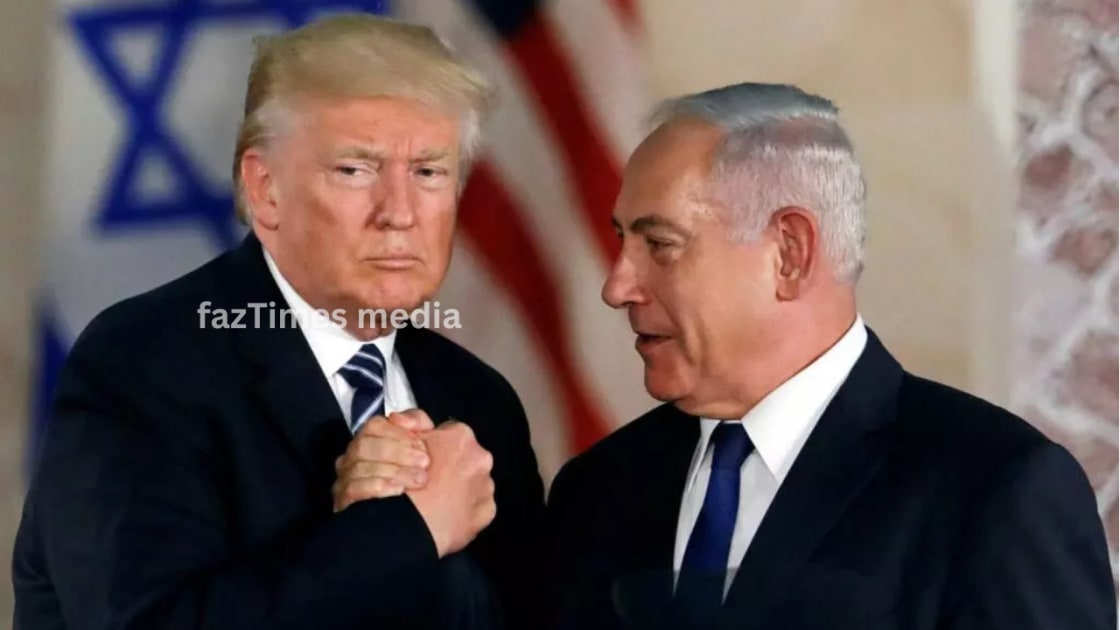
fazTimes media: As the dust settles following Israel’s bold military operation against Iran, a new storm brews near home, not in Tehran or Tel Aviv, but in the heart of the United States. Former President Donald Trump, long seen as a political heavyweight among conservative circles, is now facing fierce scrutiny from within his base over what numerous people see as a confusing and hypocritical stance on U.S. involvement in the conflict.
Trump’s binary messaging, intimately distancing the U.S. from Israel’s conduct while intimately celebrating their success, has touched off a surge of wrathfulness and disappointment, particularly among “America First” rightists who formerly formed the backbone of his electoral support. The occasion has laid bare a growing fracture within the Republican Party, raising critical questions about foreign policy, fidelity, and the uncertain direction of Trump’s political heritage.
An Antithetical Narrative
In the immediate wake of Israel’s coordinated strikes on Iranian targets, which reportedly involved over 200 aircraft and targeted crucial nuclear and military installations, Trump issued a statement prompting caution. “We don't seek war with Iran,” he said, advising that military escalation could hinder political progress.
Still, just one day. Latterly, Trump changed his tone significantly. In a social media post, he declared the strikes a "strategic success," suggesting that they aligned with a 60-day deadline he'd still issued to Iran to renew accommodations. This dramatic pivot has led numerous people to wonder whether Trump was against the operation or whether he was behind it in each one.
This nebulousness has not gone unnoticed. “You cannot have it both ways; either you support military restraint or you don't,” said Thomas Caldwell, a conservative political critic in Virginia. “Trump’s double game is confusing the very people who believed he stood for a new period of nonintervention.”
Rightists Feel Betrayed
The counterreaction was nippy. Several Democratic lawmakers and conservative observers, especially those combined with the populist “MAGA” sect, accused Trump of abandoning his commitment to stay out of foreign entanglements.
“America doesn’t need to bounce further into Middle Eastern wars,” twittered Representative Lauren Maddox of Arizona, a loyal Trump supporter turned critic. “We suggested America First. However, we need to review everything. If Trump is siding with endless war,
Others have been more blunt. Right-sect talk show host Bryan Keller described Trump’s station as “a treason of the working-class Americans who transferred him to Washington to fix our frugality, not to fund foreign conflicts.”
A Split in the GOP
The growing rift has exposed two contending coalitions within the Republican Party. On one side are the pro-Israel jingoists, who argue that U.S. support for Israel is essential for maintaining indigenous stability and fighting Iran’s growing influence. On the other are the “America First” rightists, who believe the U.S. should prioritize domestic enterprises over foreign alliances.
This pressure is nothing new, but the recent strikes have pushed it into the open. “Trump tried to please both sides, but now he’s lost trust on both fronts,” said Maria Ortega, a political wisdom professor at Georgetown University. “He’s literate in that in politics, straddling the hedge frequently means falling off it.”
Was the U.S. involved?
Despite Trump’s assertion that the U.S. played no part in the Israeli operation, multiple sources suggest otherwise. Elderly Israeli officers have intimately suggested that Washington was informed ahead of time, and several American intelligence agencies reportedly tracked the buildup to the attack weeks in advance.
Likewise, recent Pentagon data confirms that the U.S. had replenished Israel’s Iron Dome bullet defense systems just days before the strikes, a move unlikely to be coincidental.
“There’s no way Israel pulled off a commodity of this magnitude without U.S. knowledge,” said a former CIA critic who spoke on condition of obscurity. “Indeed, if we didn’t launch the dumdums ourselves, we’re clearly in the circle.”
This perception that Trump may have still greenlit the operation while pretending to oppose it has only strengthened distrust among his base.
A Struggle for Credibility
At the core of this extremity is a question of authenticity. Trump erected his political identity on a pledge to disrupt the establishment, reject endless wars, and prioritize American interests. Too numerous, his recent moves suggest he's slipping into the very theveritablyearth formerly fought against.
“He’s amusing, like every other chairman before him, saying one thing and doing another,” said Rachel Stern, a conservative activist from Michigan. However, why should we believe anything differently? He says, “If that’s the case.
The MAGA movement, which formerly treated Trump as an imperturbable figure, is now entering a period of soul-searching. Some leaders have floated the idea of backing an indispensable campaign in 2028 if Trump continues down a path they view as antithetical to core values.
Danger of Escalation
There are also growing fears that the U.S. could be dragged into a broader conflict. Iran has pledged to avenge, and experts advise that American colors posted in Iraq, Syria, and the Persian Gulf may be targeted.
“The peril then isn’t just political; it’s real,” advised retired Marine General Mark Fallon. “One misapprehension, and we could find ourselves in a war that no one
asked for and no bone
benefits from.”
This possibility has amped antiwar voices across the political spectrum, numerous of whom are demanding that the U.S. rethink its strategic ties to Israel. Some are indeed calling for an end to military aid if Israel continues to act unilaterally without consulting its abettors.
What Comes Next?
For Trump, the road ahead is complicated. While his core support remains strong, it isn't unshakable. However, he risks alienating a base that values values, thickness, and clarity above all else if he cannot attune his public statements to behind-the-scenes conduct.
Formerly, whispers were arising within conservative circles about implicit contenders. Florida Governor Ron DeSantis, though largely silent on the recent strikes, has precisely positioned himself as a true "America First" leader, someone who could step in if Trump’s credibility continues to erode.
In the meantime, Trump’s platoon is working overtime to control the narrative. A new surge of crusade advertisements focuses on profitable growth and immigration reform, steering clear of foreign policy altogether. But whether that’s enough to quell growing dissent remains to be seen.
Conclusion: A Turning Point?
The Israel-Iran conflict may be unfolding thousands of years down, but its ripple effects are being felt deep within American politics. Trump’s attempt to balance tactfulness, military strategy, and political branding has left numerous people confused and some furious.
For now, one thing is clear: the former chairman is no longer vulnerable to review from his side. Whether this marks a turning point in Trump’s dominance over the Republican Party or just another political storm he weathers will depend on what he does next and how his sympathizers respond.
Stay with fazTimes for real-time updates, analysis, and ground reports on the unfolding situation in the Middle East.


Discussion0
Join the conversation on this story
Loading comments...