
Trump Secures 10% US Stake in Intel; CEO Pledges American Tech Leadership

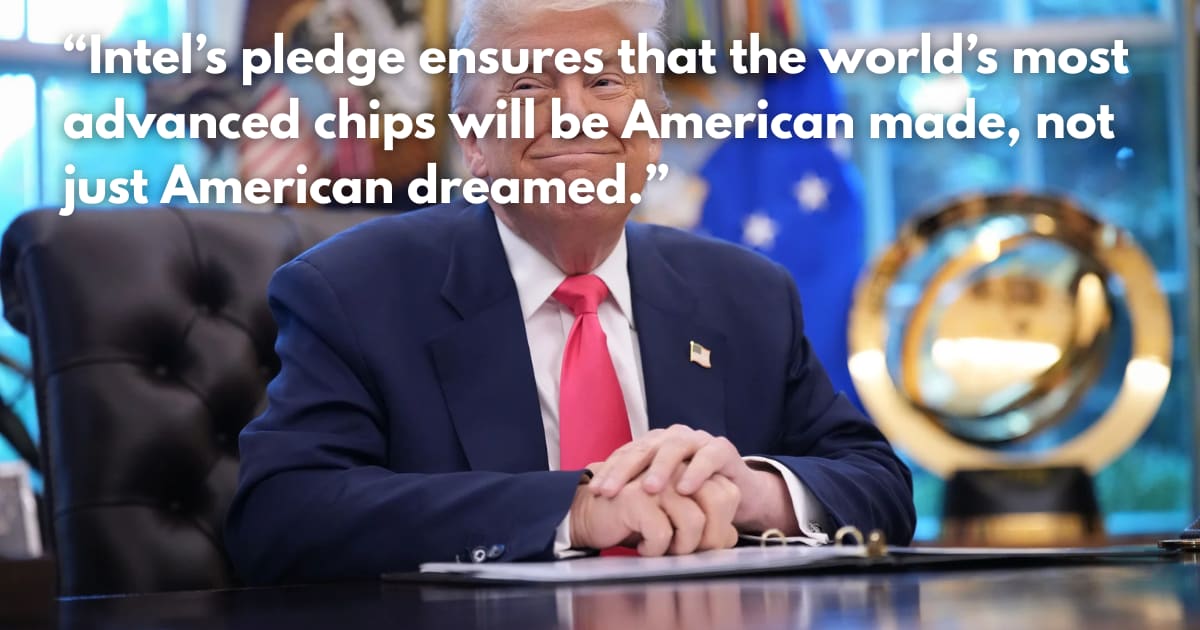


FazTimes Media: In a big and surprising move, the U.S. government has bought a 10 per cent share in Intel, a major chip-making company. President Trump's announcement on Friday ranks as one of the most significant government actions in American business since the 2008 financial crisis.
Trump said it was a “historic step” to protect the future of U.S. technology, and he said the deal would help the country become more self-reliant in making chips, especially as other countries are getting more competitive.
According to official documents, the U.S. bought 433.3 million shares of Intel at $20.47 each. On the same day, Intel’s stock price was $24.80, so the government started with a paper profit of almost $1.9 billion, as reported by the Associated Press.
This is a huge investment from the U.S. government.
The total amount invested is $8.9 billion, mostly from the CHIPS Act, which aims to strengthen the U.S. semiconductor supply chain. An extra $3.2 billion came from the Secure Enclave program, bringing the total government spending to $11.1 billion.
Even though the U.S. is now one of Intel’s biggest owners, officials said the government doesn’t have voting rights or a place on the board. Intel confirmed that the company is still private and independent, despite the large government investment.
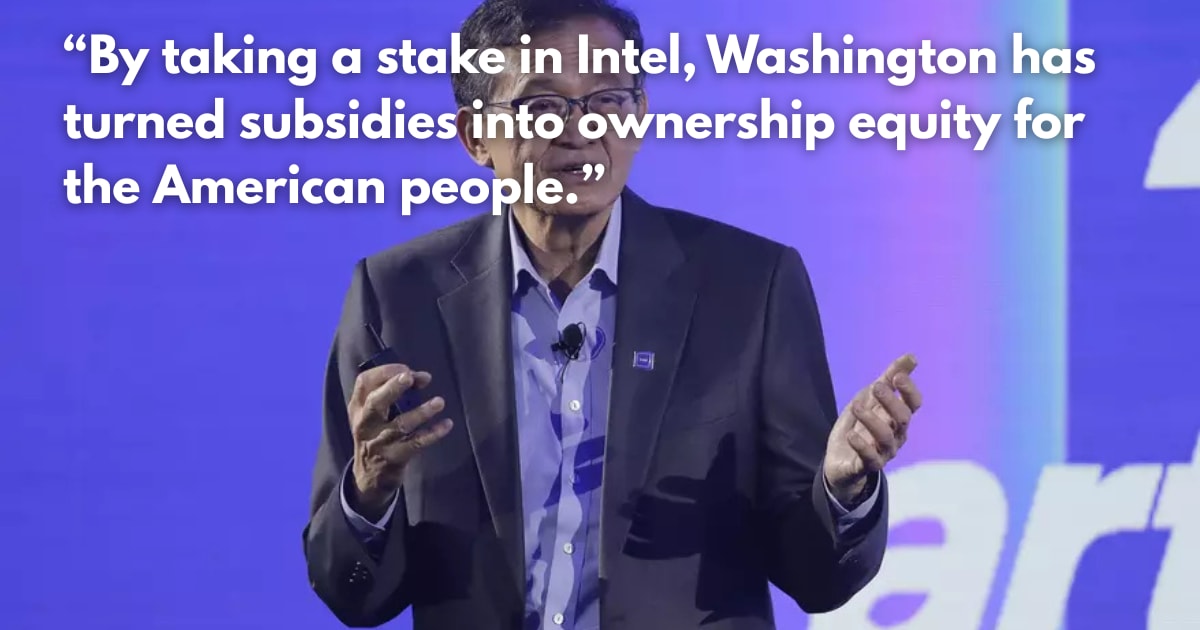
Intel’s CEO, Lip-Bu Tan, said the company is “grateful for the confidence” shown by the President and the American people. As reported by AFP, Tan said Intel would stay committed to making the world’s most advanced chips in the U.S.
This agreement comes after a difficult time between the White House and Intel’s leaders. A few weeks ago, Trump was openly questioning Tan’s loyalty, saying he had ties to Chinese tech investments. But after a meeting in Washington and a letter from Tan promising his loyalty to the U.S., the relationship improved. According to the New York Times, Trump had pushed Intel to give up a tenth of its shares during talks in August.
Commerce Secretary Howard Lutnick called the deal a “victory for American workers and security.”
Market Reaction: A Short-Term Boost
Once the top company in the semiconductor world, Intel has lost over $22 billion since 2023. It has also gone through big job cuts and missed chances in growing areas like smartphones and artificial intelligence. To put things into perspective, Intel’s current value is about $108 billion, which is much lower than Nvidia’s massive $4.3 trillion market cap. The difference shows how far Intel has fallen behind the competition.
A Divisive Move: Critics Sound Warnings
Scott Lincicome from the Cato Institute told the AP that the purchase was “a terrible precedent that could lead to politics influencing business decisions.” Tech analyst Rob Enderle, speaking to AFP, called it a “slippery slope toward partial nationalisation.”
Investor Nancy Tengler from Laffer Tengler Investments also raised concerns, warning that “taxpayers might end up paying if Intel doesn’t recover.” As reported by BBC News, many critics are worried that government involvement could make Intel’s choices more complicated, especially when trying to balance political goals with staying competitive globally.
Why Intel Matters to America
For people wondering why Intel has gotten so much attention, the answer is simple: semiconductors are the foundation of most modern technology. During the pandemic, a global shortage of chips hit many industries around the world, showing how dependent the U.S. has become on manufacturing in Asia.
What Happens Next?
The main question now is whether Intel can actually show good results. With significant government funding, the public has high expectations. Experts say just getting money isn’t enough—Intel has to catch up in areas where it's fallen behind, like making better AI chips, creating faster mobile processors, and improving manufacturing methods.
Ben Bajarin from Creative Strategies told the New York Times, “When the government becomes part of a company, the real test is if Intel can get back into the lead in innovation. Just having money doesn’t resolve problems with how things are done.”
A Turning Point for Tech Policy
For countries like India and others watching from the side, this move also shows a big change in how the biggest economy in the world handles its tech. Instead of letting everything be run by private companies, Washington is now directly taking part in owning companies—something that’s not common unless there’s a big crisis.
As technology becomes the new area where countries compete, the Intel deal shows that governments are ready to take action when important industries are in trouble.
Conclusion
The Intel stake deal is more than just an investment—it shows how seriously the United States is taking its future in technology. Although this move has split economists and investors, there’s no doubt it sends a strong message: America wants to stay at the top of the global tech race.
Our primary goals at FazTimes Media are to be accurate and confident and adhere to the highest journalistic standards. We check every news story we share against several trustworthy and separate sources to ensure its accuracy.
We have reviewed this report, along with articles from major news outlets worldwide, including BBC News, Reuters, Bloomberg, Al Jazeera, NDTV, The Economic Times, and The Indian Express.
We want to keep the highest standards in global journalism so that our readers can trust the information they acquire.


Discussion0
Join the conversation on this story
Loading comments...