
Trump Slaps 25% Tariff on India from Aug 1, Adds Penalty for Russia Trade
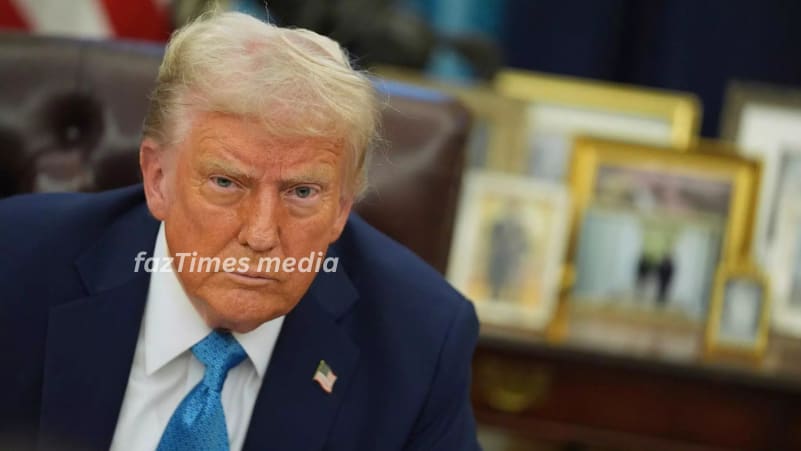
FazTimes media: Many people in diplomatic and business areas are surprised by a move from U.S. President Donald Trump. He has announced a 25% tax on Indian products, which will start on August 1. This decision was shared on social media, and it happens as India and the U.S. have trouble agreeing on trade matters. Although both countries say they want better economic connections, this action shows increasing disagreement about trade rules and India’s strong relationship with Russia.
Trump was direct in his message.
In his post, he said India has some of the highest tariffs globally and called its non-money trade restrictions “very tough and annoying.” Even though he called India a “friend,” he clearly showed he is upset about what he thinks is unfair trade that has been going on for a long time.
Why the Tariffs Now?
The timing of this announcement isn't random. The U.S. is increasing its focus on global economics as it gets ready for its presidential elections later this year. Trump is likely to push his “America First” message again during his campaign. Trade gaps are a common political issue, and now India has become a target.
BBC News reports that the U.S. has a trade deficit of more than $30 billion with India. India sends many medicines, clothes, and tech services to the U.S., which is a big part of why this is the case. Although India has made efforts to lower tariffs and open up its markets, the U.S. feels these actions aren't enough. Another issue is India's continued trade and military partnership with Russia.
Trump mentioned India's big purchases of Russian oil and weapons, which have kept happening even as the war in Ukraine continues and Western countries add more sanctions on Russia.
The Russian Factor
Trump's remark brought attention to India's status as one of Russia's top buyers of defense and energy goods, putting India in the same group as China. He wrote, "All things not good!" to show that he didn't like India's ongoing ties with Russia.
The U.S. has been worried about India's neutral stance on the Ukraine war before. Al Jazeera says that the US has told India many times to stop relying on Russian oil and military equipment. But India has said that it has the right to make the best choices for its own country, especially when it comes to energy needs and long-term defense partnerships.
Despite this, the new tariff appears to be a way for the U.S. to show pressure over India's independent approach in foreign affairs. Even though it's not called a sanction, the mention of a 25% penalty suggests that the U.S. is using this as a form of influence.
Talks Still on Track?
Interestingly, even though there was a big announcement, the next U.S.-India trade talks are still planned for later this month in New Delhi. A U.S. trade team, led by Brendan Lynch, the Assistant U.S. Trade Representative for South and Central Asia, is set to meet with Indian officials to continue the sixth round of discussions.
In the previous round in Washington, India’s main negotiator, Rajesh Agrawal, who works in the Commerce Department, was hopeful that they were getting closer to resolving differences, especially on digital trade and data rules. But Trump’s recent action might weaken this progress.
Dr. Vandana Sehgal, a trade policy professor at Jawaharlal Nehru University, said, “This shows that trade diplomacy is more influenced by political stories than real economic issues. Negotiators have to fix the problems caused by loud political talk.”
Impact on Local Businesses and Consumers
For Indian exporters, especially small and medium-sized businesses, the increase in tariffs is happening at a tough time. Many of these companies are still dealing with problems from disrupted global supply chains and high inflation. Anuj Sharma, who owns a textile export business in Surat, says, “This will affect us.” He explains that they have already set the prices for their next shipment, and now they might have to cover the extra costs themselves.
Because of this, prices for Indian products could go up, which might make things pricier for American customers. Some companies may need to relocate their factories, but this is costly and time-consuming.
A Turning Point for India?
This situation shows India how unpredictable global relationships can be, especially when leaders with strong personalities like Trump are involved. India has had good relations with several countries, such as the US, Russia, and the EU, but it has become harder to keep them that way.
Ananya Basu, a senior fellow at the Observer Research Foundation, said that this tariff issue is a clear warning.
She said India needs to work harder to spread out its trade connections and reduce its dependence on just one market, whether it's for defense, energy, or exports.
Some people think that such an event might push India to build stronger trade links with countries like the UK, Japan, Australia, and members of the ASEAN group.
Final Thoughts
Trump's latest tariffs might be meant to help his political campaign, but the effects could go much further than just his speeches. This move could undo a lot of the good work that has been done in U.S.-India trade relations over the years, and it might make it harder for India to stay balanced between the West and Russia.
Even though talks are still happening, it might take a long time to fix the trust between these two democracies.
BBC News reports that the U.S. is moving toward a new way of thinking called "strategic transactionalism," where even close friends are seen as rivals unless they completely agree with American goals.
Currently, Indian companies, leaders, and everyday people need to get ready for a rough few months—until the talk turns back into real action.
At FazTimes, we prioritize accuracy, confidence, and strong journalistic standards. To ensure every news story we share is real, we verify it with multiple trustworthy and independent sources.
We’ve compared this report with coverage from major news outlets around the world, including BBC News, Reuters, Bloomberg, South China Morning Post, Al Jazeera, NDTV, The Economic Times, and The Indian Express.
Our dedication lies in upholding the highest standards in global journalism, ensuring our readers can trust the information they receive.


Discussion0
Join the conversation on this story
Loading comments...