
Trump Slaps Additional 25% Tariff on India for Russian Oil Trade
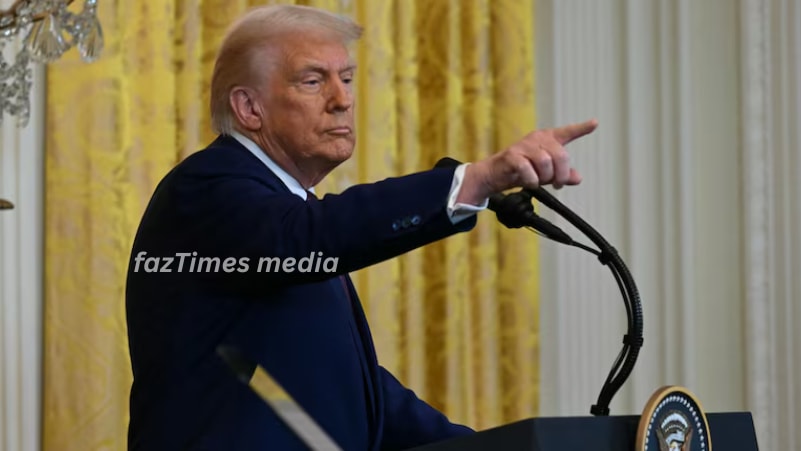

FazTimes Media | President Donald Trump signed an executive order on August 7, 2025, which was a big step in the trade conflict between the U.S. and India. This move raises the tariff on goods from India by 25%, making the total tariff on these goods coming into the U.S. 50%. India's continued purchases of oil from Russia pose a significant threat to U.S. national security, prompting this decision.
Trump used the International Emergency Economic Powers Act (IEEPA) to say that India's dealings with Russian oil were of national interest. The order says, "I find that the Government of India is currently importing oil from the Russian Federation, either directly or indirectly."
Here's a shorter and clearer version of what was said:
Changes Coming Up:
All qualified Indian goods will face an extra 25% duty twenty-one days after the agreement's signing, bringing the total duty to 50%. India responded by being harshly critical and defiant.
The move was strongly criticized by India's Ministry of External Affairs, which called it "unjustified, irrational, and unreasonable." Furthermore, they asserted that there has been no punishment for other major energy consumers. The government clarified that market conditions and concerns about energy security, not political alliances, drive its reliance on Russian oil.
Ajay Srivastava, a former trade official, pointed out that focusing on India while ignoring China's bigger Russian oil imports was contradictory.
Effects on Business and Trade
The amount of goods that India sent to the US in 2024 was about USD 87 billion. A 50% tax could potentially lead to a significant decline in sales of textiles, jewelry, medicines, machinery, and leather. Predictions suggest a 40–50% drop in exports.
An Indian study revealed that the proposed tax could impact approximately 87% of India's exports to the U.S.
Thinking About Strategies Again?
Higher taxes show that the American government's policies have changed in a bigger way. Even though there were attempts to improve ties in the past, like when Trump and Modi met in February to talk about energy partnerships and trade goals, things quickly went disastrously.
Reports say that India's security advisor spoke with Russian officials about working together on energy issues. This indicates that India is determined to keep its strategic freedom. Modi's recent trip to China, his first in more than seven years, made people think about how alliances in the area might change.
How Oil Prices Affect the World
The markets acted quickly. According to BBC News and other news sources, world oil futures went up a little after the tariffs were announced, which made prices go up by about 1%. (Politico and The Times) Secondary sanctions could cut Russia's energy income by 10–20%. Such measures would cause oil prices to rise by US$6–11 per barrel and raise the risk of a global slump.
What will happen next? These are the main points:
It will cost you more to live after August 27, 2025. Shipments arriving before September 17 will not incur any charges.
India has said it will protect its interests if it has to. This could cause taxes to be paid by both sides or a change in trade partners.
Because of the stress, business leaders want to start new trade talks. To expand its range of products, India is investigating alternative markets and energy sources in the interim.
Last Words: A Decisive Moment in International Business
This move on tariffs is a sign of one of the most significant changes in ties between the US and India in recent years. India and Brazil are the only two countries that have to deal with a total tariff burden of 50% from the U.S. This episode demonstrates the strategic use of trade policies.
Indian farmers and importers immediately feel the negative effects. It makes officials and people who make decisions think quickly about alliances, energy diplomacy, and geopolitical choices.
India's handicrafts and medicines are facing significant financial challenges. In terms of politics, the move may make New Delhi want to strengthen ties with countries in the region, like China and the Gulf, especially when it comes to energy deals.
In Washington, D.C., Trump says that his actions are part of an "America First" plan. He employs trade policies both as a barrier and to influence global norms. There is one very clear lesson that can be gleaned from the current situation: trade and diplomacy are no longer two separate fields on a global scale; they are now one big battleground.
Our main goals at FazTimes media are to be accurate, confident, and follow excellent journalistic standards. We check every news story we share with a number of trustworthy and separate sources to make sure it's true.
We have read this report along with articles from major news outlets throughout the world, including BBC News, Reuters, Bloomberg, Al Jazeera, NDTV, The Economic Times, and The Indian Express.
We want to keep the highest standards in global journalism so that our readers can trust the information they acquire.


Discussion0
Join the conversation on this story
Loading comments...