
General
Trump's Diplomacy with China: Will He End the Trade War?
By Saquib Ansari
Published: Sep 15, 2025, 05:57 PM
Last updated: Sep 15, 2025, 06:34 PM


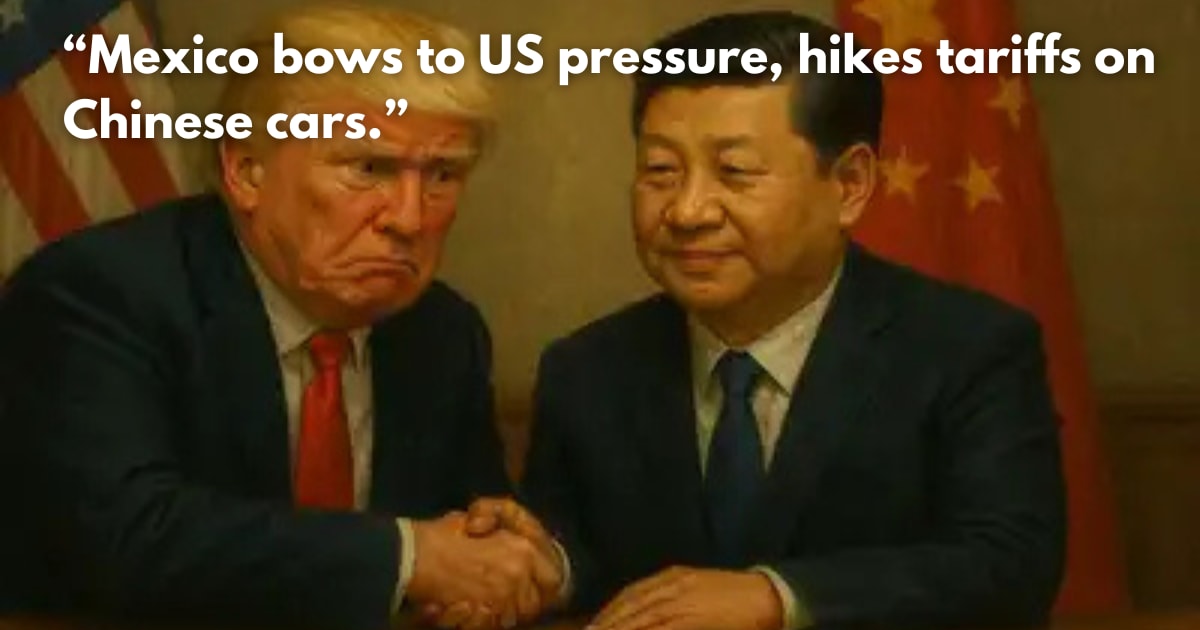

FazTimes Media: Diplomacy might become important again as news comes out about a possible visit by US President Donald Trump to China in early November. The trip could happen either before or after the Asia-Pacific Economic Cooperation (APEC) summit in South Korea. The planned trip is seen as an effort to improve relations and maybe reduce the current trade war between the world's two biggest economies.
This idea comes at a tense time. Since April, the US and China have been in another round of increasing tariffs. The White House has already added 30 per cent tariffs on Chinese imports and is pushing its European allies to put barriers as high as 100 per cent on Chinese products. However, according to BBC News, many European countries are not ready to follow the US, worried about how it might affect their own industries.
Preparation for a Xi-Trump Meeting: Diplomacy in the Spotlight
Chinese and American officials have had several phone calls this week, setting up a possible meeting between Trump and Chinese President Xi Jinping. I believe that these talks focus more on arranging the meeting than on making significant changes in policy, according to experts.
Chen Qi, a professor of international relations at Tsinghua University, told local media that any real progress in the trade war now depends on Xi and Trump. “If the two leaders meet, it’s more likely that the situation will not get worse,” he said. But he also warned that China would not be shy about limiting exports of rare earth materials if the US increases pressure.
Rare Earths: Beijing's Strategic Asset in the Global Power Game
Wu Xinbo, Dean of the Institute of International Studies at Fudan University, stated bluntly, “This has been our most effective card played against the US, hitting America where it hurts most.” He pointed out Trump's concerns regarding the possibility of China cutting off rare earth supplies again.
The US military relies heavily on rare earths for advanced systems such as the F-35 fighter jet, radar systems, submarines, and missile guidance. Although Beijing eased some civilian-use restrictions in June as part of a temporary trade agreement, it continues to strictly control military-grade exports.
Shen Dingli, a Shanghai-based international affairs expert, described these restrictions as a “calculated move to maintain a strategic upper hand.”
Security Tensions: South China Sea and Taiwan as Flashpoints
The trade dispute is just one aspect of a broader geopolitical situation. This week, Chinese Defence Minister Dong Jun warned US Defence Secretary Pete Hegseth about maritime security during their call. Beijing stressed that stability in the South China Sea is a "core interest", and criticises what it deems foreign provocations.
The South China Sea is one of the world's most contested maritime regions, with overlapping claims by China, the Philippines, Vietnam, and others.
Beijing considers Taiwan an inalienable part of its territory, while the US, without officially recognising it as independent, has committed to supporting Taipei with defensive arms. Chinese Foreign Minister Wang Yi later urged Washington to “exercise caution and prudence” on sensitive issues.
According to Al Jazeera, Beijing announced plans to turn Scarborough Shoal into a marine reserve, a move analysts see as an effort to bolster its territorial claims against Manila.
Rephrase the following: 'Enhance the self-esteem and autonomy of adolescent girls,' said an associate professor at Nanjing University. 'It is key for Beijing to expect Washington to scale down its "freedom of navigation" missions in the South China Sea.' “China will call for restraint on both sides to avoid accidents that could escalate tensions,” he noted.
For Washington, balancing freedom of navigation, alliance commitments to Manila, and broader trade concerns makes the South China Sea a thorny challenge.
Local Relevance: Why This Matters for Economies and Communities
For people living nearby, the effects of this trade war are really close to home. When tariffs go up, it can change the prices of things like oil, metal, and other important goods. These price changes then affect the local market. Items like phones, cars, and even everyday things people buy can become pricier. Furthermore, problems with getting rare earth materials—used in things like smartphones and solar panels—can cause issues across many industries around the world.
A Fragile Balance: Cooperation, Competition, and the Risk of Collapse
Ja Ian Chong from the National University of Singapore explained, “What China really wants is for the US to stop being so involved in the South China Sea. But what the US wants is to keep its friends and its influence around the world. Finding a middle path won’t be easy.”
Conclusion: A Defining Moment in U.S.–China Relations
President Trump’s planned visit to China happens at a crucial time. With tariffs already causing stress on both countries and the deadline for a truce set for November 10, the coming weeks could shape the future of US-China relations for a long time.
Our primary goals at FazTimes Media are to be accurate and confident and adhere to the highest journalistic standards. We check every news story we share against several trustworthy and separate sources to ensure its accuracy.
We have reviewed this report, along with articles from major news outlets worldwide, including BBC News, Reuters, Bloomberg, Al Jazeera, NDTV, The Economic Times, and The Indian Express.
We want to keep the highest standards in global journalism so that our readers can trust the information they acquire.
Link:
https://www.faztimesmedia.com/viewpost/trumps-diplomacy-with-china-will-he-end-the-trade-war


Discussion0
Join the conversation on this story
Loading comments...