
General
Trump's H-1B Visa Fee Hike: $100K Annual Cost & New Rules
By Saquib Ansari
Published: Sep 20, 2025, 07:01 AM
Last updated: Sep 20, 2025, 11:53 AM
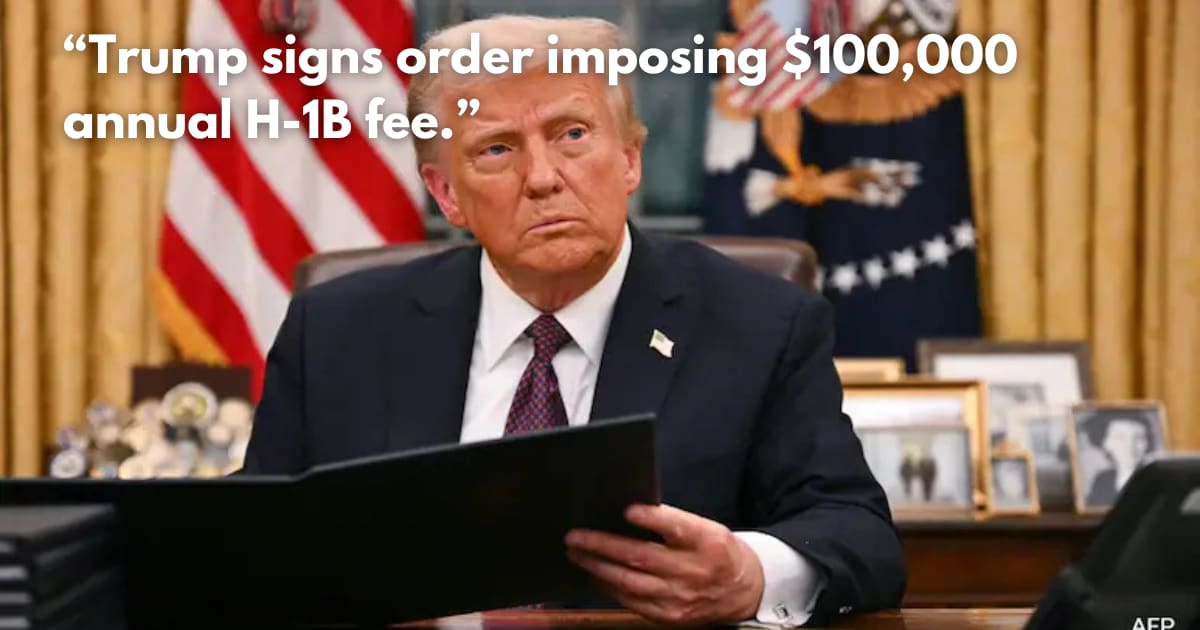



FazTimes Media: US President Donald Trump has signed a proclamation that significantly raises the cost of obtaining an H-1B visa, a move that has stunned the global technology sector. The new policy introduces a $100,000 annual fee per application, which could reshape the landscape of skilled immigration to the United States.
The H-1B visa, long regarded as a vital pathway for Indian engineers, IT professionals, and researchers, is now becoming one of the most expensive routes for entering the American workforce. With this decision, the Trump administration claims it aims to address "the misuse" of the program and prioritise hiring American workers.
Trump signed the proclamation at the White House on Friday, accompanied by senior officials. Pointing out the importance of domestic workers, he stated, “We need workers. We need great workers, and this policy ensures that we will have them. The incentive is now to hire American workers.”
Commerce Secretary Howard Lutnick strongly backed the policy, asserting that imposing a high fee would discourage reliance on foreign labour. “These companies will need to reconsider their options,” he said. Paying the government $100,000 in addition to compensating the worker is not sustainable. Instead, he suggested training graduates from top American universities. That is the goal here,” Lutnick explained.
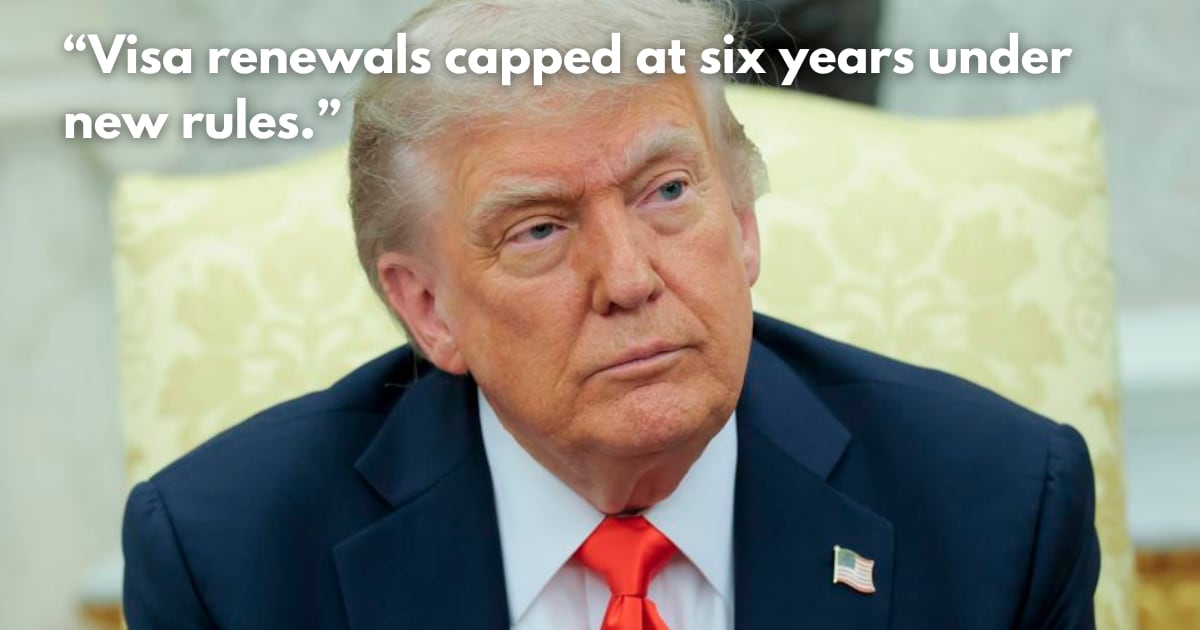
According to the proclamation, the revised rules apply to both new and renewal applications, with visas renewable for a maximum of six years. Interestingly, alongside the H-1B overhaul, Trump also introduced a new “gold card visa” scheme, allowing individuals to obtain visas for $11 million and corporations for $2 million. Critics argue that this introduces a two-tier immigration system, which excludes skilled middle-class professionals and grants preferential access to the ultra-wealthy.
Why the Change? → What Sparked the Shift?
An official document stated that the H-1B program has been "deliberately exploited" to replace American workers with low-paid foreign labour, which undermines both economic competitiveness and national security.
According to BBC News, the Trump administration sees this as part of a broader effort to implement "America First" policies and ensure that U.S. jobs are not "outsourced through visas."
At the same time, Trump claimed that the move would ultimately strengthen the nation: "Everyone’s going to be pleased. We’re keeping people who really want to be here, who will be productive, but we won’t allow misuse anymore."
Impact on Indian Professionals → How Indians Are Affected
The implications for Indian tech workers are significant. According to Pew Research, nearly 73% of H-1B visas approved in 2023 went to Indian-born applicants, while China accounted for 12%. For decades, this program has been a pathway for Indian engineers at companies like Google, Microsoft, and Amazon.
With the new $100,000 annual fee, companies may now be hesitant to file H-1B petitions. Analysts suggest that smaller IT firms—especially those that rely on contract workers—may reduce operations in the U.S., potentially shifting focus to Canada, Europe, or Australia.
An Indian IT recruiter based in Bengaluru said, “This move essentially kills the dream of mid-level professionals who were hoping to move to the U.S. Even big Indian IT firms will struggle to justify such costs when they can build teams elsewhere.”
Reactions from the Tech World → Tech Industry Reacts.
The tech industry, which heavily relies on H-1B visas, has expressed concern. While some companies remain cautious in their official responses, insiders warn that innovation and competitiveness may suffer. Elon Musk, the CEO of Tesla and a longstanding supporter of the H-1B programme, has reportedly expressed his readiness to engage in a vigorous defence of the programme. Musk himself has employed many foreign engineers in Tesla’s research labs.
According to Al Jazeera, opposition is growing not only from Silicon Valley but also from universities that fear the change will discourage international students, who often transition from academic programs to H-1B roles.
The Politics Behind the Policy → Politics Driving the Move.
Observers argue that the move is not solely about job creation but also reflects political strategy. Trump, who once described himself as a supporter of the H-1B visa program and used it for his own businesses, has changed his stance under pressure from far-right groups that view it as harmful to American workers.
Political analysts suggest that this decision might strengthen support among certain voter groups ahead of upcoming elections. However, it could alienate the influential tech industry and the Indian-American community, both of which are vital to the US economy.
Legal and Administrative Changes → Law & Policy Tweaks
The proclamation also instructs the Department of Labour to adjust prevailing wage levels, which set the pay standards for H-1B workers. Increasing these salaries, along with the $100,000 fee, could further discourage employers from using the programme.
Meanwhile, the Department of Justice (DoJ) has launched investigations into alleged misuse of the programme, led by Harmeet Dhillon, the India-born Assistant Attorney General for Civil Rights. Dhillon has called on Americans to report instances where they believe companies favour foreign workers over domestic ones.
In her statement: “Please share your leads with us. We’ve already taken action against some employers. The goal is fairness.”
Contradictions in Trump’s Approach → Trump’s Mixed Signals
What makes this policy noteworthy is Trump’s previous support for the H-1B visa program. In December 2024, after the election, he openly praised the programme, stating, “I have many H-1B visas on my properties. I've been a believer in the program. It’s a great program.…
The abrupt shift, according to many experts, highlights the administration's challenge in balancing economic needs with political messaging. While the tech sector demands more skilled workers, Trump's political base prefers stricter immigration controls.
Consequences for the US Economy → Impact on the US Economy
If implemented strictly, the $100,000 fee could have unintended consequences. By pushing foreign talent away, the US may lose its advantage in artificial intelligence, software engineering, and biotechnology, where India provides a steady supply of skilled professionals.
BBC News reported that several American universities are already concerned about losing top international students to Canada and Europe, where immigration policies are more welcoming. Economists warn that restricting foreign talent could slow innovation, reduce competitiveness, and even lead to the movement of jobs overseas.
A Silicon Valley executive remarked, “If we can’t bring the talent here, we’ll move the jobs abroad. The work won’t stop—it will just leave the US.”
Looking Ahead → The Road Forward
Right now, the new rule is likely to face legal challenges from business groups and organisations that advocate for people's rights. There's also uncertainty about whether Congress will back these significant changes or try to make them smaller.
For Indian workers, the situation is tough right now. Families who were planning to move to the US might have to think again about their plans. Furthermore, companies in India might start sending their skilled workers to other places around the world instead of the US.
Conclusion → Final Take
The Trump administration’s choice to add a $100,000 yearly cost for H-1B visas is one of the most significant changes in US immigration rules in a while. Although it's being sold as a way to protect American jobs, this move could cut ties with the global tech industry and stop many skilled workers, especially from India, from coming to the US.
Al Jazeera highlighted that this issue extends beyond visas, demonstrating how politics is influencing the US's economic decisions. For now, the future of Indian tech workers in the US is unclear, and the once hopeful H-1B visa dream is being tested more than ever.
Our primary goals at FazTimes Media are to be accurate and confident and adhere to the highest journalistic standards. We check every news story we share against several trustworthy and separate sources to ensure its accuracy.
We have reviewed this report, along with articles from major news outlets worldwide, including BBC News, Reuters, Bloomberg, Al Jazeera, NDTV, The Economic Times, and The Indian Express.
We want to keep the highest standards in global journalism so that our readers can trust the information they acquire.
Link:
https://www.faztimesmedia.com/viewpost/trumps-h-1b-visa-fee-hike-100k-annual-cost-new-rules


Discussion0
Join the conversation on this story
Loading comments...