
Turkey Ramps Up Missile Production Amidst Israel-Iran Escalation
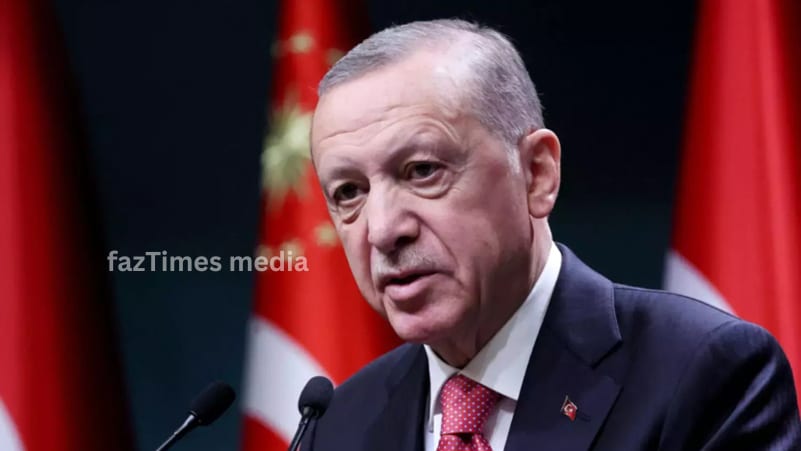
fazTimes media: As the Israel-Iran strife enters an unstable modern stage, swells are being felt far past the quick war zone. In a noteworthy improvement, Türkiye has declared a driven arrangement to boost its production of medium- and long-range rockets, a move President Recep Tayyip Erdogan says is fundamental to support national security and prevent potential dangers.
The declaration, made earlier this week after a cabinet assembly, marks a pivotal rotation in Ankara’s defense posture. Whereas Türkiye isn't directly included within the strife between Israel and Iran, its topographical vicinity and NATO participation deliver its choices broader territorial and worldwide noteworthiness.
“In light of later advancements, we are making generation plans to bring our medium- and long-range rocket stockpiles to a level that guarantees deterrence,” Erdogan said, adding that the objective is to construct a defense capacity “so solid that no one will indeed set out to act extreme toward us.”
The timing, the tone, and the expectation of this explanation recommend more than a scheduled defense arrangement. Examiners caution this may flag the beginning of a modern arms race within the, as of now, unsteady Middle East, and one that may draw in players not initially part of the Iran-Israel confrontation.
Türkiye’s Geopolitical Situation
Türkiye finds itself in an extraordinarily unstable position. It offers borders with conflict-prone countries like Syria, Iraq, and Iran, which have frequently acted as a buffer between Europe and the Middle East. Whereas pressures between Ankara and Tel Aviv have been high for a long time, especially over Israel’s arrangements in Gaza, Türkiye has not taken a dynamic stance in the ongoing Israel-Iran strife.
Still, the suggestions of that war are unavoidable. Rocket trades between Israel and Iran, both straightforward through intermediaries, have shown how rapidly insecurity can spread over borders. With key U.S. bases found in Türkiye and its NATO commitments in place, the nation is both a cutting-edge player and a potential target should the strife extend.
“There is no quick risk to Türkiye right now,” said Ahmet Kasim Han, teacher of worldwide relations at Istanbul's Beykoz College. “But the territorial security arrangement is unraveling, and Ankara is responding to that collapse by contributing intensely to its discouragement capabilities.”
Arms Race on the Skyline?
Erdogan’s emphasis on rocket generation isn't fair to a degree. It also reflects a developing craving to coordinate, on the off chance that not challenge, the military capabilities of Israel and the United States, particularly within the range of airborne fighting.
“Israel and the U.S. have set a tall benchmark when it comes to rocket defense and hostile airstrike capabilities,” said Han. “Türkiye, Iran, and other territorial powers are presently attempting to catch up.”
Türkiye’s defense segment has seen quick development in the last long years. Its homegrown rambles, just like the Bayraktar TB2, have gotten universal recognition and have been utilized in clashes from Libya to Ukraine. Presently, the center is moving to longer-range rocket frameworks that can extend control and guarantee survivability in a high-intensity struggle environment.
Erdogan’s most recent comments align with this broader aspiration. “God willing, within the not-too-distant future, we are going to reach a defense capacity that's so solid that no one will indeed set out to act intensely toward us,” he announced.
Strategy Still on the Table
Despite his self-assured military position, Erdogan has not closed the door on strategy. In a later phone discussion with German Chancellor Friedrich Merz, he emphasized that the Iranian atomic issue might, as it were, be settled through transactions.
This dual-track approach of reinforcing defense while supporting discretion is characteristic of Türkiye’s outside approach under Erdogan. Known for adjusting relations between the West and East, Türkiye has overseen the preservation of ties with NATO, the U.S., Russia, and Iran, regularly at the same time. Investigators accept that this adjusting act is becoming more troublesome as blame lines extend over the Middle East.
“Türkiye needs to be seen as a stabilizing drive, but its later moves recommend it's planning for a worst-case scenario,” said Dr. Lale Gündüz, a defense investigator based in Ankara. “This is both a message to its enemies and an explanation of freedom from the conventional Western security umbrella.”
India’s See: Observing Closely from the Sidelines
Back in India, outside approach specialists and vital scholars are closely observing improvements in Türkiye. With solid political ties to both Ankara and Tel Aviv and a vital interface in Iran, modern Delhi has noteworthy stakes in how the territorial strife unfurls.
India has not issued an official explanation on Türkiye’s rocket development plans. In any case, behind closed doors, policymakers are allegedly concerned that the Israel-Iran crisis might trigger a domino effect over the Middle East, affecting oil costs, energy pipelines, and the security of millions of Indian specialists within the region.
“This isn't about Türkiye building rockets. It's approximately how each nation is recalibrating its security posture in reaction to this modern instability,” said Suhasini Haidar, a senior remote undertakings writer based in Delhi. “India must be arranged for disturbances, both financial and strategic.”
An Unused Security Worldview for the Middle East
The Middle East has long been a theater for intermediary wars and moving collusions. But with Israel straightforwardly focusing on Iranian locales and Iran weighing its reaction, a modern and perilous point of reference is being set. Nations like Türkiye are pursuing the composition of the divider and planning appropriately.
This isn’t about discouragement; it’s about impact. In a locale where military might frequently translates into discretionary weight, contributing to rocket innovation may, moreover, offer assistance to Türkiye in carving out a more compelling part.
There’s also the residential point. As Türkiye faces expansion and financial weight, defense generation offers both political mileage and job creation opportunities. Erdogan’s government has regularly highlighted innate defense fabrication as a point of national pride.
Conclusion: A Future in Flux
Türkiye’s choice to ramp up rocket generation amid the Israel-Iran strife is more than just a military overhaul. It’s a reflection of more profound geopolitical shifts, a reaction to the disintegration of conventional collusions, and a conceivable trigger for a more extensive territorial arms race.
Whereas Ankara demands it is just fortifying its defense, the suggestions extend far past its borders. As pressures proceed to rise, the enormous question is not whether the Middle East is heading toward an arms race but how far away and how quickly.
For nations like India, Türkiye’s advancing defense methodology offers a glimpse into a future where control is progressively anticipated through rockets and discouragement, not fair strategy. The coming months will test whether territorial players can step back from the brink or whether the arms race gets to be the modern standard.
© fazTimes media, 2025 – All rights reserved.


Discussion0
Join the conversation on this story
Loading comments...