
General
Ukraine Strikes Choke Russian Oil Exports & Fuel Supplies
By Saquib Ansari
Published: Sep 18, 2025, 05:30 PM
Last updated: Sep 19, 2025, 04:12 AM


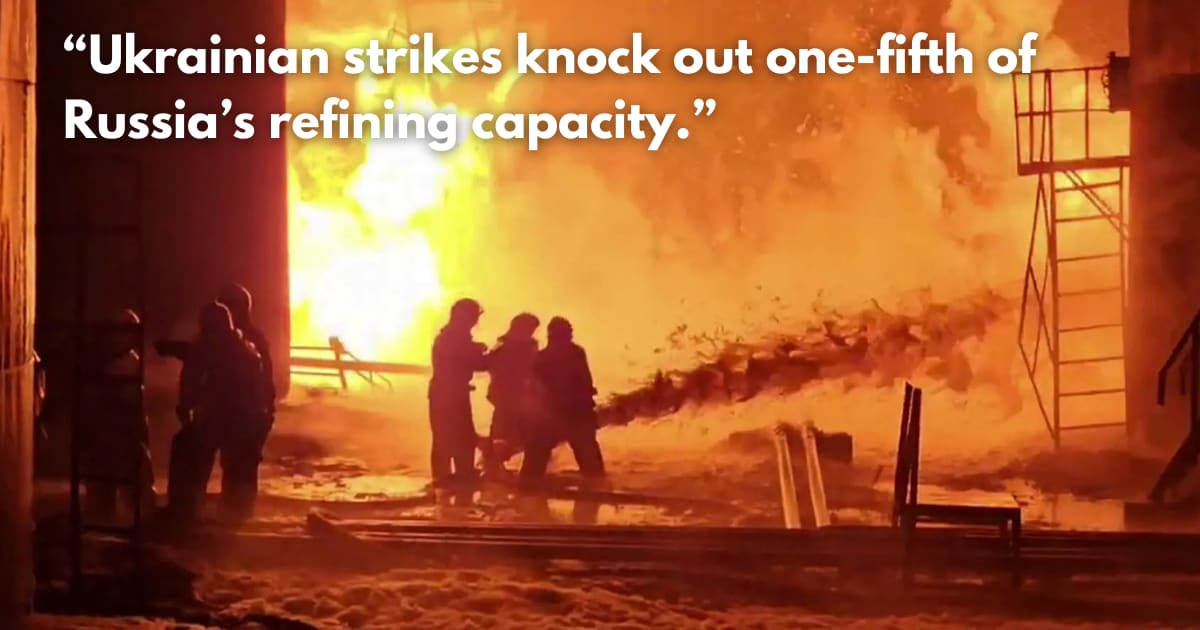

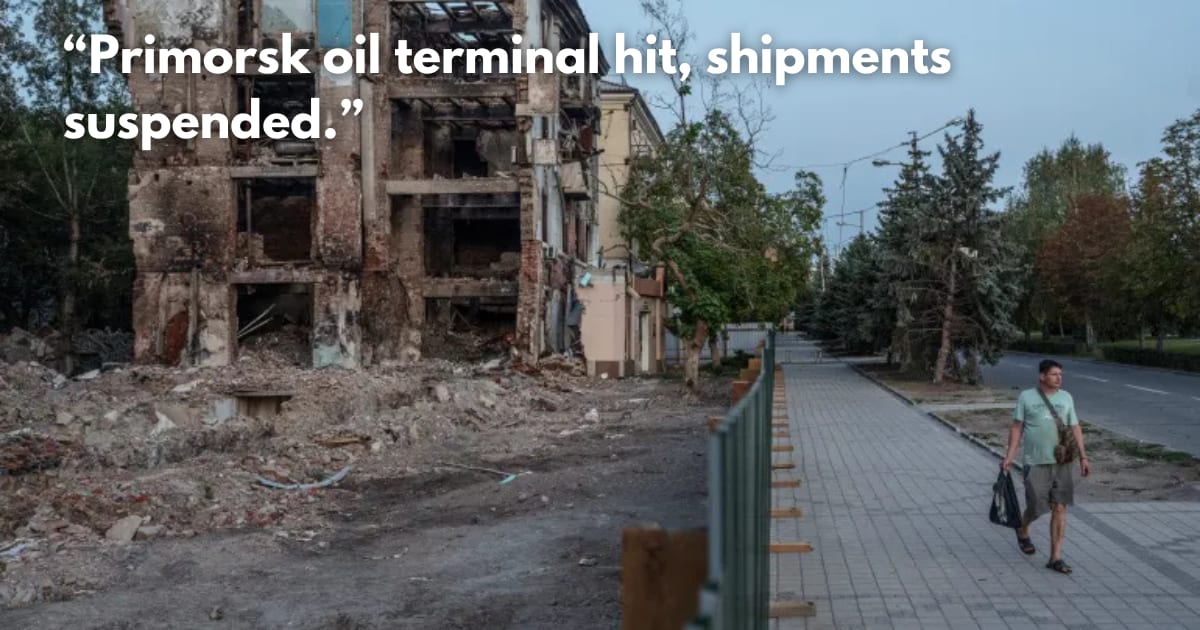

FazTimes Media, Kyiv / New Delhi: The war in Ukraine has taken a dramatic turn recently, with Kyiv intensifying drone strikes on Russia’s oil refineries, storage facilities, and export terminals. These targeted attacks have led to widespread fuel shortages across various Russian regions, disrupted exports, and increased pressure on Moscow’s economy. At the same time, the European Union (EU) is indicating tougher sanctions, with Poland calling for a complete ban on Russian oil imports after Russian drones entered NATO territory earlier this month.
The strategy is clear: deny Russia the two things it relies on most to sustain its war — fuel and money.
Ukraine’s New Approach: More Than Defence → Ukraine’s New Playbook
Since early 2024, Ukraine has changed its battlefield approach. Instead of just defending territory, Kyiv has started a dual offensive:
President Volodymyr Zelenskyy gave a national speech on Sunday outlining the rationale for this change.
Moscow uses these energy revenues to finance its military. President Volodymyr Zelenskyy, in a national address on Sunday, explained the logic behind this shift.
“Russia’s war is essentially a function of oil, gas, and other energy resources,” Zelenskyy said. “The most effective sanctions are not always words or papers. The most effective ones are fires at refineries, at oil terminals, and at depots.”
On the same day, Ukrainian drones attacked Russia’s second-largest refinery in Kirishi, a plant that produced millions of tonnes of diesel and fuel oil last year. The attack disabled a unit that handled about 40 per cent of its capacity.
Russian officials confirmed to Reuters that they had to cut production, resulting in the refinery operating at only three-quarters of its normal output. Days later, another strike hit the Saratov refinery, which is known to supply fuel directly to the Russian military.
The impact of these strikes is evident across Russian territories. The Russian state-run newspaper Izvestiya recently reported that fuel shortages have spread to ten regions, including central areas like Ryazan and Nizhny Novgorod, as well as the annexed region of Crimea.
Petrol station owners interviewed by the Russian Independent Fuel Union reported that deliveries had halted for weeks, leading to closures. Regional governors have also raised concerns about the shortages, with images of long lines at fuel stations becoming widespread on Russian social media. Ukraine claims to have already destroyed one-fifth of Russia’s refining capacity this year.
A commander from Ukraine’s Unmanned Systems Forces recently stated:
“The Russian war machine will only stop when it runs out of fuel.”
This aligns with Zelenskyy’s warning at the Yalta European Strategy Meeting in Kyiv: “Putin will begin to end this war himself when he truly feels that his resources for war are running dry.”
Fuel is not Russia’s only challenge. Ukraine’s second strategic aim is to disrupt oil exports, which account for nearly half of Russia’s federal revenue. Last Friday, Ukrainian drones reportedly targeted Primorsk, Russia’s largest oil offloading terminal on the Baltic Sea. According to Suspilne, a Ukrainian news outlet, the strike caused fires at a pumping station and a moored ship, leading to a halt in shipments.
Other attacks damaged infrastructure along the Transneft Baltic Pipeline System-2, which transports crude oil to export terminals at Ust-Luga. Industry sources told Reuters that Russia’s main pipeline operator has warned producers they may soon be required to reduce output due to the damage.
While Transneft dismissed these claims as “fake news”, analysts believe the situation is serious. According to BBC News, Russia has banned refined fuel exports since February in an effort to prioritise domestic shortages, but even crude exports are now facing threats.
The attacks have sparked discussions within Europe. On September 10, Russian drones entered NATO airspace in Poland, raising concerns throughout the bloc. As a response, Warsaw called for an immediate EU ban on all Russian oil imports.
Currently, most EU states have ceased buying Russian crude. However, Hungary and Slovakia continue to import via pipelines, under exemptions valid until 2027, arguing that it is more economical than sourcing from other regions.
EU Commission President Ursula von der Leyen announced this week that Brussels is working on its 19th sanctions package, focusing on energy, banks, and cryptocurrency transfers. “The Commission will propose accelerating the phase-out of Russian fossil imports,” she posted on social media.
According to Al Jazeera, while the EU has reduced oil imports by nearly 90 per cent since the invasion in 2022, gas imports remain an issue. A London-based think tank, Ember, estimates the EU still paid Moscow $23.6 billion for gas last year, almost $5 billion more than it provided Ukraine in military aid.
This contradiction has drawn strong criticism. Zelenskyy recently urged Europe: “Stop searching for excuses. If Putin refuses peace, he must be forced into it.”
Russia’s Counter Move → Russia Strikes Back
Despite these setbacks, Russia continues to advance militarily. Over the past week, its forces captured three villages—Sosnovka and Novonikolayevka in Dnipropetrovsk and Olhivske in Zaporizhia. In a rare move, Ukraine’s Commander-in-Chief Oleksandr Syrskiy dismissed two officers responsible for these sectors, indicating frustration over territorial losses. Analysts at the Washington-based Institute for the Study of War say Russia has been gaining ground at a high human cost: around 130,000 casualties for 1,910 square kilometres since May.
President Zelenskyy also noted on Sunday that Russian forces were suffering “significant losses” in Kupiansk and Dobropillia, two of the fiercest hotspots on the front line. Meanwhile, Ukrainian units are reportedly moving closer to the Russian border in the northern Sumy region.
The energy conflict between Ukraine and Russia has notable consequences for India and the local populations. India remains a major buyer of discounted Russian oil since sanctions were imposed, which helps to moderate fuel prices domestically. However, if Ukraine's attacks on Russian infrastructure continue and the EU introduces more stringent measures, global oil prices may once again rise.
As Al Jazeera reported, "The Russian war machine will not only slow down on the battlefield but also at fuel stations and export terminals. Damage to refineries and delays in shipments erode Moscow's fighting capacity.
Ukraine's message is clear: if Russia's strength comes from oil, then oil must become its weakness.
Our primary goals at FazTimes Media are to be accurate and confident and adhere to the highest journalistic standards. We check every news story we share against several trustworthy and separate sources to ensure its accuracy.
We have reviewed this report, along with articles from major news outlets worldwide, including BBC News, Reuters, Bloomberg, Al Jazeera, NDTV, The Economic Times, and The Indian Express.
We want to keep the highest standards in global journalism so that our readers can trust the information they acquire.
Link:
https://www.faztimesmedia.com/viewpost/ukraine-strikes-choke-russian-oil-exports-fuel-supplies


Discussion0
Join the conversation on this story
Loading comments...