
General
UN Sanctions Snapback: Iran Fears Economic Pain & War Risk
By Mohamed Areif Mubarack
Published: Sep 28, 2025, 03:36 PM

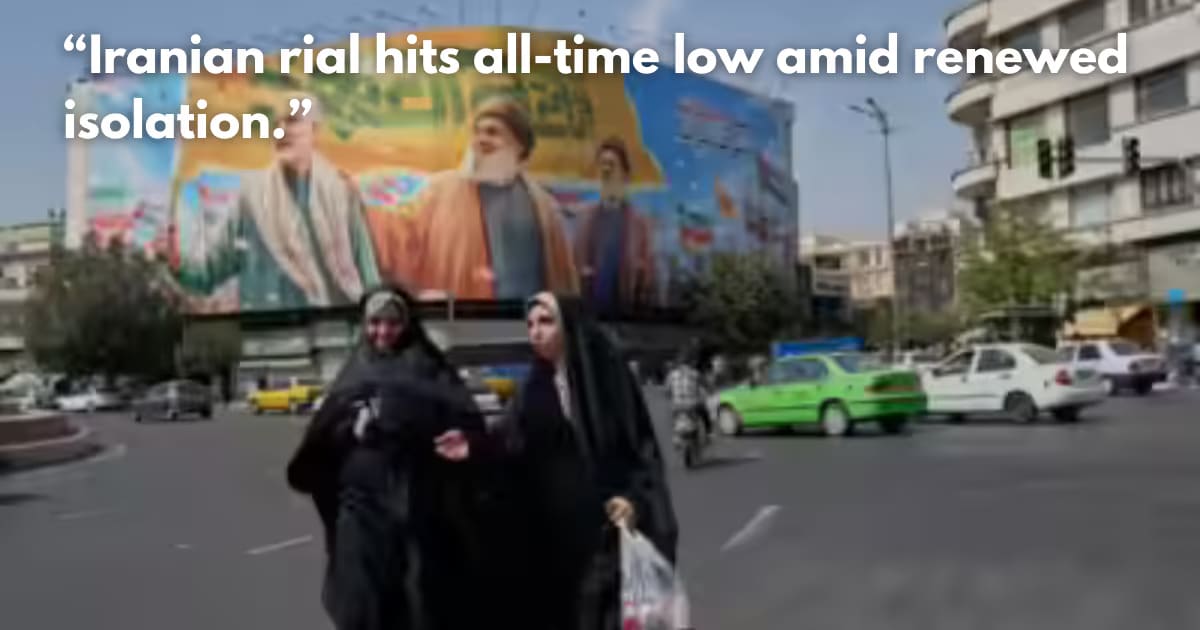
FazTimes Media, Tehran: For millions of Iranians, the time change to midnight GMT on Sunday brought a big wave of worry. The “snapback” part of the 2015 nuclear agreement was turned on again, bringing back UN sanctions on Iran almost ten years after they were put on hold. This action, started by European countries that signed the nuclear deal, has caused serious fears of getting worse economic problems and a possible start of another conflict.
The sanctions include rules on weapons, freezing assets, limits on banking, and travel bans. These are required for all UN member countries. While Western cities say this is a needed step to stop Iran’s nuclear program, others say it’s the regular people who will suffer the most.
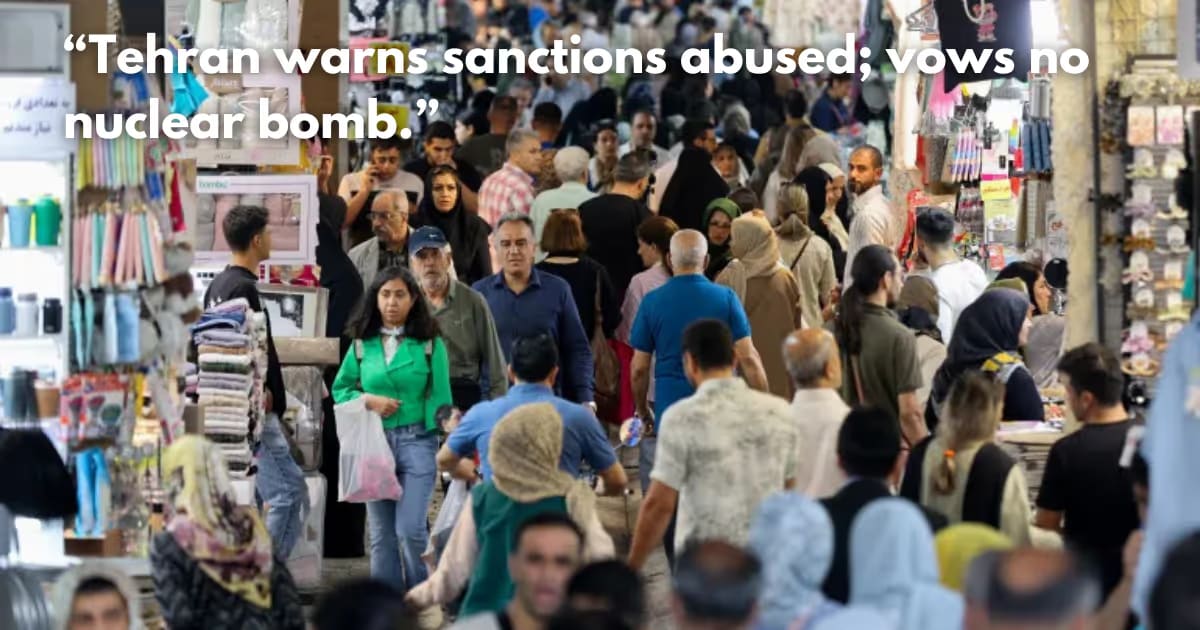
In Tehran’s busy Grand Bazaar, traders are already feeling the effects. The Iranian rial dropped to 1.3 million against the US dollar in the open market—the lowest ever. Rouzbeh, a 35-year-old shopkeeper selling imported electric motors, told Al Jazeera:
“Whenever the dollar goes up, imported goods become too expensive. Some traders shut their shops until prices get back to normal, while others raise prices. But people’s incomes aren’t going up, so sales go down.”
This feeling shows the bigger economic trouble in Iran. With inflation over 40 percent, according to Donya-e-Eqtesad, the country’s biggest economic newspaper, families are preparing for higher prices on food, medicine, and basic things.
For many Iranians, the sanctions are not just about money but also about danger. Israel and the United States have carried out airstrikes recently, killing more than a thousand people and causing billions in damage, as reported by BBC News.
The worry is that the sanctions could give Israel a new reason to attack again. “Israel might use this as another excuse for more fighting,” said a Tehran university professor, who asked for anonymity for safety reasons.
Iran’s Supreme Leader, Ayatollah Ali Khamenei, has already said there will be no talks with Washington, making diplomatic options even smaller.
At the same time, hardline officials in the government say the end of the nuclear deal—the Joint Comprehensive Plan of Action (JCPOA)—proves their long-standing refusal to speak with the West.
The snapback provision was part of the JCPOA, intended to penalize Iran if it broke the nuclear deal's rules. However, Iran claims it was the West, especially the United States, that first failed to keep its promises. When President Trump pulled out of the agreement in 2018, Iran stayed within the deal’s terms for almost a year before slowly increasing its uranium enrichment levels.
Reuters reports that Iran is now enriching uranium to 60 percent, much higher than the 3.67 percent limit in the agreement, but still not enough for weapons. Iran says it has no plans to build a nuclear bomb and accuses Israel and the US of using nuclear claims to justify their hostility.
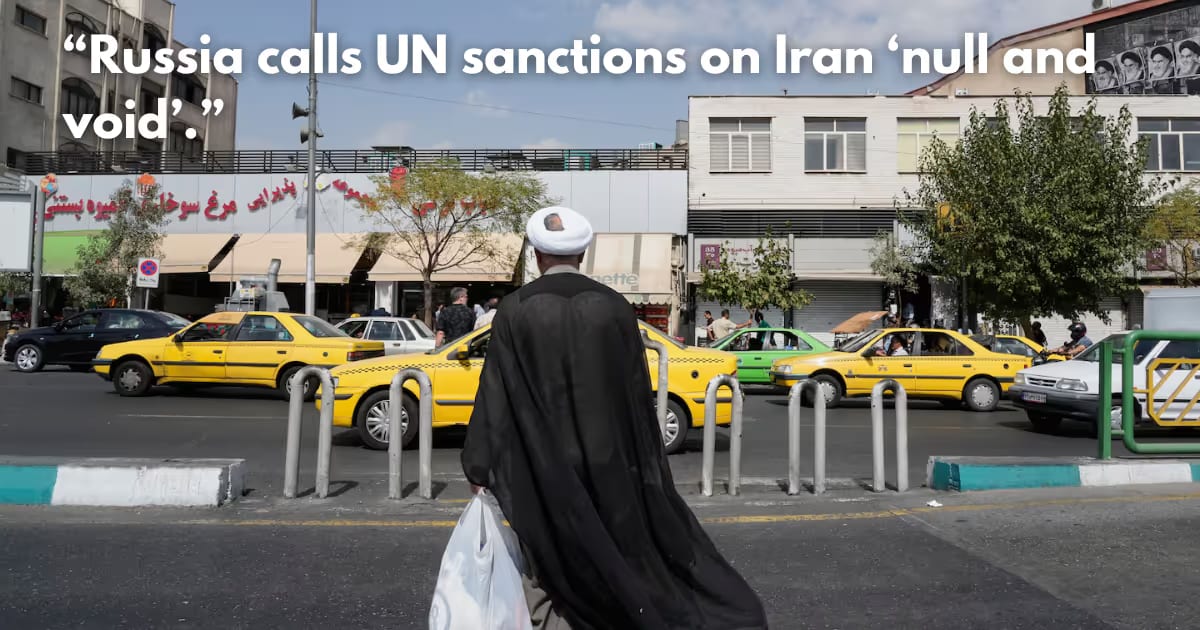
Russia and China, both signatories to the JCPOA, argue that the snapback mechanism is not legal, as it was scheduled to expire in October 2025.
At a UN Security Council meeting, Russia called the sanctions “invalid” and even threatened to reconsider its relationship with the UN Secretariat.
Iran’s newspapers show the country’s divided public opinion. The reformist paper Shargh Daily said the nuclear deal was “dead,” while the conservative Kayhan, whose editor is chosen by Khamenei, said the crisis wasn’t serious. It argued that the economy was doing better without talks than with them.
At the same time, the judiciary told local media and social platforms not to spread “provocative” content about rising prices. Some outlets were given cases for “disrupting psychological security.”
This evidence shows that the authorities are getting ready for possible public anger, especially since people still remember past protests over economic issues.
The accusations of Iran providing drones to Russia for use in the Ukraine war have led to the imposition of sanctions, further straining relations with the West. According to Al Jazeera, European countries have turned down Iran’s offers for a temporary deal and are choosing to apply more pressure instead.
China and Russia continue to support Iran. China is still Iran’s biggest oil buyer, often buying crude at big discounts, while Russia recently signed a $25 billion deal to build nuclear power plants in Iran.
But analysts warn that both countries might be careful to avoid facing more penalties from the UN. Whether they are prepared to openly violate the new sanctions is the crucial question.
Hardline figures like Saeed Jalili, a conservative member of Iran’s National Security Council, have used sanctions to promote their “resistance economy” idea. Jalili recently shared a video criticizing any dealings with the West and urged people to “neutralize the enemy’s unreasonable demands.”
But many regular Iranians feel left out. Zahra, a 42-year-old mother of two in Isfahan, spoke in a phone call:
“They always tell us to be patient and resist. But resistance doesn’t bring food to the table. We are exhausted. Every time there’s hope for peace, politics destroys it.”
This sense of hopelessness shows the growing difference between what leaders say and what people experience.
According to The Guardian, the United States’ current stance on Iran seems heavily shaped by Israel, with American religious groups and pro-Israel activists playing a major role in decision-making. This has made Iran believe that U.S. policy isn’t independent, making it difficult to have real diplomatic talks.
The sanctions were meant to bring Iran back to talks, but they might actually make hardline groups stronger, silence reformers, and make people even more troubled. As one Iranian scholar said:
“The West says sanctions bring peace, but for Iranians, they mean empty store shelves and a future full of uncertainty.”
It's still unclear if diplomacy can come back or if the region will move toward more conflict. But one thing is certain: the Iranian people—not just the leaders—will have to bear the biggest cost.
Our primary goals at FazTimes Media are to be accurate and confident and adhere to the highest journalistic standards. We check every news story we share against several trustworthy and separate sources to ensure its accuracy.
We have reviewed this report, along with articles from major news outlets worldwide, including BBC News, Reuters, Bloomberg, Al Jazeera, NDTV, The Economic Times, and The Indian Express.
We want to keep the highest standards in global journalism so that our readers can trust the information they acquire.
Link:
https://www.faztimesmedia.com/viewpost/un-sanctions-snapback-iran-fears-economic-pain-war-risk


Discussion0
Join the conversation on this story
Loading comments...