
General
US Bill Sparks 'Thought Police' Concerns Over Israel Criticism
By Saquib Ansari
Published: Sep 17, 2025, 06:49 AM
Last updated: Sep 17, 2025, 06:58 AM
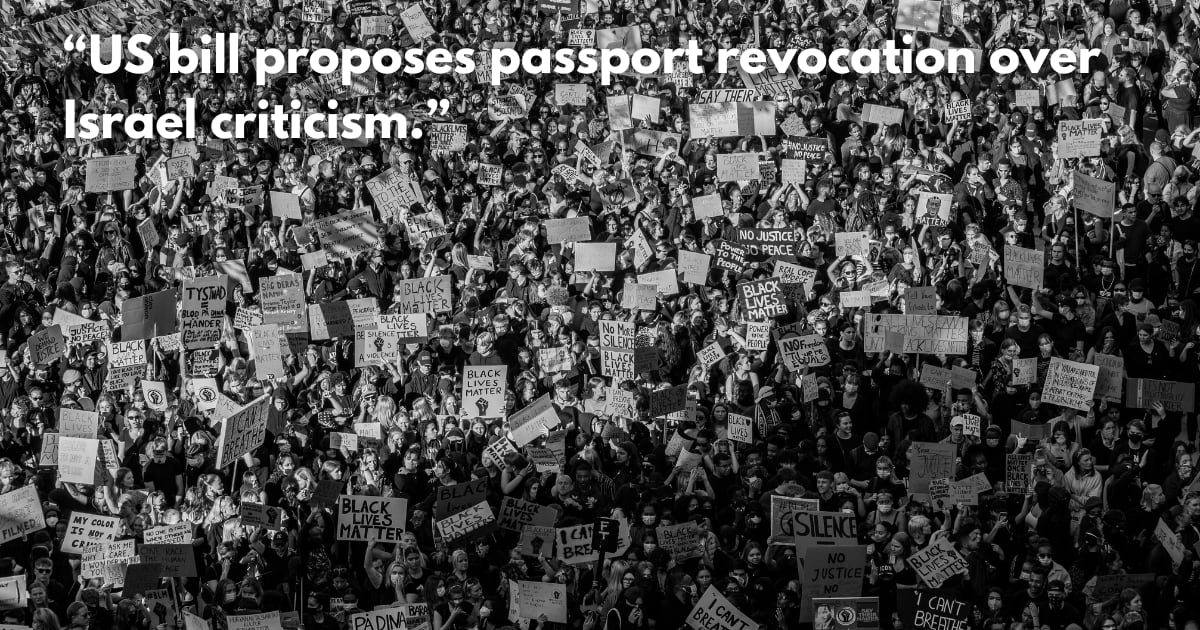
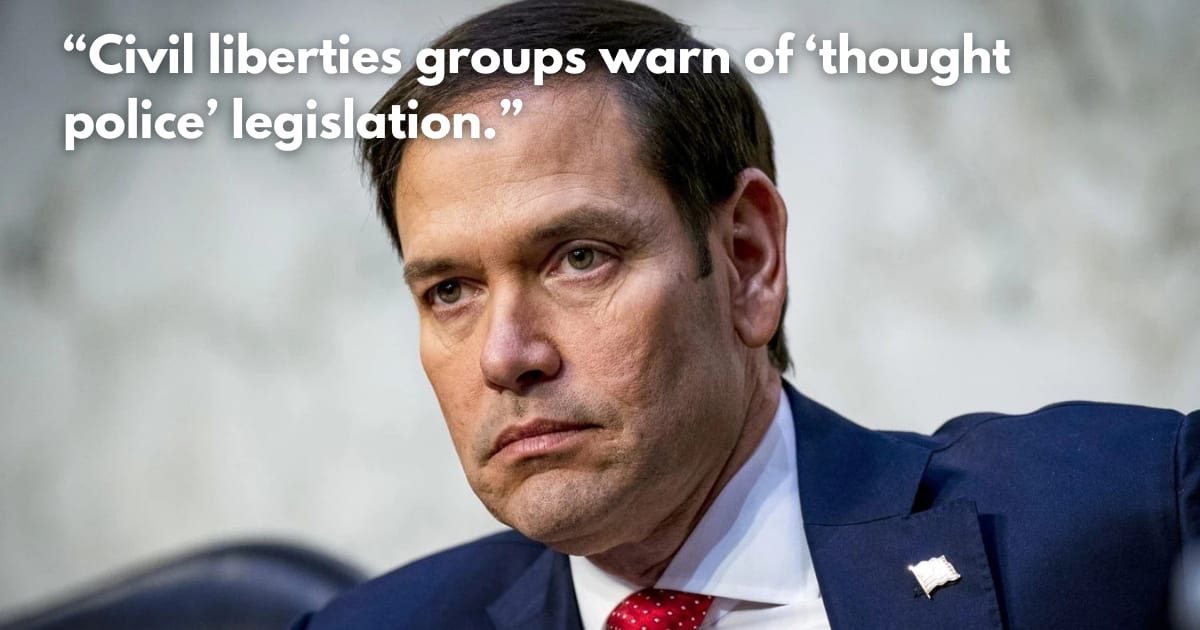

FazTimes Media: US lawmakers have introduced a bill that has sparked a lot of discussion. Civil liberties groups are worried it could take away basic rights from American citizens for criticizing Israel. The bill is backed by Florida Congressman Brian Mast, who is in charge of a key committee in the House of Representatives. Critics call it a dangerous move that could lead to a "thought police" system today.
The Intercept reported on September 13 that the bill would let the Secretary of State take away or deny passports to US citizens if they are seen as helping foreign terrorist groups. While this might seem like a security measure, the unclear language in the bill has scared free speech supporters. They fear it could be used against journalists, activists, and regular people who express different political opinions.
What the Bill Would Do → Inside the Bill
The draft law gives the Secretary of State—currently Marco Rubio—wide authority to cancel passports of US citizens based on what they say, who they associate with, or what they do. This power would be similar to what's already used against non-citizens, who have had their visas and green cards taken away because of political activity against Israel.
One example is Rumeysa Ozturk, a Turkish student at Tufts University. In March, her visa was revoked after she wrote an article in the student newspaper calling for a boycott of Israel. Her article never mentioned Hamas, yet it was enough to get her kicked out. According to BBC News, Ozturk said the decision showed "a climate of fear where even academic debate is treated as a threat."
"Material Support": A Dangerous Loophole → The Loophole Question
Al Jazeera reports that organisations such as the Anti-Defamation League (ADL) and the Brandeis Centre for Human Rights have previously accused student groups, such as Students for Justice in Palestine (SJP), of providing “material support” to Hamas merely by organising protests against Israel’s military operations in Gaza. Under the proposed legislation, students attending rallies or sharing posts on social media could potentially face the risk of losing their passports.
“This is a textbook example of guilt by association,” said Hina Shamsi, a director at the American Civil Liberties Union (ACLU). “Speech and peaceful activism are being recast as terrorism. That is profoundly un-American.”
Journalists in the Crosshairs → Press Under Fire
Perhaps most concerning for the media industry, the legislation could penalise investigative reporting or coverage of conflicts. In October 2023, Arkansas Senator Tom Cotton called for a Justice Department investigation into news agencies, including AP, Reuters, CNN, and The New York Times, following the publication of photographs from freelance journalists covering the Hamas attack on Israeli military sites.
Critics fear the new bill could allow the State Department to claim such coverage constitutes “support” for terrorism, effectively silencing the press. “Once the government decides it can police journalism under the guise of counterterrorism, democracy itself is at risk,” warned Trevor Timm, co-founder of the Freedom of the Press Foundation.”
The Israel Factor → Israel Angle
Although the bill does not explicitly mention Israel, its political context makes the connection impossible to ignore. Congressman Mast has been one of the most vocal defenders of Israel in Washington. Yet, as critics point out, the definition of “support” has been steadily expanding in recent years, often targeting pro-Palestinian voices.
“Labelling dissent as terrorism is a tactic authoritarian regimes use,” said journalist Glenn Greenwald in a recent podcast. “It’s alarming to see American lawmakers adopting the same playbook, especially in the service of a foreign government’s interests.”
Free Speech vs. National Security → Speech or Security?
The bill has reignited a broader debate in the United States about the balance between national security and civil liberties. While laws against providing resources to terrorist organisations already exist, expanding those restrictions into the realm of political speech is seen as unprecedented.
According to The Guardian, many lawmakers remain divided. Some Democrats argue that the bill undermines constitutional protections, while Republican backers frame it as a patriotic duty. “You cannot claim to defend America while silencing Americans,” one Democratic senator said anonymously.
Global Reactions → World Responds
Outside the US, the bill has drawn attention as well. Analysts in Europe and the Middle East see it as part of a larger pattern of suppressing criticism of Israel on the global stage. Debates about the equating of anti-Zionism with antisemitism in Germany, France, and the UK have sparked controversies about the limits of free expression.
In Canada, where pro-Palestinian protests have been growing, activists say the US proposal could embolden similar crackdowns north of the border. “What happens in Washington rarely stays in Washington,” said a spokesperson for Canadians for Justice and Peace in the Middle East.
A Slippery Slope → Downward Spiral?
Civil liberties advocates warn that once the government starts limiting passports based on political speech, there may be no clear stopping point. What begins as a restriction on criticism of Israel could soon extend to criticism of the government itself.
“This isn’t just about Israel or Palestine,” said Shamsi from the ACLU. “It’s about whether Americans will continue to have the right to express themselves freely on foreign policy without fearing they might lose their citizenship rights.”
The Road Ahead → What Lies Ahead
If the law is passed, it would represent one of the most significant declines in civil liberties in modern American history. While its immediate target is critics of Israel, its long-term effects could fundamentally alter the concept of free expression in the country.
Our primary goals at FazTimes Media are to be accurate and confident and adhere to the highest journalistic standards. We check every news story we share against several trustworthy and separate sources to ensure its accuracy.
We have reviewed this report, along with articles from major news outlets worldwide, including BBC News, Reuters, Bloomberg, Al Jazeera, NDTV, The Economic Times, and The Indian Express.
We want to keep the highest standards in global journalism so that our readers can trust the information they acquire.
Link:
https://www.faztimesmedia.com/viewpost/us-bill-sparks-thought-police-concerns-over-israel-criticism


Discussion0
Join the conversation on this story
Loading comments...