
US Intelligence vs. Trump on Iran Nuclear Project: Looming War Threat
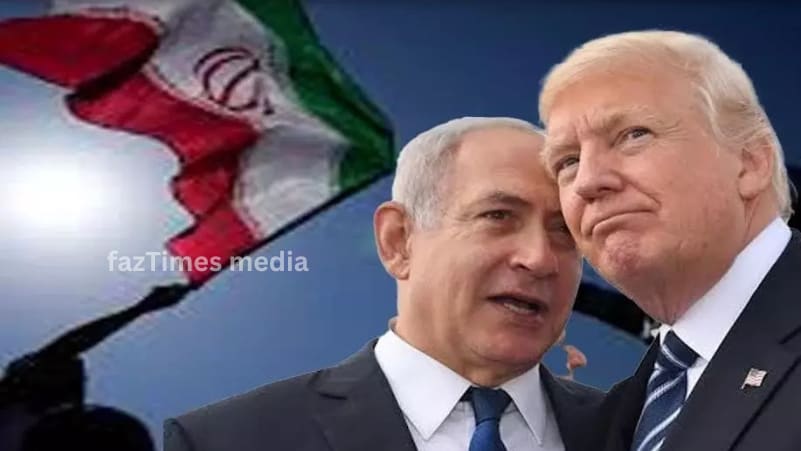
fazTimes media: Washington, D.C. The political turmoil surrounding Iran’s nuclear ambitions has taken on a familiar tone. For many observers, the current U.S. administration’s stance, led by President Donald Trump’s strong rhetoric and military signals, feels eerily similar to the events leading up to the 2003 Iraq invasion.
Despite clear warnings from the U.S. intelligence community that Iran is not actively pursuing nuclear weapons, President Trump has insisted that the Islamic Republic is racing toward acquiring a bomb. His claims have been echoed by Israeli leaders, resulting in heightened military activity in the region. This has raised fears that another large-scale conflict in the Middle East might be imminent.
At the heart of this unfolding drama is Tulsi Gabbard, the Chief of National Intelligence, whose recent testimony before Congress directly contradicted the administration's escalation narrative. Gabbard, a former congresswoman and military officer known for her anti-war stance, stated that current U.S. intelligence assessments found no evidence that Iran is actively developing nuclear weapons.
However, her input has been noticeably absent from high-level policy decisions. Sources close to the National Security Council indicate that Gabbard has been sidelined in recent weeks, with her opinions overlooked in favor of more aggressive advisors who advocate for a tougher approach toward Tehran.
The Growing Divide Between Intelligence and Policy
The gap between intelligence assessments and presidential rhetoric has drawn criticism from various political factions. Critics argue that this disconnect could have dangerous consequences, both for the region and for U.S. credibility abroad.
“We’ve seen this movie before,” said Aaron Stein, a Middle East affairs analyst in Washington. “In 2002 and 2003, intelligence was manipulated to support a pre-set conclusion: regime change in Iraq. We’re now seeing similar patterns emerge with Iran.”
Back then, the justification was Saddam Hussein’s supposed weapons of mass destruction, claims that were later proven false. Now, with the White House alleging that Iran is “on the brink” of producing a bomb, some fear history may be repeating itself, despite official reports indicating otherwise.
Military Buildup Suggests More Than Discussion
Adding to the tension, the Pentagon has moved over 31 aerial refueling tankers to Europe. These aircraft would be crucial for any long-range bombing campaign, especially if targets include deeply buried nuclear facilities in Iran. On the ground, Israel has increased its military actions, targeting what it claims are Iranian military sites in Tehran, including a centrifuge facility used for uranium enrichment. A significant explosion shook the Iranian capital early Wednesday, followed by reports of damage to several key sites, including a Revolutionary Guard facility.
The Grand Bazaar in Tehran, usually a bustling hub of economic activity, was closed for several hours—an unusual disruption that sent shockwaves through local communities and fueled speculation that a major conflict may be approaching. Despite these strikes, Israeli defense officials admitted that the attacks only delayed Iran’s nuclear program by a few months. “We have bought time,” one commander reportedly told local media, “but unless there's a larger strategy in place, Iran will adapt and recover.”
Iran’s Strengthened Facilities and the U.S. Role
Iran’s nuclear program is deeply entrenched, both symbolically and physically. The Fordow enrichment plant, one of Iran’s most sensitive sites, lies about 90 meters underground, effectively shielding it from conventional airstrikes. To breach such defenses, military experts believe that only the U.S. military has the necessary capability, particularly the GBU-57/B Massive Ordnance Penetrator, a 14-ton bunker-buster bomb that can only be delivered by the U.S. Air Force’s B-2 Spirit stealth bomber.
Recent developments suggest that U.S. military planners are seriously considering such options. While no orders have been given, logistical groundwork and aerial positioning indicate advanced planning for a potential strike. This possibility has alarmed foreign policy experts and regional governments alike.
“If Washington commits to a full-scale military campaign, it risks plunging the region into chaos,” warned Dr. Mona Khoury, a Lebanese analyst at the Beirut Center for Security Studies. “Iran is not Iraq. It has allies, a large conventional military, and a deeply nationalistic population.”
Diplomatic Options Fading
What’s often overlooked in the current situation is a genuine political solution.
The 2015 Joint Comprehensive Plan of Action (JCPOA), known as the Iran nuclear deal, was once the best framework for ensuring Iran’s nuclear activities remained peaceful. However, Trump withdrew from the deal in 2018, calling it “fundamentally flawed,” and since then, diplomatic channels have significantly narrowed.
While European leaders have attempted to revive talks, the current escalation makes such efforts increasingly difficult. Iranian officials have responded to the airstrikes with renewed defiance, warning that further attacks would only strengthen their resolve and accelerate their nuclear pursuit, not halt it.
“They are forcing our hand,” said an Iranian Foreign Ministry spokesperson during a press conference in Tehran. “We will not be intimidated by military threats or illegal sabotage.”
Public Skepticism Grows
Back in the U.S., public opinion appears wary. A recent national survey by the Pew Research Center found that 68% of Americans prefer diplomatic solutions over military action, even when dealing with adversaries like Iran.
Among veterans and military families, skepticism is even stronger. Many are haunted by the lengthy and costly wars in Iraq and Afghanistan, conflicts that drained trillions of dollars and claimed thousands of lives without achieving lasting peace.
“It’s the same playbook with different actors,” said Brian Thompson, a retired Army sergeant who served in Iraq. “They say it’s about national security, but in the end, it’s the soldiers and families who pay the price.”
A Turning Point Ahead
As tensions continue to rise, Washington finds itself at a critical crossroads. With intelligence contradicting alarmist claims and military assets quietly being stationed for possible action, the coming weeks may determine whether the U.S. embarks on another open-ended Middle Eastern conflict or finds a path toward renewed diplomacy and de-escalation. For many observers from the outside, the stakes could not be higher.
And for Americans still grappling with two decades of overseas wars, the haunting question remains:
Is this really how we want to write the next chapter?
Stay tuned to fazTimes for ongoing coverage of Middle East affairs and U.S. foreign relations.


Discussion0
Join the conversation on this story
Loading comments...