
Uttarakhand Helicopter Crash: 7 Dead in Gaurikund Near Kedarnath; Bad Weather Suspected
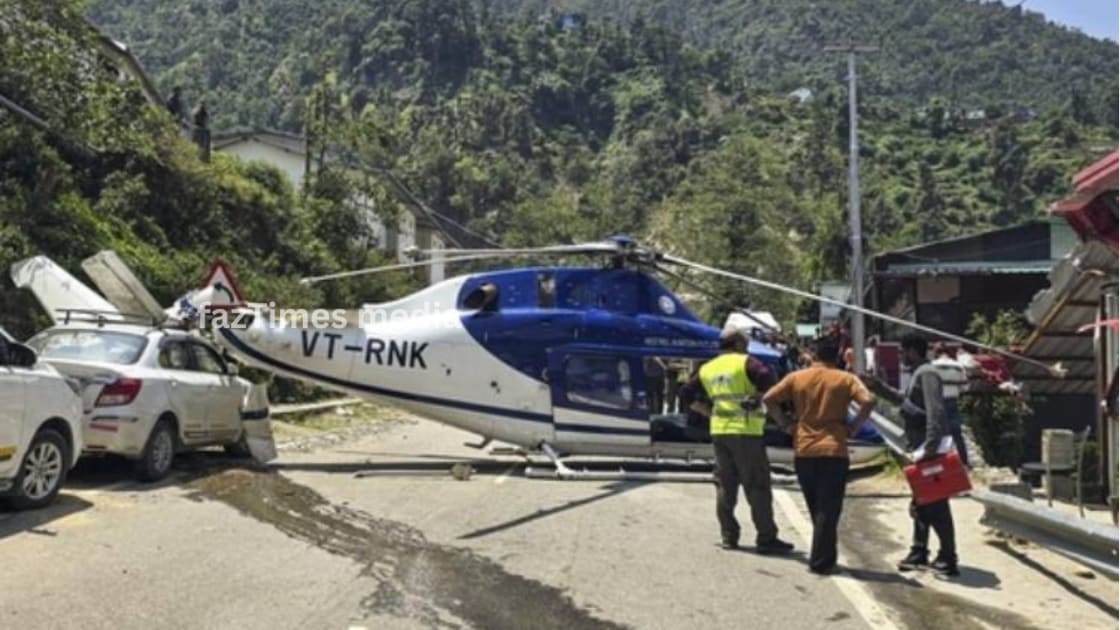
fazTimes media: Rudraprayag, Uttarakhand – Another tragic event shook the peaceful hills of Uttarakhand early on a quiet Sunday morning. A helicopter carrying pilgrims from Kedarnath to Guptkashi crashed near Gaurikund, killing five people and once again showing how dangerous flying is in this area with its rough terrain.
The crash happened at about 5:30 a.m. when the helicopter, which was thought to be working for a charter service, went down in a thick forest above Gauri Mai Khark. Five of the seven people on board, including the pilot, sadly died. Rescue operations are still going on, so the condition of the other two remains under consideration.
In less than a month, Uttarakhand has seen three helicopter crashes, including this most recent one. It brings up important issues regarding aviation safety in one of the most difficult yet spiritually important parts of India.
A Flight of Faith Ends Indeed
Many people view a trip to Kedarnath as an inner search and a lifelong dream, rather than just a journey. Kedarnath Temple, which is tucked away in the Garhwal Himalayas, welcomes thousands of pilgrims every year. Helicopters provide a quicker, more comfortable alternative for long journeys, unstable weather, and steep terrain, especially for older or physically less fit pilgrims. However, the skies over Uttarakhand have grown more hazardous.
Due to heavy clouds and early monsoon showers, visibility was very bad this morning, according to officials on the ground. The loud whir of the helicopter, a sharp thud, and the sound of trees snapping were all heard by the locals. Minutes later, smoke billowed up from the wooded hillsides.
"The weather in the higher regions changed quickly," Rakesh Tiwari, the district disaster management officer, told FazTimes. It's possible that the pilot lost sight. We are making every effort to recover bodies and guarantee that survivors receive prompt medical attention.
Several Recent Events That Are Concerning
This season has seen other instances of this kind. Another helicopter had a technical issue just last week, on June 7, just after taking off from the Badasu helipad. Just two meters above the ground, the plane carrying five passengers on their way to Kedarnath experienced an emergency. The helicopter avoided a serious accident by making an emergency landing on the Rudraprayag-Gaurikund highway because of the pilot's attentiveness.
In that instance, no civilians suffered injury, although the helicopter's head hit a parked car and the rotor blades damaged a store. The passengers escaped unharmed, but the pilot was airlifted to a higher medical facility after suffering a back injury.
Regretfully, this cannot be said for the Uttarkashi district crash on May 8. In Gangani, a helicopter en route from Sahastradhara to Harshil crashed close to the Gangotri highway. The pilot and six of the seven passengers perished instantly. The lone survivor survived and was taken to AIIMS Rishikesh for life-saving treatment. Locals, visitors, and officials are all shaken by these consecutive accidents. The trend is extremely concerning and necessitates immediate changes.
Technology, Terrain, and Weather: A Dangerous Mix
Although the Himalayan landscape of Uttarakhand is unquestionably stunning, it is also one of the most challenging places for airplanes to fly. Even the most seasoned pilots are challenged by high-altitude winds, narrow valleys, and rapidly shifting weather. The risks increase significantly when you factor in aging aircraft, inadequate maintenance, or constrained commercial schedules.
"Flying in the mountains is never routine," said Captain Surendra Joshi, a retired Indian Air Force pilot who currently instructs helicopter crews, in an interview with FazTimes. Pilots require aircraft with cutting-edge safety systems, robust training, and real-time weather updates. These requirements are frequently not fulfilled.
He went on to say that in order to meet the high demand during the Char Dham Yatra season, many charter services work under extreme pressure. "More trips translate into higher profits. However, if not properly regulated, it may jeopardize safety.
What's Going On?
In light of the tragedy that occurred today, the government of Uttarakhand has declared that all non-emergency helicopter flights in the Kedarnath area will be temporarily suspended while an investigation is conducted. By evening, a team from the Directorate General of Civil Aviation (DGCA) is also anticipated to arrive at the scene of the crash. In addition to offering his condolences, Chief Minister Pushkar Singh Dhami promised that "strict action will be taken if negligence is found."
"Deeply saddened by the tragic helicopter crash in Uttarakhand," tweeted Union Aviation Minister Jyotiraditya Scindia. We are keeping an eye on the situation and making sure rescue teams have our full support.
Additionally, aviation authorities have been urged to perform safety audits of all helicopter operators in the area right away. However, residents believe that these audits only occur after a tragedy occurs. Kamla Devi, a Gaurikund shopkeeper who lost a relative in the collision, questioned why people should wait until they die. "Accidents are reported every year, but nothing changes."
Hills Voices: Residents Demand Accountability
Rescue and relief efforts have been centered on the local community. The first people to arrive at the crash site were villagers from Gauri Mai and the surrounding communities, who assisted with body recovery and guided authorities. "We've grown up in these mountains," said Mahesh Negi, a porter who frequently helps pilgrims on the Kedarnath trek. We are aware of how fast clouds can move in. However, helicopters continue to fly despite the risks.
He thinks that private operators shouldn't be the only ones making flying decisions. "Weather departments, local governments, and aviation companies need to coordinate better."
Long-Term Reform Is Necessary
The collision that occurred today serves as a warning in addition to being a tragic accident. There is a pressing need to reconsider how air services function in hilly terrain, given Uttarakhand's rapidly increasing helicopter tourism.
Experts advise
Adding more weather monitoring stations to isolated locations
Adding contemporary navigation and safety equipment to helicopters
Pilots receiving specialized training for high-altitude flying
Stricter regulations are enforced during monsoon and fog-prone months.
Improving scheduling to alleviate flight pressure during peak hours
Above all, families who lose loved ones require assurance that future lives will be protected in addition to compensation.
A Heartbreaking Reminder
Families waited outside hospitals today, anticipating the worst, hoping for news as the sun sank behind the foggy peaks of Rudraprayag. As though in mourning with the hills, the bells of neighboring temples rang softly.
The inhabitants of Uttarakhand are accustomed to the dangers of earthquakes, floods, and landslides. However, the pain becomes more intense when neglect or human error contributes to the toll.
The purpose of helicopters is to provide hope—a simpler means of approaching God. But every takeoff will be accompanied by fear as well as prayers until safety truly becomes a top priority.
For more information on this evolving story and coverage of rescue operations throughout the region, stay tuned to fazTimes.


Discussion0
Join the conversation on this story
Loading comments...