
General
Waqf Act: Muslim Personal Law Board Disappointed by SC Verdict
By Saquib Ansari
Published: Sep 15, 2025, 06:20 PM
Last updated: Sep 15, 2025, 06:33 PM

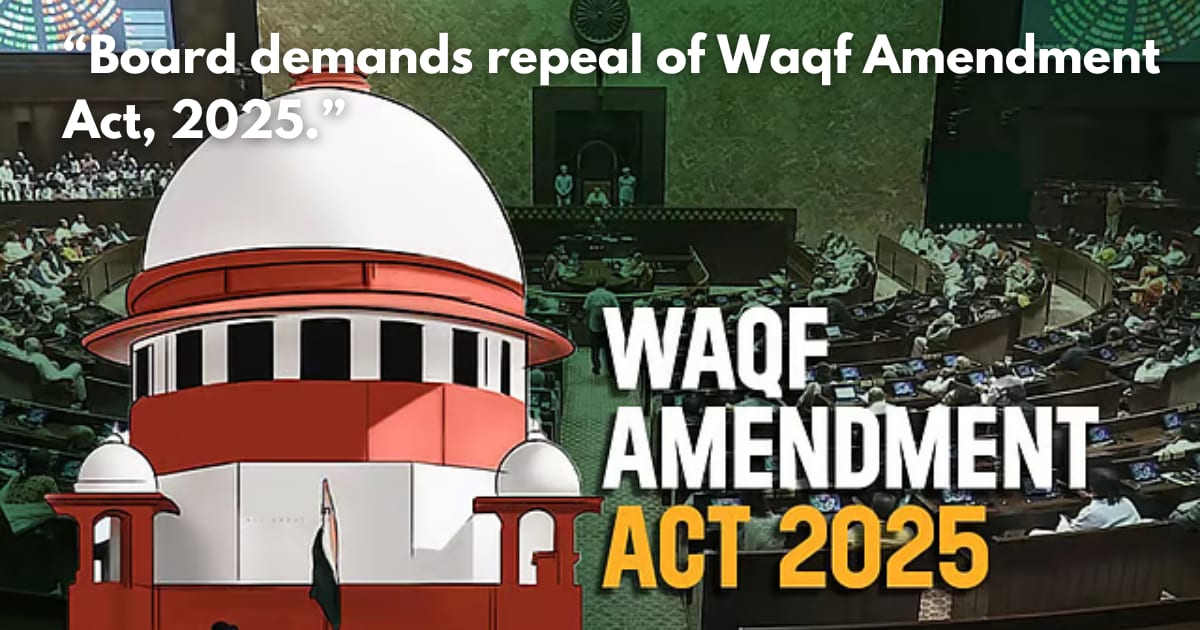

FazTimes Media: The All India Muslim Personal Law Board (AIMPLB) has clearly expressed its unhappiness with the Supreme Court's temporary decision on the controversial Waqf (Amendment) Act, 2025. While the Supreme Court temporarily cancelled some parts of the law, the Board said the judgment was "partial" and "not good enough", arguing that it didn't address bigger constitutional issues that affect the rights of millions of Indian Muslims.
In a press briefing on Saturday, AIMPLB spokesperson Dr. S. Q. R. Ilyas said that although the court provided "some help," it wasn't enough to protect the Waqf system from what he called "ongoing efforts to weaken it."
What the Court Said: Key Takeaways from the Ruling
The Supreme Court’s temporary order mainly focused on stopping government officials from overstepping in Waqf matters.
The Court said:
A government report alone cannot confirm ownership of Waqf property, as property rights are handled by courts, not government officials.
Section 3C of the amendment, which lets officials decide who can create a Waqf, has been put on hold.
The authorities have stopped the rules that allowed properties to be taken off the Waqf list during investigations.
Revenue officers cannot decide who owns property, reinforcing the idea that government, judiciary, and other branches should stay separate.
Limits on non-Muslim members: no more than four in the Central Waqf Council and three in State Waqf Boards.
The requirement that someone show five years of practicing Islam to create a Waqf was paused until clear rules were made.
Legal experts said these directions were important in stopping unfair government actions. But they also noted that the Court didn’t change other controversial parts of the law, which still worry Waqf supporters.
Why the Board Is Unhappy: Concerns over Autonomy and Rights
The AIMPLB's interim verdict is just a "half victory." Dr Ilyas says the ruling doesn’t fix the main problems, like religious freedom, rights of minorities, and the independence of community groups.
He says some of the controversial rules that are still in place, such as taking away the recognition of Waqf from the user and requiring a registered Waqf deed, hurt the core of Islamic practices. “These rules go against centuries of Muslim tradition, where community leaders and people used to set up waqf institutions without needing a lot of paperwork,” Dr Ilyas said.
The Board is worried that government officials, who might not be fair, could use their small authority to control or even take away Waqf lands until the Court makes a final decision.
Historical Context of Waqf in India: From Legacy to Legal Battles
Waqf comes from Islamic law and means dedicating property, like land or buildings, for religious, educational, or charitable uses. Critics of the amendment say that weakening Waqf property protections could lead to land grabs, business use, or political gain.
As reported by BBC News, Muslim groups all over India see the changes as part of a bigger trend where the government is trying to control minority institutions more.
The AIMPLB’s “Save Waqf Campaign”: Mobilizing Support Nationwide
Even though the Court gave some relief, the AIMPLB is still pushing its Save Waqf Campaign nationwide. The second phase of the campaign started earlier this month and has many activities:
Street Protests and Sit-ins: Voices Rising in State Capitals
Local religious leaders and young people are leading symbolic marches for the Waqf. The campaign also engages in discussions and meetings with individuals from various religions, emphasising the critical importance of safeguarding minority trusts.
Senior leaders who participate in peaceful protests have been arrested. The campaign also keeps the media interested through daily news briefings.
The campaign is set to end with a big rally at Delhi’s Ramlila Maidan on November 16, 2025, where thousands of Muslims and members of civil society are expected to come together.
According to Al Jazeera, similar events in the past have also drawn support from non-Muslim people, especially those who worry about the shrinking space for independent trusts and charities in India.
Wider Reactions and Political Underpinnings: Beyond the Courtroom
Opposition leaders have criticised the government for trying to weaken minority rights through so-called legal changes. On the other hand, government officials assert that the changes aim to enhance "transparency and accountability" in Waqf management.
A legal expert named Faizan Mustafa talked about how the court’s temporary decision shows an effort to balance the government’s role with the independence of communities. “But the unclear parts of the law still worry us about the idea of secularism in the Indian Constitution,” he said.
What Lies Ahead: Possible Paths and Challenges
The Supreme Court hasn’t set a date for the final decision, but more hearings are planned in the following months. In the meantime, both the government and the AIMPLB are getting ready for a long and tough legal and political fight.
For everyday Muslims, the argument isn’t just about legal words. It’s about keeping institutions that help the poor, the ignored, and the religious. “It’s not only about land,” said Abdul Rahman, a student from Lucknow who took part in a recent Waqf protest. “It’s about respect and who we are. We lose an important support system for our community if we weaken the Waqf.
Conclusion: A Defining Moment for Minority Institutions
The Supreme Court’s temporary decision on the Waqf Amendment Act has left the Muslim Personal Law Board partly pleased but mostly unhappy. By keeping some strict rules, the court has stopped immediate harm, but it hasn’t fully dealt with the bigger issues of law and community.
As protests grow and the Board gets ready for a big rally in Delhi, the Waqf issue is set to become one of the most important discussions of the year. Whether the final ruling will support India’s diversity or move toward more government control is still uncertain.
Our primary goals at FazTimes Media are to be accurate and confident and adhere to the highest journalistic standards. We check every news story we share against several trustworthy and separate sources to ensure its accuracy.
We have reviewed this report, along with articles from major news outlets worldwide, including BBC News, Reuters, Bloomberg, Al Jazeera, NDTV, The Economic Times, and The Indian Express.
We want to keep the highest standards in global journalism so that our readers can trust the information they acquire.
Link:
https://www.faztimesmedia.com/viewpost/waqf-act-muslim-personal-law-board-disappointed-by-sc-verdict


Discussion0
Join the conversation on this story
Loading comments...