
WHO Adds Weight-Loss, Diabetes Drugs to Essential Medicines List


FazTimes Media, New Delhi: In a major decision that may change how people get treatment around the world, the World Health Organisation (WHO) has officially added some new medicines for diabetes and weight management to its updated Essential Medicines List (EML). Along with these, the new list also includes important treatments for cancer and cystic fibrosis.
This announcement, made on Friday, shows that the WHO is increasingly aware of the health problems caused by obesity, diabetes, and other long-term illnesses. BBC News reports that experts think this update could be a big change in making sure that medicines, which many people could not afford before, are available to more people, especially in poorer countries.
A List of Essential Medicines Added to the Global Health Index
The Essential Medicines List was first created in 1977 and helps governments decide which medicines should be available for everyone. The latest version includes 523 medicines for adults and 374 for children.
Yukiko Nakatani, WHO’s Assistant Director-General for Health Systems, Access and Data, said the update is a big step toward solving major health problems: “The new editions of the essential medicines list show a big step forward in making new medicines with real health benefits more widely available, with a strong chance of helping public health globally.”
This year’s update pays special attention to diseases that are becoming widespread, like type 2 diabetes and obesity, which are connected to higher death rates around the world.
The Strong Link Between Diabetes, Obesity, and Modern Lifestyles
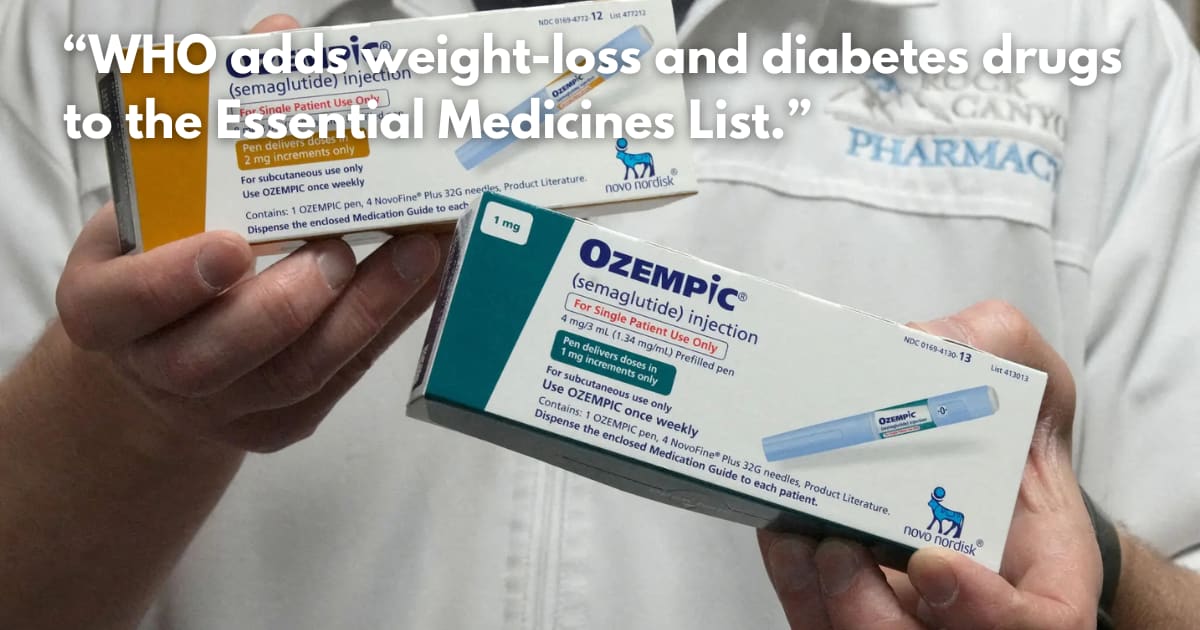
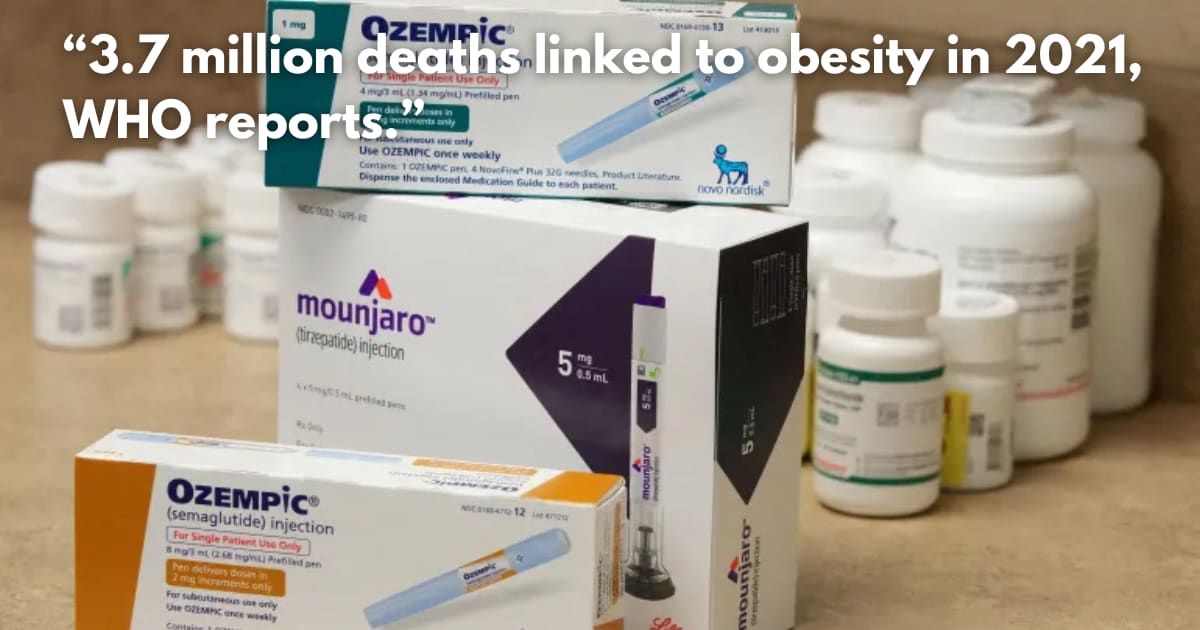
The WHO committee added the main ingredients in Novo Nordisk’s Ozempic (semaglutide) and Eli Lilly’s Mounjaro (tirzepatide) to treat type 2 diabetes, especially for people who also have heart problems, kidney issues, or obesity. These medicines belong to a group called GLP-1 receptor agonists, which help control blood sugar and, as a side effect, can reduce appetite, making them useful for weight loss. Recently, they have become well-known under various brand names as “weight-loss drugs”.
But again, the WHO did not include them specifically for treating obesity alone, which is the same as before in 2023. The organisation stated that individuals with diabetes who also have other serious health conditions should primarily use these medicines.
Al Jazeera reports that the decision aimed to prevent these drugs from serving as lifestyle aids instead of life-saving treatments.
The Price Barrier: Why High Medicine Costs Limit Patient Access
Although including these drugs on the Essential Medicines List is a significant advancement, their high cost remains a major issue. WHO clearly said that “medicine prices like semaglutide and tirzepatide are making it challenging for people to get them.” Both Ozempic and Mounjaro are still costly, especially for people in poorer and middle-income countries. Even in richer countries, the high demand for these drugs for weight loss has led to shortages.
WHO hopes that putting these drugs on the list will help more companies make cheaper versions, especially as patents are about to run out next year. Health activists say this could be a big change for countries like India, where diabetes and obesity are getting worse, but treatment is still too costly.
A Global Health Emergency: Rising Cases of Diabetes Worldwide
The numbers are very concerning.
According to WHO data:
In 2022, about 800 million people around the world had diabetes.
Over a billion people are affected by obesity worldwide.
In 2021, more than 3.7 million deaths were linked to being overweight or obese—more than the total number of deaths from malaria, tuberculosis, and HIV combined.
Public health experts warn that without effective treatment plans, these diseases could cause serious problems for healthcare systems in the future.
Dr Anjali Mehta, an endocrinologist based in Delhi, stated that the WHO’s decision is crucial for countries like India, where diabetes is already a major issue. “For countries like India, where diabetes is already a major issue, the WHO’s decision is crucial. The availability of cheaper versions could significantly impact the treatment of millions of patients.
Beyond Diabetes: Other Critical Medicines Added to the List
This year’s update to the essential medicines list goes beyond diabetes and obesity.
In addition to diabetes and obesity, the WHO has also added treatments for other major illnesses:
Cystic Fibrosis: The list now includes Trikafta (Kaftrio), a new treatment from Vertex Pharmaceuticals.
Cancer Treatments: WHO also added Keytruda (pembrolizumab), which is used to treat advanced cervical, colorectal, and lung cancers.
Insulin Analogues: Rapid-acting insulin analogues from companies like Novo Nordisk and Eli Lilly were added to the list.
These drugs will help people with type 1, type 2, and gestational diabetes manage their blood sugar more quickly and easily.
Why This Matters Locally: Impact on Indian Patients and Healthcare
In countries across South Asia and Africa, where healthcare isn’t always easy to get, the new version of the Essential Medicines List has big effects. In India alone, the International Diabetes Federation says well over 77 million people have diabetes, and this number is expected to go up quickly in the next ten years. Obesity is also growing, especially among young people in cities.
It also puts pressure on big drug companies to change how much they charge for these medicines.
The Road Ahead: Making Medicines Affordable and Accessible to All
Although adding these drugs to the WHO list is beneficial, many challenges remain to be addressed.
Affordability: If generic versions are not produced, the high cost will continue to prevent people from accessing the medicines they need.
Supply Chains: Even when generic drugs are available, getting them to remote and less-developed parts of the country will be a big task.
Public Awareness: Doctors say that things like eating healthy and staying active are the best first steps. Medicines should help, but they shouldn’t take the place of beneficial habits.
Conclusion: Addressing Diabetes and Access to Medicines Together
The WHO’s decision to add medicines for diabetes, obesity-related problems, cancer, and cystic fibrosis to its Essential Medicines List represents a major change in how global health is handled. For millions of people living with long-term illnesses, this means there could be better access to life-saving treatments.
Our primary goals at FazTimes Media are to be accurate and confident and adhere to the highest journalistic standards. We check every news story we share against several trustworthy and separate sources to ensure its accuracy.
We have reviewed this report, along with articles from major news outlets worldwide, including BBC News, Reuters, Bloomberg, Al Jazeera, NDTV, The Economic Times, and The Indian Express.
We want to keep the highest standards in global journalism so that our readers can trust the information they acquire.




Discussion0
Join the conversation on this story
Loading comments...