
China's New Aircraft Carrier Transits Taiwan Strait for Final Tests
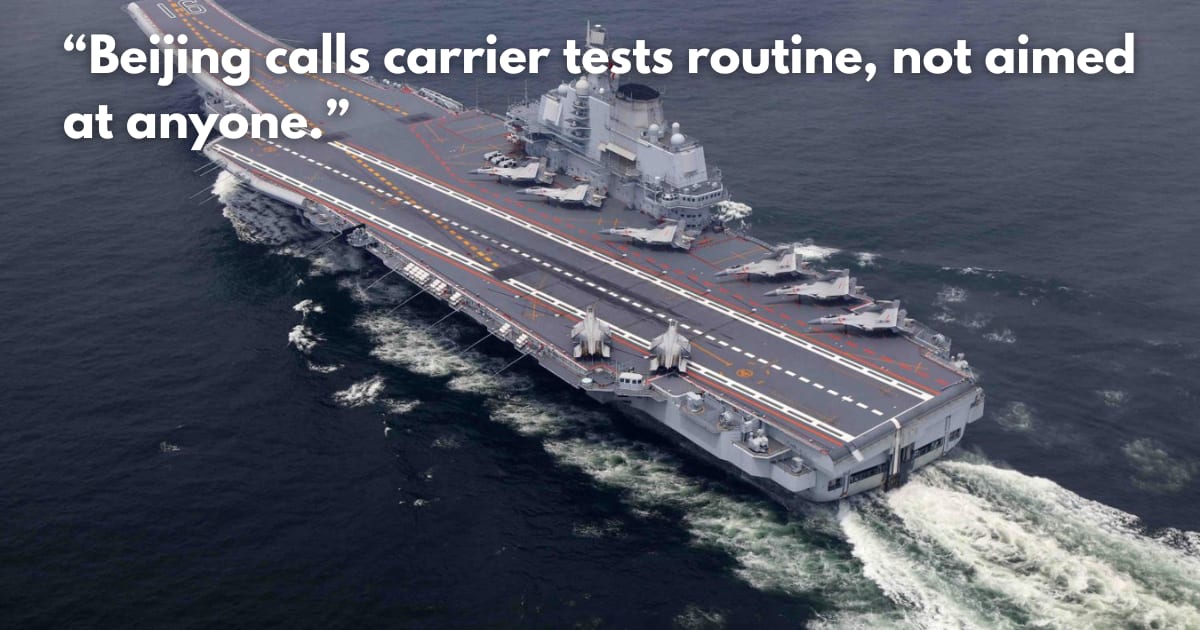
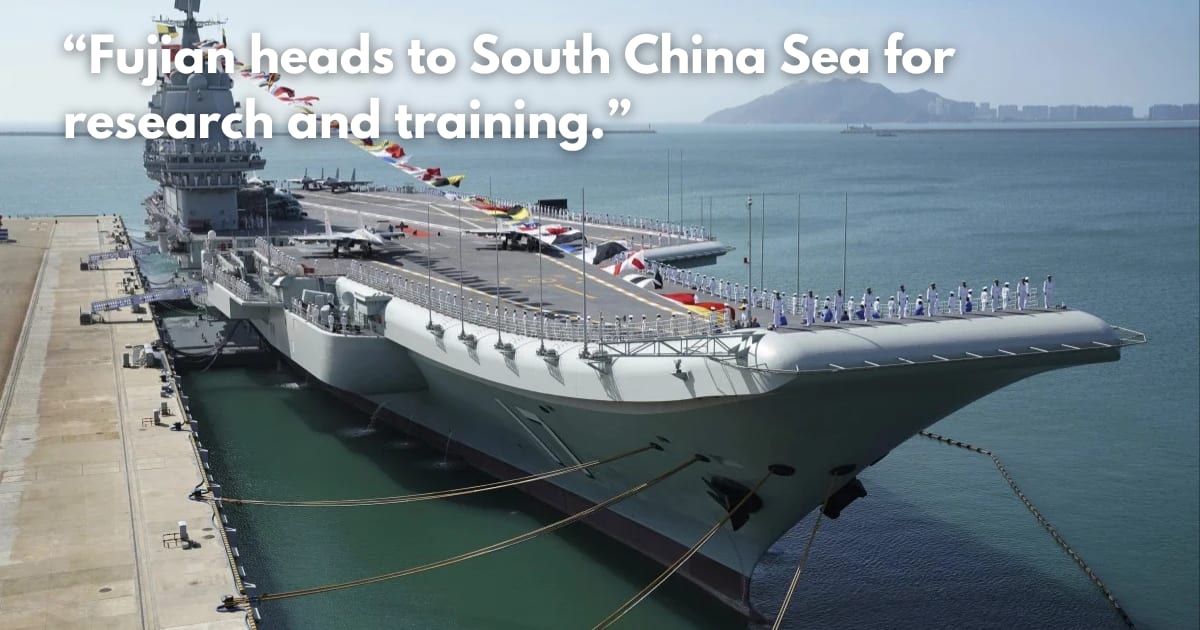
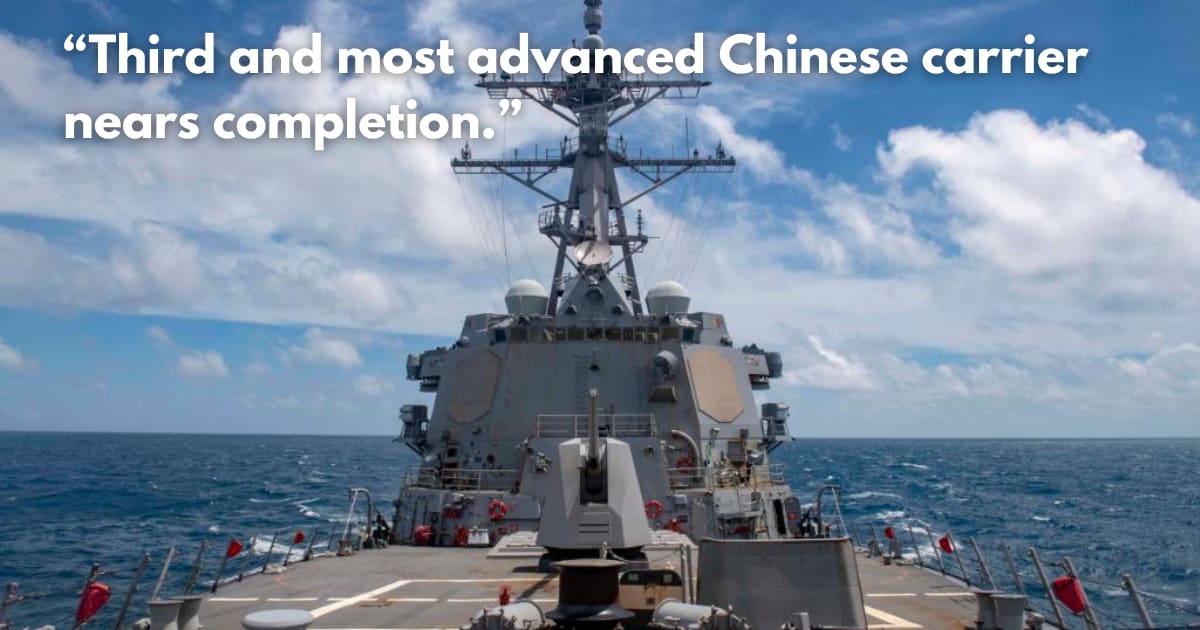

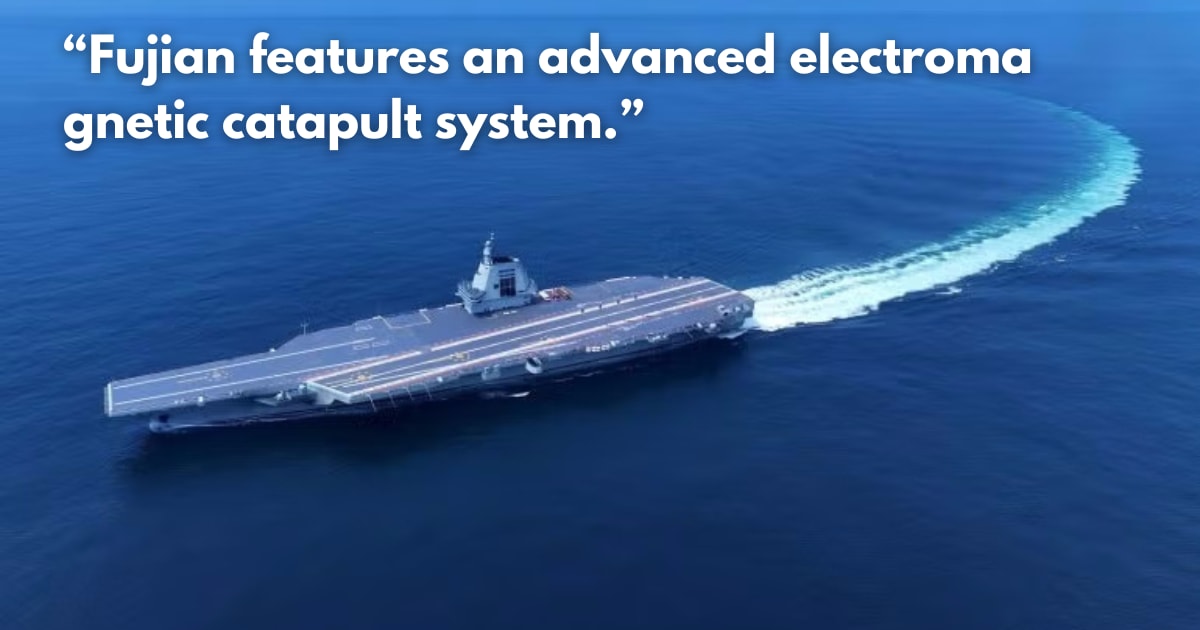
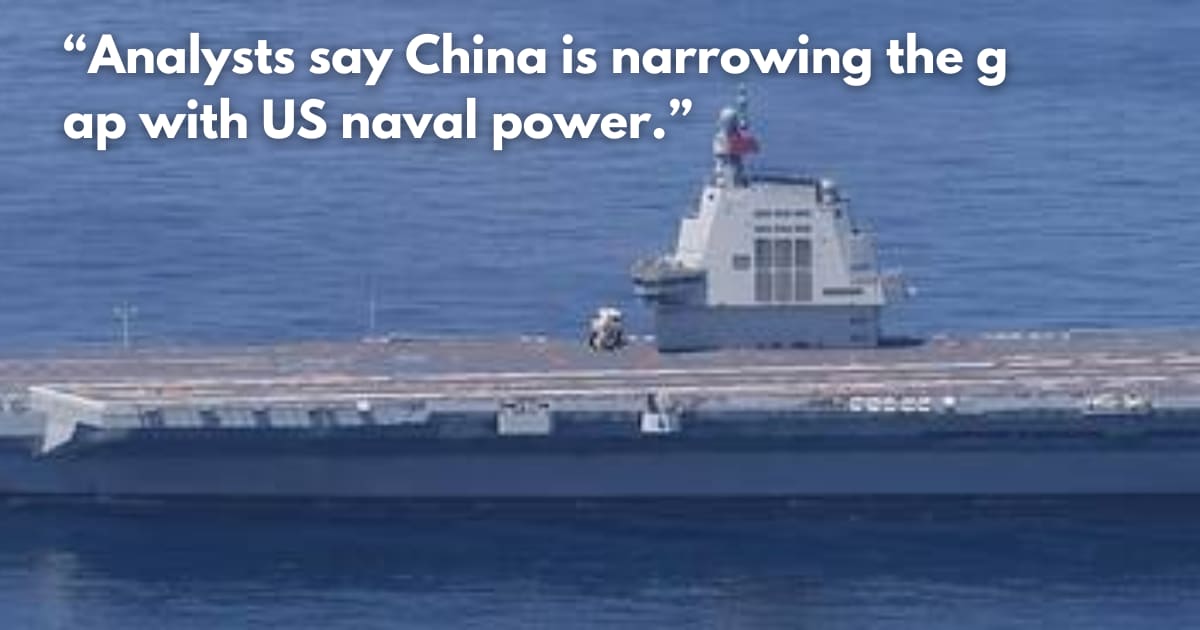
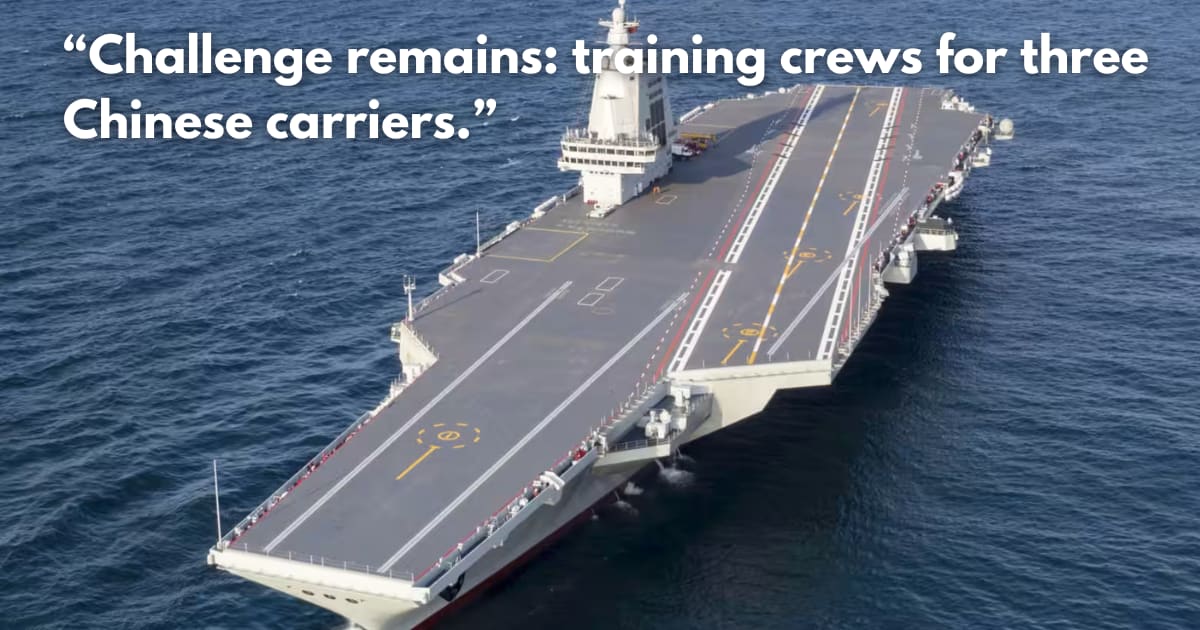

FazTimes Media, China: China's third and most advanced aircraft carrier, the Fujian, has passed through the Taiwan Strait on its way to the South China Sea. This move is another step in Beijing's increasing focus on its naval power. Chinese state media calls the journey part of "routine trials," but it has drawn a lot of attention in the region. Experts say this comes at a time when tensions in East Asia are getting higher.
The People's Liberation Army Navy (PLAN) says this transit is an important part of testing the ship before it officially starts working. A PLAN spokesperson, Senior Captain Leng Guowei, said the mission was "standard practice in the construction process" and not aimed at "any particular country or entity.".
BBC News reports that the journey through the Taiwan Strait, a key area of conflict between China and Taiwan, as well as the United States, was seen as symbolic. Military expert Fu Qianshao from China's state-run Global Times said the ship's arrival in the South China Sea shows it is "near operational readiness." The Fujian has already been tested in the East China Sea and Yellow Sea, but moving to deeper waters marks a new stage in its preparation.
However, there are still differences: the Fujian is powered by traditional fuel, unlike the US carriers, which use nuclear power. It is also about 20 per cent smaller than the US carriers.
Regional Reactions
The movement of the Fujian carrier didn't go unnoticed by countries in the region. Japan's Maritime Self-Defence Force said it saw the Fujian near the Senkaku Islands, which China calls Diaoyu and Taiwan calls Diaoyutai. Two Chinese destroyers joined the carrier, demonstrating the Chinese navy's ability to collaborate with other ships.
For Japan, the encounter was another sign that China is increasing its military presence in areas both countries claim. For Taiwan, the situation has more meaning. Although Taiwan hasn't made an official comment, security experts think these military exercises are part of China's plan to build a stronger military presence around the island.
Dr Li Jun, a maritime expert from National Chengchi University in Taipei, said, “As reported by The Guardian, every time a Chinese warship crosses the Strait, it sends both a real and mental message.” He explained that it shows China's military strength and puts pressure on Taiwan's leaders, while also showing Chinese citizens that their navy is improving.
Striking the Balance: Hardware Power vs. Human Capital
Although the Fujian carrier shows China's progress in technology and industry, experts say that navy strength isn't just about having good equipment. Ray Powell, a former US Air Force colonel and maritime analyst, told Al Jazeera that China's real challenge is training enough skilled people to run multiple carriers.
“With three carriers—Fujian, Liaoning, and Shandong—the People's Liberation Army Navy has to split its experienced crews,” Powell said. “China is improving its ships, but developing the skills for long-term, far-reaching carrier operations is something the US has spent nearly a century learning.”
This lack of experience means that even though China is making rapid progress, its ability to project power around the world is still behind the US. Carrier operations involve working together smoothly with air squadrons, support ships, supply chains, and control systems—skills that take many years to develop.
Fujian is likely to be officially launched on a day that has special meaning in history or politics. Even though there's no official date yet, some experts believe it might be September 18, which marks the day Japan attacked Manchuria in 1931, or October 1, which is China's National Day. These dates are chosen because they help show the ship's importance as a symbol of national pride.
Experts say Beijing often connects military events with important dates to send a message both at home and abroad. It's a way to show that China's growth is strong and tied to its past struggles against foreign forces.
Fujian's testing in the South China Sea brings up new questions about what's going to happen there. The area is a key route for global trade and energy, but it's also where several countries have conflicting claims. These countries include China, Vietnam, the Philippines, Malaysia, and Brunei.
Reuters reports that China has been sending more naval ships to the South China Sea over the past ten years, which has caused protests from some of these countries. A new and powerful carrier like Fujian could change the balance of power, supporting China's claim of having full control over almost the entire area.
A Message That Resonates Far Beyond Asia
According to BBC News, China's navy is now the biggest in the world, with the latest addition of a third carrier. This shows China wants to become a global navy, able to operate far from its borders. For Washington, the announcement is a big deal. The United States currently has 11 aircraft carriers, all powered by nuclear energy, which gives it unmatched global influence. However, the growing Chinese carrier fleet is a symbol of a new kind of competition at sea.
Professor Andrew Erickson, an expert at the US Naval War College, said, "Every new Chinese carrier makes the Western Pacific more complex. The challenge isn’t just the number of ships—it’s the message they send: China is ready to change the way security works in the region."
Conclusion: Defining a Watershed Moment for the Continent
The movement of Fujian through the Taiwan Strait is more than just a test—it's a message. It shows China's confidence in its growing military, its readiness to act in difficult areas, and its desire to be considered a major power on the seas.
For people in Asia, this moment reminds them how fast the security situation is changing. What once seemed far away—China trying to match the US Navy—is now happening right here. As Beijing gets ready to officially launch its most advanced carrier, the world will be watching not only where Fujian goes but also how it affects the balance of power in the Indo-Pacific.
Our primary goals at FazTimes Media are to be accurate and confident and adhere to the highest journalistic standards. We check every news story we share against several trustworthy and separate sources to ensure its accuracy.
We have reviewed this report, along with articles from major news outlets worldwide, including BBC News, Reuters, Bloomberg, Al Jazeera, NDTV, The Economic Times, and The Indian Express.
We want to keep the highest standards in global journalism so that our readers can trust the information they acquire.






Discussion0
Join the conversation on this story
Loading comments...