
Business
EU & NATO Tariffs on India & China: The Economic & Political Hurdles
By Saquib Ansari
Published: Sep 15, 2025, 04:35 PM
Last updated: Sep 15, 2025, 06:34 PM



FazTimes Media, New Delhi / Brussels / Washington: A new request from US President Donald Trump has caused discussions in many important cities around the world. Trump wants NATO and the European Union (EU) to put very high tariffs, up to 100 per cent, on India and China—two of the biggest economies in the world. His main idea is to stop the flow of money from Russian oil and push President Vladimir Putin to end the war in Ukraine.
The Financial Times first reported this idea. This approach is unprecedented in history. While the West has already put many restrictions on Russia since the start of the Ukraine invasion in February 2022, going after India and China would be a big step with serious effects on worldwide trade.
Why Trump Is Going After India and China: Trade Wars on a New Front
Trump, who has said he will end the Ukraine war "on day one" if he gets re-elected, told European leaders last week that putting tariffs on Beijing and New Delhi is the "best way" to stop Russia's war efforts. The reason is simple. China and India are the two biggest buyers of Russian crude oil, which is still Russia's main source of income.
According to Chinese customs data, China imported 109 million tonnes of Russian crude in 2024, which makes up almost one-fifth of its total oil imports.
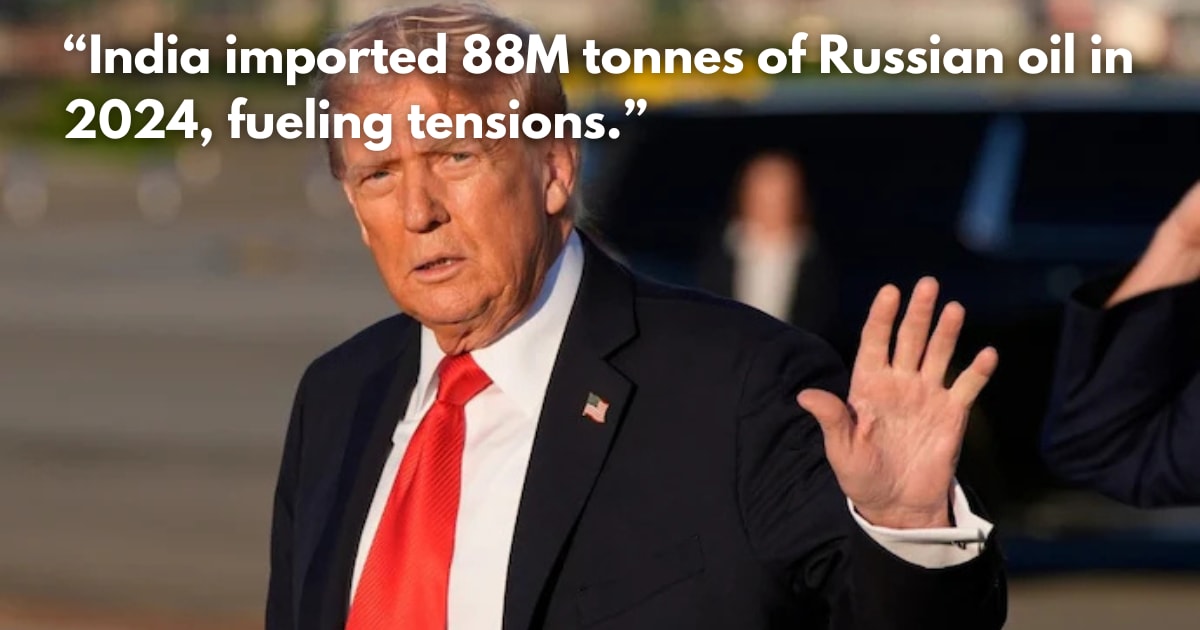
India imported 88 million tonnes in the same year, covering about 15 per cent of its overall oil needs. Trump believes that without these buyers, Russia’s money would run out, which would force Putin to stop the war. On September 13, in a post on his Truth Social account, Trump said he was "ready to do major sanctions on Russia" once NATO agreed to join in.
Interestingly, Trump has already added a 25 per cent tariff on Indian oil imports linked to Russia, but has not directly punished China yet because of the delicate situation in the US-China trade war. Instead, he has asked NATO to take the lead in imposing high duties on Chinese goods.
What Would Such Tariffs Mean for Europe? Economic Ripples Across the Continent
The EU, however, faces a complicated dilemma. As BBC News explained, Europe’s economic ties with China run much deeper than those with India. In 2024, EU-China trade in goods reached nearly €732 billion ($860bn).
Europe’s trade deficit with Beijing stood at over €305 billion ($359 billion)—making China the bloc’s largest import partner.
Roughly 40 per cent of Europe’s imports from China are electronics, followed by heavy machinery, clothing, and accessories.
India’s Role, By Comparison, Is Much Smaller: A Player Caught in the Crossfire
Europe’s trade deficit with India in 2024 was around €22.5 billion ($26 billion), mainly from pharmaceuticals, steel, and electronics. Imposing 50–100 per cent tariffs on China would therefore hit European industries hard. Prices for electronics, cars, and consumer goods could skyrocket. Manufacturing chains across Germany, Italy, and France rely heavily on Chinese imports. For this reason, Brussels is unlikely to back Trump’s plan without serious debate.
NATO’s Involvement: Security Alliances and Economic Fallout Intersect
Trump’s demand also drags NATO into unusual territory. NATO is primarily a military alliance, not a trade regulator. But Trump insists that security and economics are inseparable in the Ukraine war. The request came just days after Russian drones violated NATO airspace, entering Poland and Romania. Warsaw described the drone intrusion as “deliberate”, while Bucharest scrambled fighter jets to intercept one of the aircraft. Both countries are NATO members, raising fresh concerns about the conflict spilling into Europe.
In response, France and Germany announced they would strengthen NATO’s eastern flank by moving additional troops and equipment eastward. Against this backdrop, Trump believes tough trade action will “shorten the war” and show Russia that its backers will pay a heavy price.
Legal and Political Roadblocks: Barriers That Could Stall Trump’s Plan
Even if NATO and the EU imposed Trump-style tariffs, significant legal obstacles would stand in the way. In the US, Trump’s authority to unilaterally impose tariffs under the International Emergency Economic Powers Act (IEEPA) is already under challenge. A US trade court ruled in May that his earlier tariffs exceeded presidential powers. An appeals court upheld that decision in August, and the matter now sits with the Supreme Court. A ruling is expected in November.
If the US president himself faces legal limits, convincing sovereign European states to follow suit will be far more complicated.
Global Reactions: Allies, Rivals, and Markets Respond
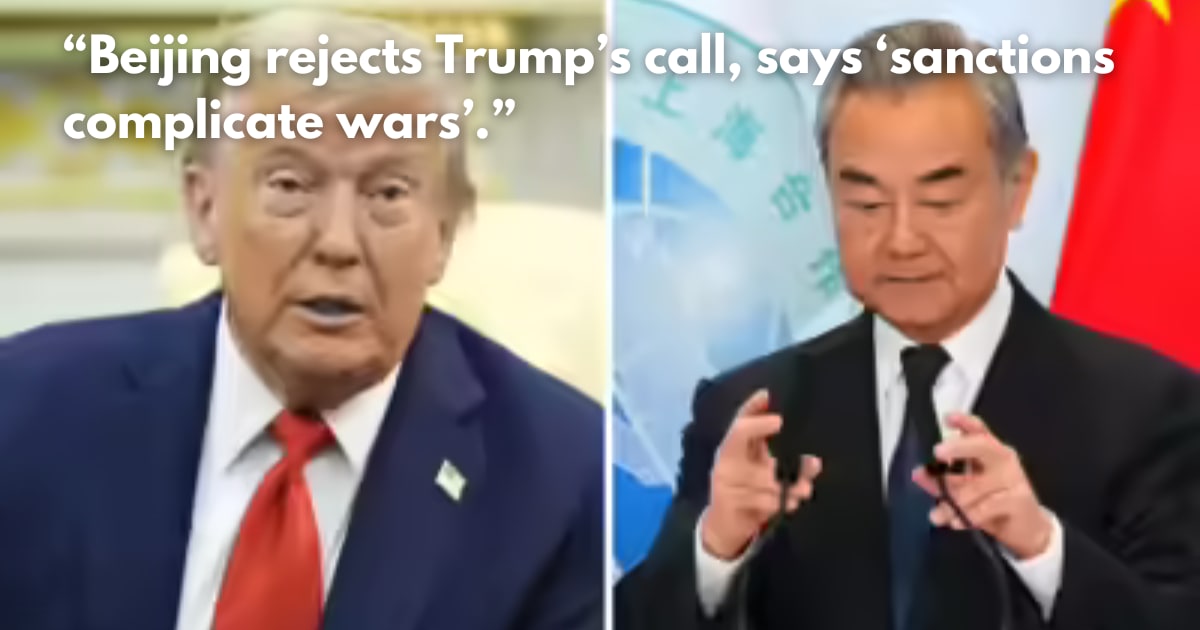
China quickly responded to the situation. China’s foreign minister, Wang Yi, stated that his country does not take part in wars or support plans for them. He claimed that sanctions complicate conflicts instead of helping to fix them. According to Al Jazeera, Wang asked Washington to “not involve China in confrontations.”
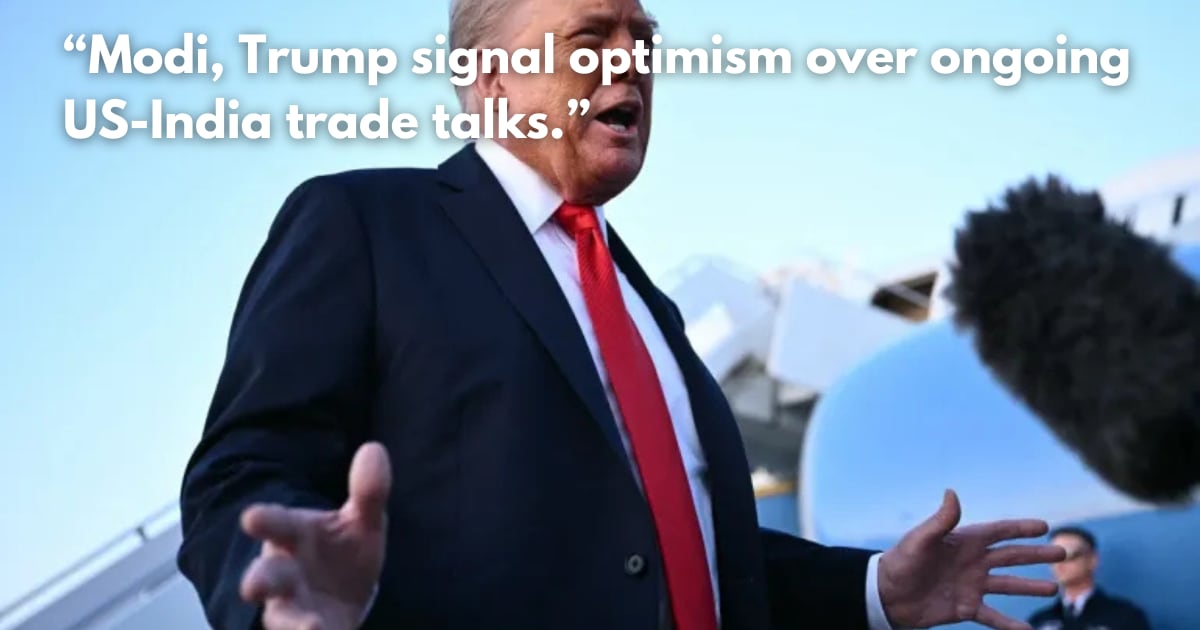
India has stayed careful. Prime Minister Narendra Modi and Trump are planning to talk soon. Modi recently said that India and the US are “good friends and natural partners” and suggested that current trade discussions might have a positive ending.
New Delhi has always defended its purchase of Russian oil, saying that cheap energy is necessary for India’s development and for keeping fuel prices affordable for its large population.
Europe’s Balancing Act: Walking the Tightrope Between Washington and Beijing
For the EU, this decision is not only about pressuring Russia—it’s also about staying economically strong.
European economies are still working to recover from the energy crisis caused by Russia’s gas cutoffs in 2022. At that time, the EU got nearly 45 per cent of its natural gas from Russia. That number has now dropped to around 13 per cent, thanks to locating other sources. But the effects of inflation and high energy bills are still clear.
Now, Europe could face another big problem if it cuts trade with China. A German economist told Der Spiegel, “You can’t just cut China out of the European economy without serious problems. The impact would be worse than the 2008 financial crisis.”
What Comes Next? Uncertainty Clouds the Future of Global Trade
In the next few weeks, US Treasury Secretary Scott Bessent will meet China’s Vice Premier He Lifeng in Madrid to reduce tensions. Washington hopes to find a middle ground—pushing back on China’s connection with Russia while avoiding a full trade war.
At the same time, NATO and G7 finance ministers are considering more sanctions on Russia and possibly more focused actions against countries that are seen as supporting Moscow. They are also closely monitoring Turkey, another NATO member, and the third-largest buyer of Russian oil after China and India.
For now, it doesn’t look like the EU or NATO will proceed with Trump’s extreme tariff plan. But talks about “secondary sanctions” on companies or banks related to Russian energy are already happening.
Conclusion: A World Bracing for Impact
Trump's call for NATO and the EU to impose big tariffs on India and China is a strong move, but it could be very dangerous. It shows frustration with how slowly things are moving in Ukraine, but it also shows big differences between the US and its allies on how to deal with Russia's international partners.
Europe depends a lot on Chinese goods, so putting big tariffs on them could hurt its own economy badly. India is a bit easier, but since India is getting closer to the US, Washington probably prefers talking things over instead of fighting.
As BBC News pointed out, the real issue isn't whether tariffs can be put in place, but whether the West can come up with a plan that harms Russia without causing a global economic disaster. Currently, Trump's idea seems more like a way to get attention than a real plan.
The next few months will show if the proposal leads to real action or just becomes another headline in a very unstable world.
Our primary goals at FazTimes Media are to be accurate and confident and adhere to the highest journalistic standards. We check every news story we share against several trustworthy and separate sources to ensure its accuracy.
We have reviewed this report, along with articles from major news outlets worldwide, including BBC News, Reuters, Bloomberg, Al Jazeera, NDTV, The Economic Times, and The Indian Express.
We want to keep the highest standards in global journalism so that our readers can trust the information they acquire.
Link:
https://www.faztimesmedia.com/viewpost/eu-nato-tariffs-on-india-china-the-economic-political-hurdles





Discussion0
Join the conversation on this story
Loading comments...