
India Boosts Russian Oil Imports Amidst Escalating Israel-Iran Conflict
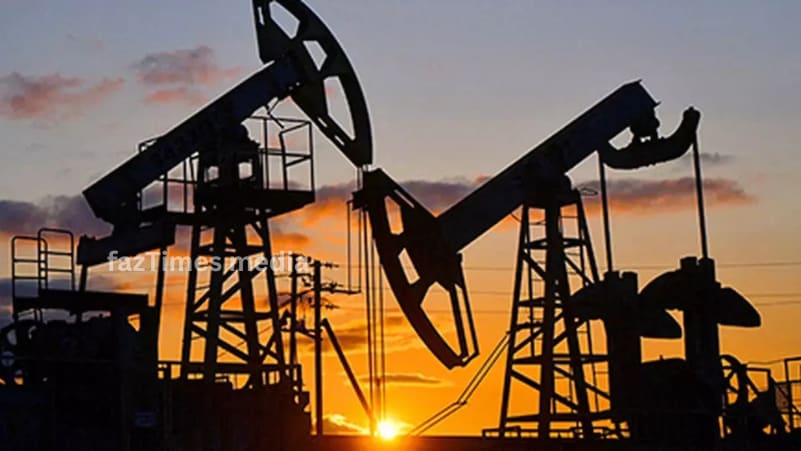
fazTimes media: New Delhi. As military pressures rise within the Middle East, India is unobtrusively reshaping its vitality scene. After Israel's airstrike on Iranian atomic sites on June 13, followed by U.S. strikes on Iranian military resources, modern Delhi has altogether boosted its crude oil imports from Russia. This marks a major alteration in sourcing methodology in the midst of worldwide uncertainty.
Information from worldwide exchange analytics firm Kpler shows that Indian refiners are anticipated to import between 2 and 2.2 million barrels per day (bpd) of Russian oil in June. Usually, the most noteworthy volume is in about two years and outperforms the combined month-to-month imports from conventional inlet providers like Iraq, Saudi Arabia, the UAE, and Kuwait.
This move is more than fair. It appears India's changing approach to geopolitical chance, financial common sense, and energy stability. In a questionable world, oil isn't just a product; it’s a technique.
Middle East on Edge, Markets on Alert
The Middle East remains central to worldwide energy exchange. But with Israel and Iran on a collision course, the locale is getting to be a less secure choice for energy merchants like India. So distant, there has been no coordinated effect on oil shipments, but pressures are high.
The Strait of Hormuz, a contract conduit between Iran and the UAE, handles about 20% of worldwide oil trade. For India, this entry is imperative. Roughly 40% of its unrefined and nearly half of its condensed characteristic gas (LNG) imports travel through this strait. Indeed, the risk of disturbance sends shockwaves through worldwide oil markets.
Iran has cautioned that it may strike back by blocking the strait on the off chance that the U.S. and Israel proceed with their military activities. Iranian state media have anticipated that oil prices may rise to USD 400 per barrel in the event of a full blockade.
Be that as it may, examiners consider this situation improbable. “A total barricade would harm Iran’s interface much more than those of its enemies,” said Sumit Ritolia, lead investigator at Kpler. Iran trades 96% of its oil through Hormuz. Cutting it off would be like shooting yourself in the foot.
India’s Strategic Pivot: The Russia Advantage
India's expanded reliance on Russian rough offers a few points of interest. Since Western sanctions took effect after the Ukraine war disconnected Russia from European markets, Moscow has been offering oil at reduced rates to nations willing to purchase, with India being one of the foremost dynamics.
In 2023 and 2024, India expanded its purchases of Russian Urals, ESPO, and Sokol grades, which presently account for over 40% of India's oil blend. These oil streams bypass the unsafe Strait of Hormuz, traveling through more secure courses such as the Suez Canal, the Pacific, or around Africa’s Cape of Good Hope.
Indian refiners have, moreover, contributed to updating their offices to handle a more extensive assortment of unrefined products. This adaptability permits them to switch between Central Eastern, Russian, American, or African grades based on cost and accessibility. “Geopolitics is reshaping India’s vitality strategy,” Ritolia clarified. “The current increment in imports from Russia isn’t a fair brief; it’s a key move.”
Beyond the Gulf: A Global Energy Web
India isn’t exclusively dependent on Russia. Imports from the U.S. are, moreover, expanding, coming to 439,000 bpd in June, compared to 280,000 bpd in May. In spite of rising shipping costs, American oil is becoming more engaging due to its unwavering quality and separate-from-struggle ranges.
Also, Indian oil companies are investigating supply contracts with makers in Nigeria, Angola, and Brazil. In spite of the fact that these districts are more distant, absent, they offer steady, long-term choices to the violent Inlet.
This broadening isn't, as it were, almost the economy; it’s approximately political freedom. “India needs to guarantee that no single geopolitical hotspot can undermine its economy,” said a vitality service official, who talked anonymously.
How Vulnerable Are We?
With the Israel-Iran strife overwhelming worldwide news, numerous people in India are inquiring if the nation is prepared for a worst-case situation. The brief reply is yes, to a degree. India has key petroleum reserves that can cover around 9 to 10 days of utilization. Whereas not sufficient for a long-term emergency, these savings can offer assistance to address short-term supply disturbances.
Domestic Impact: Fuel Prices and the Common Man
In addition, most of India’s oil supply contracts permit adaptability in rerouting amid crises. Shipping protection costs have risen marginally, but refiners are not freezing.
“There’s anxiety, but not alarm,” said a senior official at Indian Oil Enterprise. “We’ve been planning for this kind of circumstance since the Ukraine war began.”
In spite of rising pressures, Indian fuel costs have remained reasonably steady so far. This soundness is due to the rebates on Russian oil and government tax changes to ease the burden on buyers. Be that as it may, in case the circumstances within the Middle East compound essentially, particularly in case the Strait of Hormuz is disturbed, Indian pump costs seem to rise strongly.
“There’s continuously a time lag between worldwide occasions and retail impact,” said Dr. Anjali Rao, a financial analyst at the Indian Foundation of Remote Exchange. “If oil hits USD 120 per barrel or higher, buyers will feel it.”
Geopolitics Meets Realpolitik
India’s reaction to this emergency highlights a broader slant in its remote approach, which a few specialists allude to as “strategic multialignment.” Instead of taking sides, India is locked in with all major powers, Russia, the U.S., India's neighbors, and Iran, while unobtrusively securing its interface.
As of late, Indian negotiators have come out to partners in Tehran, Tel Aviv, and Washington, calling for de-escalation. At the same time, behind-the-scenes dialogs point to guaranteeing India’s oil supply remains unfaltering.
India has, moreover, maintained a strategic distance from making obvious political explanations, centering instead on stability, sway, and open shipping courses. “We don’t need to add fuel to the fire,” said an outside issues service official.
The Road Ahead: Adaptability as a Strength
Whereas vulnerability remains, one thing is clear: India is learning to adjust rapidly. In a world where supply chains are delicate and clashes can flare up abruptly, adaptability is significant. From overhauling refineries to reconfiguring political ties, India’s vitality procedure is becoming more brilliant, broader, and more flexible.
In the words of a senior arrangement advisor, “We can’t control the storm, but we can alter our sails.”
The Israel-Iran struggle may advance. But for the present, India's cautious adjustment of acquiring cheap oil from Russia, differentiating sources, overseeing savings, and keeping up discretionary nonpartisanship is keeping the country's motors running.
For a country that imports over 85% of its unrefined needs, energy freedom may stay a far-off objective. But vitality security? That’s being built one barrel at a time.





Discussion0
Join the conversation on this story
Loading comments...