
Kaneria Slams BCCI: "Where's the Consistency in Patriotism?" Over India-Pakistan Matches
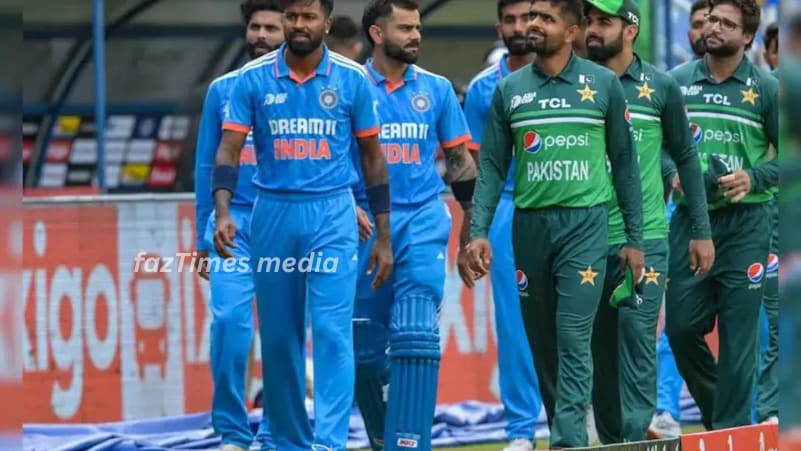
fazTimes media: New Delhi, India — Danish Kaneria, a former cricket player for Pakistan, has started a new discussion about the mixing of sports and politics after it was confirmed that India and Pakistan will play a high-profile match in the upcoming Asia Cup. The match, which is set for September 14, has gotten a lot of interest, both for its sporting importance and for the political issues it brings up between countries.
Kaneria says the ruling shows what he calls "double standards" by the Board of Control for Cricket in India (BCCI). His criticism comes soon after Indian players pulled out of a similar match against Pakistan in the World Championship of Legends, saying they were too loyal to play. People thought that India might boycott future games with Pakistan because of this quick boycott.
In an interview with local reporters, Kaneria said, "There should be cricket between all of us." "Ex-Indian cricketers recently skipped a legends match, which is what got people talking about it." People thought India might not play Pakistan in bigger games like the Asia Cup or even ICC events after that.
The go-ahead for the Asia Cup
The Asian Cricket Council (ACC) just released the Asia Cup schedule. India and Pakistan will play each other in the group stage. Kaneria made it sound like the match could not have happened without permission from BCCI officials. The ACC appears to have received approval from the BCCI. "We cannot finish such a high-stakes game without India's permission," he stated.
India and Pakistan still play each other in multi-nation events like the Asia Cup and ICC World Cup, even though political tensions often make it hard for the two countries to play cricket together. Kaneria says that this lack of consistency in approach leads to confusion and takes away from the patriotic statements that Indian players and officials have made in other situations.
There is a clash between principles and realism.
Kaneria's main point of disagreement is what he sees as a clash between national rhetoric and practical planning. "If you're going to talk about patriotism, you have to stick to it." From now until that match, people will question the view of those who didn't show up to the Legends event. His perspective brings up a bigger question that happens a lot in Indian public life: should sports stay out of political and diplomatic disputes, or should they show how people feel about their country?
The cricket world plays a significant role in generating revenue.
Kaneria also talked about how India has a huge financial stake in cricket around the world, which makes it difficult for boards and broadcasters to ignore Indian involvement. "The BCCI is the world's cricket economic engine." About 80% to 90% of the money made from cricket goes through India. Every board wants its players to be in the IPL because it is the biggest event. People all over the world watch India play.
According to BBC News, the match between India and Pakistan is one of the most watched sports events, even more popular than the FIFA World Cup. ICC records show that more than 273 million unique people watched the 2019 World Cup match between India and Pakistan.
Kaneria went on, "To put it simply, if India doesn't play, the game doesn't sell." When TV rights go down in value, marketers pull their ads, and ratings go down. One game between India and Pakistan can pay for a whole event. He says that this fact often takes precedence over ideological positions or patriotic stories.
Could it be considered strategic planning or perhaps viewed as hypocrisy?
Supporters of the BCCI argue for the careful selection of players for cricket tournaments. They argue that a team would lose out on financial and competitive benefits if it did not participate in ICC events or the Asia Cup. However, critics such as Kaneria argue that these decisions should stem from the same patriotic sentiments that motivate teams to forego bilateral series.
"Either establish a clear distinction between politics and sports, or remain steadfast in your beliefs." "Don't be unfair," Kaneria urged. "Let it be a firm no to playing Pakistan if that's the answer." If the answer is "yes," please accept it and proceed. But you can't change the rules every day.
What the India vs. Pakistan Battle Means
Between India and Pakistan, there is more going on than just a cricket match. It's a highly charged show that brings up nationalism, memories of past wars, and sometimes even tensions between communities. In talks, political leaders often say bad things about Pakistan, but in the name of diplomacy or business, they let cricket games happen between the two countries.
Al Jazeera says that many officials have long seen cricket as a form of "soft diplomacy"—a way to keep talking to each other when other ways of talking don't work. However, that idea appears to contradict the current political rhetoric, which claims that the two countries are entirely separate.
The public's feelings and the media's sensationalism are noteworthy.
The release of the Asia Cup schedule has once again caused a stir on both traditional and social media. Even though the match isn't until two months from now, hashtags like #INDvPAK and #AsiaCup2024 are already popular. Many Indian fans are also confused, which adds to Kaneria's worries. A fan inquired, "Could you please explain why the Legends match was canceled if we are proceeding with the current game?" "Do what you believe in, or stop using patriotism as an excuse."
Others have a different opinion. They say that the Asia Cup is a business duty and has higher stakes than unofficial tournaments.
What's Next?
With the Asia Cup coming up in September and the ICC T20 World Cup coming up soon after, India and Pakistan may play each other again. The BCCI hasn't said anything public about Kaneria's comments yet, but sources inside the cricketing body say that decisions about fixtures are made after consulting government agencies.
Kaneria's comments may not change policy, but they do show that there is still a lot of confusion and different opinions about how the two countries should interact in cricket. His advice is clear: Always do the same thing.
He stated that it is not merely a game between India and Pakistan. The test puts political ideas, popular memory, and morals under scrutiny. People will recall the decisions made now. So, it's crucial to make these choices carefully and clearly, he said.
Stay with fazTimes for more in-depth stories, expert views, and the latest cricket news from around the world.
At FazTimes, we prioritize accuracy, confidence, and strong journalistic standards. To ensure every news story we share is real, we verify it with multiple trustworthy and independent sources.
We’ve compared this report with coverage from major news outlets around the world, including BBC News, Reuters, Bloomberg, South China Morning Post, Al Jazeera, NDTV, The Economic Times, and The Indian Express.
Our dedication lies in upholding the highest standards in global journalism, ensuring our readers can trust the information they receive.


Discussion0
Join the conversation on this story
Loading comments...