
Business
Kashmir Apple Crisis: Growers Watch Harvest Rot on Blocked Highway
By Saquib Ansari
Published: Sep 17, 2025, 10:48 AM
Last updated: Sep 17, 2025, 12:45 PM

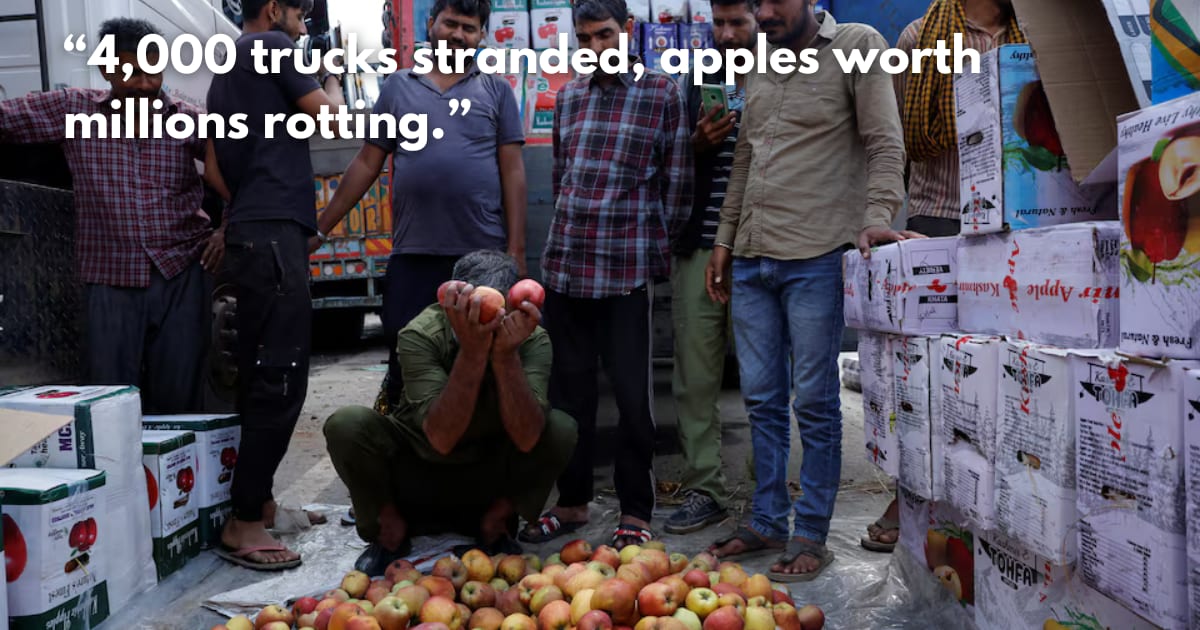


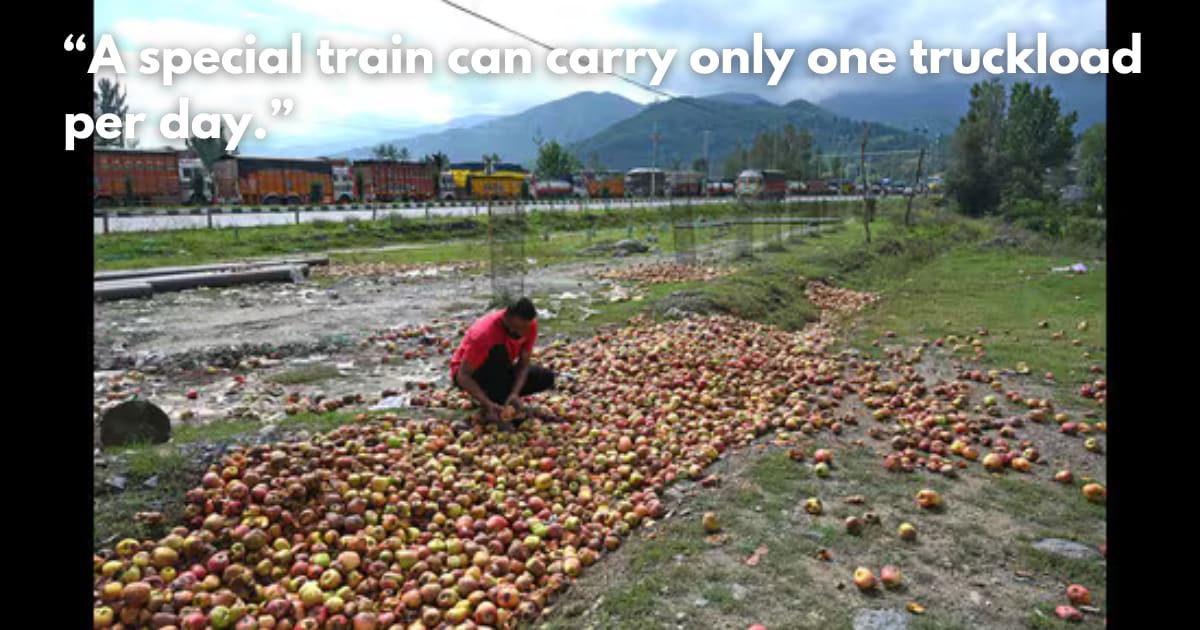
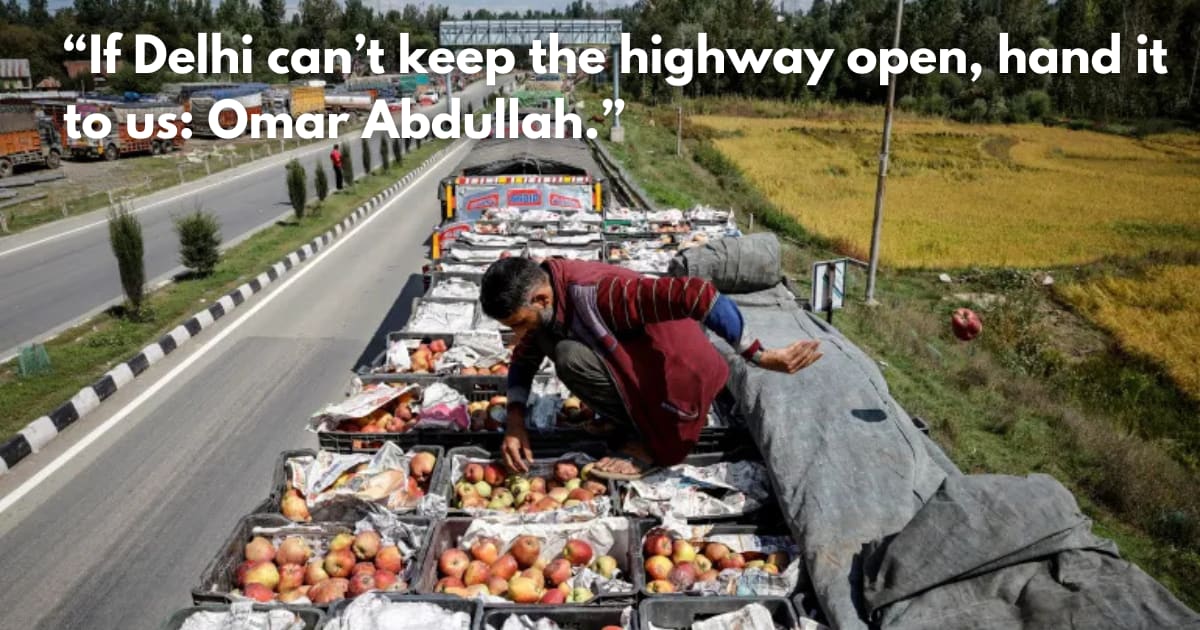

FazTimes Media, Srinagar: During the autumn harvest season in Kashmir, thousands of apple growers are watching their hard work turn into waste. Trucks filled with apples are now stuck along the Jammu–Srinagar national highway, once meant for markets in Delhi and elsewhere. Landslides have blocked a key part of the road, causing its cargo to slowly rot.
For farmers like Javid Ahmad Bhat from Baramulla, the situation is heartbreaking. His two trucks, loaded with apples worth over $10,000, have been stuck for weeks. Now, the tarp-covered vehicles are filled with spoiled fruit. “All the sweat and effort we put in since spring is gone,” Bhat said, clearly upset. “These apples were supposed to go to Delhi. Now, no one will buy them. They’ll just be thrown away on the side of the road.” His words show the deep sadness of many families in the valley who depend on the apple trade for their income.
The Road That Feeds the Valley → Lifeline of the Valley
The Jammu–Srinagar highway is more than just a road. It is the main link between Kashmir and the rest of India, especially during the winter months when the region is cut off by snow. Since August 24, heavy rains and landslides have made it impossible to travel along this important route.
The Telegraph reported that nearly 4,000 trucks are stuck at Qazigund in southern Kashmir’s Anantnag district. Inside them, there are tonnes of fresh produce that is now going bad. Farmers say their total losses are over $146 million, and the amount is growing every day the road remains closed.
The timing is especially bad. September and October are the peak harvest months in Kashmir, when apples, walnuts, and rice are collected from farms and fields. Apple farming alone makes up about 78 per cent of India’s total apple production, according to Al Jazeera.
“This is not just a small problem. “This is a big disaster,” said Ishfaq Ahmad, a farmer from Sopore. “If the road doesn’t open soon, the losses will be terrible.”
Fruit Markets in Crisis → Markets in Meltdown
Sopore, in northern Kashmir, is home to Asia’s biggest fruit market. But on Tuesday, it looked like a place of sadness. Big piles of apple boxes stayed unused, their freshness going away as days passed. The prices dropped from 600 rupees per box ($7) to just 400 rupees ($5), and the traders are worried that costs might fall even more if the blockage continues.
“Ishfaq said they stopped bringing fruit to the market. No space remains, and the trucks we dispatched several weeks ago remain stalled. Why would we send more?”
Farmers in the valley closed down fruit markets earlier this week to show their anger. They blame the authorities for not making sure the highway was opened quickly enough.
Frustration with the Government → Public Anger Mounts
For the farmers, the problem isn’t just the natural disaster but also the way the government is responding. Fayaz Ahmad Malik, head of the Kashmir Fruit Growers’ Association, said only about 10 percent of the stuck trucks were let through after almost three weeks. “Our losses are already in the millions,” Malik said. “If the government had acted faster, things wouldn’t be this bad.”
In Srinagar, Chief Minister Omar Abdullah criticised the central government for how it handled the situation. He suggested that the road should be managed by local authorities if Delhi can’t keep it working. “We’ve waited for weeks, but nothing real has been done. Enough is enough,” Abdullah told reporters.
Government Measures Fall Short → Relief That Fails
To provide some relief, Lieutenant Governor Manoj Sinha flagged off a special train on September 15 for the transport of apples from Budgam to New Delhi. Officials claimed the service would shorten delivery times and offer an alternative to the blocked highway.
However, experts remain sceptical. A railway official, speaking anonymously to Al Jazeera, explained that the train has a capacity of just 23–24 tonnes per day—roughly equal to a single truckload. “Kashmir produces close to two million tonnes of apples annually. This train cannot even scratch the surface of the crisis,” said Shakeel Ahmad, a fruit trader from Shopian.
On the highways, meanwhile, Union Minister for Road Transport Nitin Gadkari posted on X (formerly Twitter) that 50 earthmovers had been deployed to restore the road. “We are determined to reopen this vital highway as soon as possible,” he wrote. However, drivers like Shabir Ahmad, who has been stranded at Qazigund for nearly three weeks, find the assurances to be hollow.
“Every day I check my truck, hoping to move. Instead, I see the apples rotting inside. “It’s heartbreaking,” Shabir said. “The government should have acted with urgency, knowing this is harvest season. Now, nothing is moving.”
The economic backbone is under threat. → Backbone Under Siege
Horticulture is the backbone of Kashmir’s economy, employing nearly 3.5 million people directly or indirectly. Apple exports bring in billions of rupees annually and sustain rural households across the valley. With tourism — another pillar of the economy — already weakened after April’s militant attack on Pahalgam, the apple crisis is a second major blow this year.
“This is not just about fruit. It’s about survival for lakhs of families,” said agricultural economist Dr Shafiq Mir, who spoke to BBC News. "If such crises continue unchecked, they could destabilise the entire rural economy of Kashmir."
Farmers’ Desperation on Display → Desperate Farmers Speak Out
In Qazigund, many growers now open their trucks daily, only to find blackened, collapsing fruit. With no buyers, some have begun unloading the spoiled crates and leaving them by the roadside. “It feels like burying a family member,” said one farmer quietly, as he threw away rotten apples he had once nurtured with care. “We waited the whole year for this harvest, and now it has gone to waste.”
Looking Forward → The Way Ahead
Experts say that Kashmir needs more than just fixing the highway every monsoon season.
They suggest:
Building special train lines for goods that can carry more cargo.
Putting in cold storage places all over the valley so that fresh fruits can last longer.
Creating different road paths, since relying on just one main road makes the area too risky.
Our primary goals at FazTimes Media are to be accurate and confident and adhere to the highest journalistic standards. We check every news story we share against several trustworthy and separate sources to ensure its accuracy.
We have reviewed this report, along with articles from major news outlets worldwide, including BBC News, Reuters, Bloomberg, Al Jazeera, NDTV, The Economic Times, and The Indian Express.
We want to keep the highest standards in global journalism so that our readers can trust the information they acquire.
Link:
https://www.faztimesmedia.com/viewpost/kashmir-apple-crisis-growers-watch-harvest-rot-on-blocked-highway





Discussion0
Join the conversation on this story
Loading comments...