
Scientists Develop Sweat-Activated Skin Adhesive for Wearables
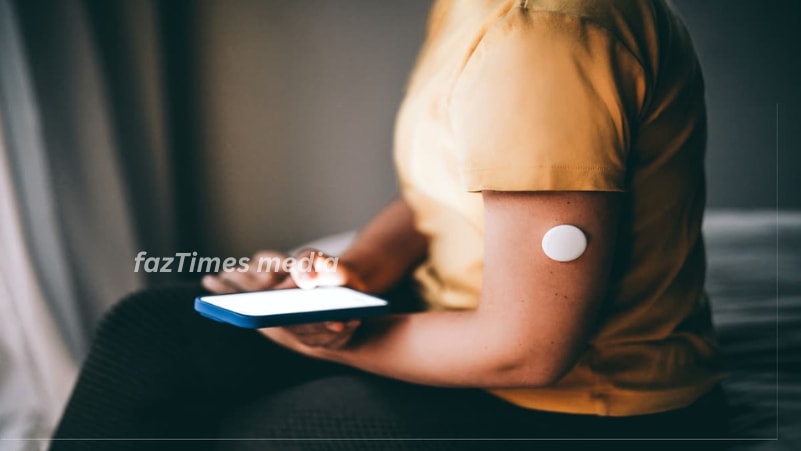
fazTimes media: PALAKKAD, INDIA — As wearable health tech becomes more popular in India, people are using devices to track things like heart rate and blood sugar. But a common problem is that these devices often cause skin irritation. Whether it's a continuous glucose monitor or a fitness tracker worn for long periods, many people experience redness, itching, and discomfort. Now, there's a new development that could make a big difference for millions of users, including many people with diabetes in India. Scientists at Texas A&M University have created a new type of adhesive that works with sweat and is gentle on the skin.
From Discomfort to Discovery
Traditional adhesives in medical wearables, like those in glucose monitors or Holter ECG patches, are made from solvents and consist of materials such as acrylates or colophonium. These adhesives are pressure-sensitive, meaning they stick strongly and stay attached even when moved around. However, these adhesives have a significant drawback: they often cause skin irritation.
“Many people feel itching, have allergic reactions, or even develop blisters when they wear these devices for a long time,” explains Dr. Nair. “In places with high humidity, like India, sweat can make the issue even worse.”
Now, scientists at Texas A&M are exploring a new type of material called polyelectrolyte complexes (PECs).
These are water-based and safe for the skin, and researchers think they could change the way we attach medical devices to the body.
“From what we know, no one has used a PEC as an adhesive for wearable medical devices before,” Dr.
Grunlan said in an official statement.
But what’s surprising?
Sweat helps the adhesive stick better. The salt and moisture from human sweat, which usually weaken adhesives, have the opposite effect with this formula. Over time, the adhesive becomes stronger with use.
“Many people think water-based adhesives would break down with sweat,” Grunlan explained. “But ours gets stronger, not weaker.”
Why This Matters for India
India has more than 100 million people with diabetes and millions more who are at risk of heart and blood vessel diseases. In recent years, wearable medical devices like continuous glucose monitors and fitness trackers have become popular in big cities such as Bengaluru, Mumbai, and Delhi.
BBC News reports that India is one of the fastest-growing markets for wearable health technology, especially after the coronavirus pandemic, as more people are interested in keeping track of their health.
However, there has been a big challenge in using these devices in India's hot, humid, and sweaty weather.
The sticky parts on these devices often don't stick well, come off too quickly, or cause red, irritated skin.
A new kind of sticky material that works with sweat and is gentle on the skin, called PEC technology, could fix this local problem.
Dr. Rajiv Menon, a public health expert in Tamil Nadu, says, “This could be especially useful for people in rural areas who use these devices for a long time and don’t have easy access to medical help.”
The Science Behind the Stick
So, what are polyelectrolyte complexes?
PECs are materials made by mixing positively and negatively charged polymers in water.
When these oppositely charged chains come together, they form a sticky, gel-like substance. PECs are less likely to cause allergies because they are biocompatible and kinder to the skin than solvent-based adhesives. A team from Texas A&M took this material and designed it to have the strength of regular adhesives but in a way that is safe and comfortable for human skin.
This work is based on earlier research conducted by Dr. Grunlan’s team. Grunlan’s team works on flame-retardant PEC coatings for things like fabric and foam. The researchers observed that medical applications could also benefit from the same sticky qualities.
Built for Long-Term Wear
In tests, the new PEC adhesive performed very well in real-life situations. Biocompatibility tests, led by Dr. Balakrishna Haridas and his team at Texas A&M’s Department of Biomechanical Engineering, showed very little skin irritation even after long periods of use.
“This isn’t just something that works in a lab,” said Dr. Grunlan. “It’s made to function in daily life—for people like athletes and elderly patients with sensitive skin.”
The product could make a big difference for people who wear patches for several days, such as those dealing with sleep problems, heart issues, or diabetes.
What’s Next?
Even though the adhesive is still in the early stages of development, the research group has already filed a patent for their formula and is discussing it with companies that make medical devices. People are hopeful that PEC adhesives might be used in newer versions of continuous glucose monitors, heart monitors, or surgical bandages within the next year or two.
India’s healthcare industry, which is investing more in digital and wearable health tools, is expected to be one of the first countries to use this technology.
According to Al Jazeera, India’s telehealth and digital diagnostic industry is expected to grow to more than $20 billion by 2030, and wearable technology will play a key role in that growth.
The Road Ahead
As more people around the world, especially in countries like India, use wearable devices, there will be a bigger need for adhesives that are gentle on the skin and work well in different weather conditions.
This new development from Texas A&M does more than just make devices more comfortable—it helps move healthcare toward being more inclusive and easier on patients.
Dr. Nair said, “The day we stop worrying about our health devices hurting our skin and start focusing on what they can tell us—that’s when the technology has improved.” With PEC adhesives, that day might be coming sooner than we think.
Final Thoughts
This new idea might seem simple—like a better way to attach something to the skin—but its impact is big.
In places with hot weather, lots of people living in rural areas, and rising numbers of long-term health problems, making wearable healthcare comfortable and easy to use is really important. It's not just about small details—it's about whether people stick with their health plans or give up and whether they catch issues early or miss important signs.
As wearable technology becomes a key part of how we take care of our health, inventions like this help ensure that it's not just for a few people but for many.
At FazTimes, we prioritize accuracy, confidence, and strong journalistic standards. To ensure every news story we share is real, we verify it with multiple trustworthy and independent sources.
We’ve compared this report with coverage from major news outlets around the world, including BBC News, Reuters, Bloomberg, South China Morning Post, Al Jazeera, NDTV, The Economic Times, and The Indian Express.
Our dedication lies in upholding the highest standards in global journalism, ensuring our readers can trust the information they receive.




Discussion0
Join the conversation on this story
Loading comments...