
Business
Trump's 100% Pharma Tariff: Impact on India's Drug Exports & US Prices
By Mohamed Areif Mubarack
Published: Sep 26, 2025, 05:08 AM


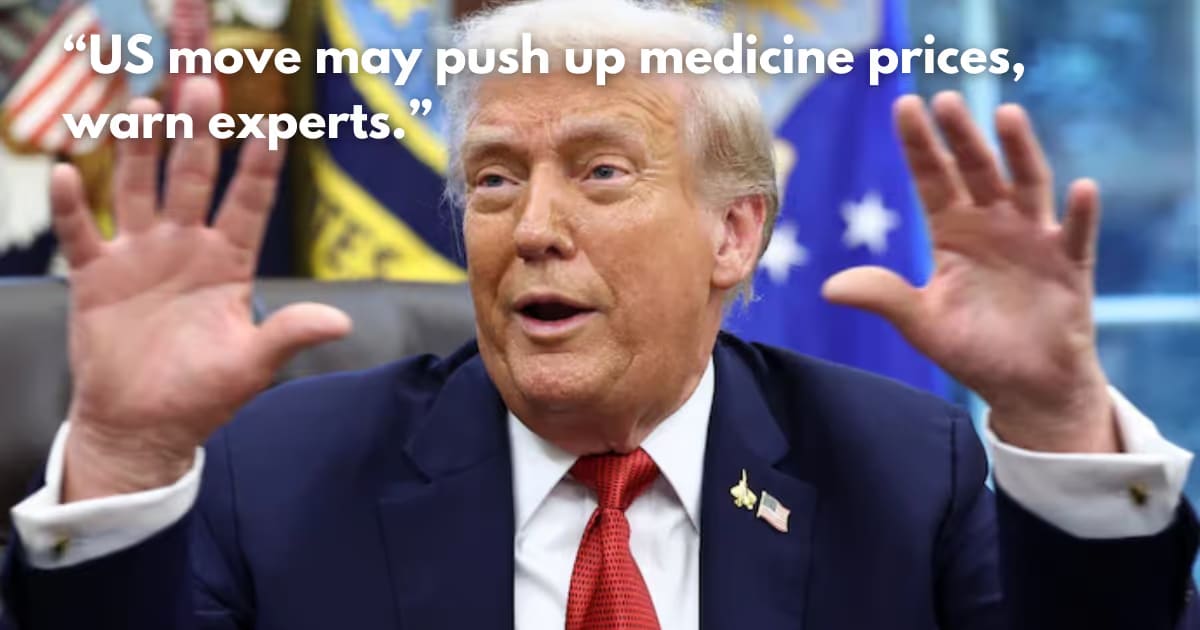

FazTimes Media, Trump Tariff: United States President Donald Trump has once again stirred up global trade with a new set of tariffs—this time aimed at the pharmaceutical industry. Starting on October 1, 2025, the U.S. will charge a 100% tax on all branded and patented medicines brought in from other countries, unless the company is already building production facilities in the U.S.
The announcement, posted on Trump’s social media site Truth Social, has caused a lot of discussion in the healthcare industry, especially in India, which is one of the biggest exporters of low-cost medicines to the U.S. market.
In his message, Trump said, “Starting October 1st, 2025, we will be putting a 100% tariff on any branded or patented pharmaceutical product, unless a company is building their pharmaceutical manufacturing plant in America.”
He explained that “is building” means starting construction or having a project underway, and said that any company failing to invest in U.S. production will have to pay the tax. Trump said this isn’t only about money but also about “national security and other reasons.”
According to BBC News, Trump believes these actions can help lower the federal budget deficit, create jobs, and encourage big companies to move their drug manufacturing to the U.S.
This continues Trump’s pattern of using tariffs as part of his economic strategy, following earlier tariffs on steel, solar panels, and Chinese products during his first term, and more recent duties on furniture, heavy trucks, and even kitchen cabinets.
In the first half of 2025 alone, Indian drugmakers sent another $3.7 billion worth of products to America.
India provides more than 45% of the generic drugs and about 15% of the biosimilars used in the U.S.
For India, the situation is serious. Its pharmaceutical industry is one of the country’s top earners, providing jobs for millions and contributing to the country’s foreign exchange.
The government in New Delhi might now need to rethink its trade plan.
Trump has positioned the tariffs to protect American jobs and ensure national security. By focusing on industries such as pharmaceuticals and furniture, he aims to appeal to voters at home who believe that sending jobs overseas has hurt the U.S. economy.
As stated by BBC News, Trump thinks that making foreign companies “make in America” will bring back economic strength. However, people who disagree say this approach could lead to trade conflicts, problems in getting goods, and higher prices for everyday consumers.
In the past, Trump’s use of tariffs caused issues with China and the European Union. India might now get involved in another trade conflict, as it already faces a 25% penalty for buying Russian oil.
Healthcare economists say American patients might be the biggest losers, as the cost of medicines could go up a lot.
Trade experts think India may have to ask for an exception, similar to the ones given in the past for steel and energy products.
For people in India, this issue is more than just numbers. Families with relatives working in pharma centers like Hyderabad, Ahmedabad, and Visakhapatnam are worried about keeping their jobs.
In a country where affordable medicines are considered a source of pride, Trump’s move shows how global politics can directly impact the lives of people in Indian homes.
The coming months will be important. India's government will probably talk to Washington about trade, and big pharmaceutical companies might look into working together or speeding up their presence in U.S. manufacturing.
For Trump, the tariff is both a political move and a risky business choice. Will it really help make more American medicines, or could it end up making drugs pricier and create problems with a country like India?
There is no doubt that this decision has positioned pharmaceuticals at the forefront of a fresh trade dispute, and the subsequent events could significantly impact the economies of both countries.
According to Al Jazeera, the proposed tax on medicines is essentially a test of the resilience of global supply chains.
Our primary goals at FazTimes Media are to be accurate and confident and adhere to the highest journalistic standards. We check every news story we share against several trustworthy and separate sources to ensure its accuracy.
We have reviewed this report, along with articles from major news outlets worldwide, including BBC News, Reuters, Bloomberg, Al Jazeera, NDTV, The Economic Times, and The Indian Express.
We want to keep the highest standards in global journalism so that our readers can trust the information they acquire.
Link:
https://www.faztimesmedia.com/viewpost/trumps-100-pharma-tariff-impact-on-indias-drug-exports-us-prices





Discussion0
Join the conversation on this story
Loading comments...