
Business
Trump's 100% Tariff on Foreign Films: Hollywood Turmoil
By Mohamed Areif Mubarack
Published: Sep 30, 2025, 05:50 AM

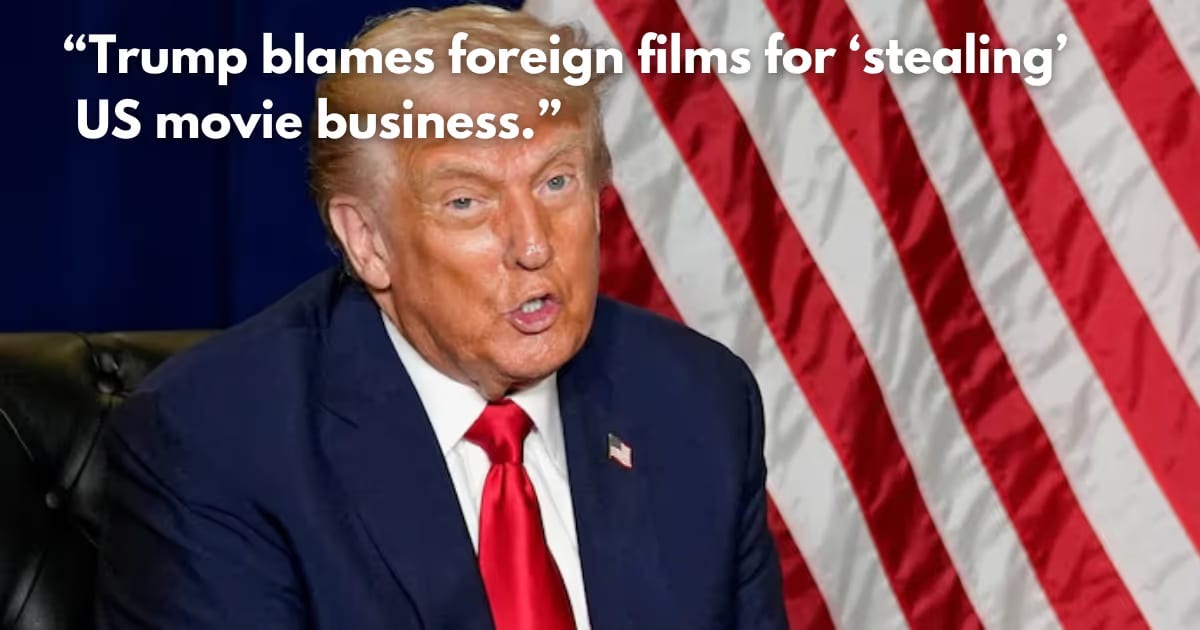

FazTimes Media, New York: In a move that has startled the global entertainment world, U.S. President Donald Trump announced on Monday that his administration will impose a 100 percent tariff on movies made outside the United States. The declaration has caused significant ripples in the Indian film industry, which has historically viewed the U.S. as one of its most lucrative international markets.
The announcement, made on Trump’s Truth Social account, carried his characteristic combative tone. “Our movie-making business has been stolen from the United States of America by other countries, just like stealing candy from a baby,” he wrote, accusing other nations of undermining Hollywood’s dominance. Trump also criticized California’s Democratic governor Gavin Newsom, saying the state had been “hard hit” and blaming Newsom as “weak and incompetent.”
“To solve this long-time, never-ending problem, I will be imposing a 100 per cent tariff on any movies that are made outside of the United States,” Trump declared.
For India, which is the world’s largest film producer, the move could prove costly. Indian cinema—particularly the Bollywood, Telugu, and Tamil industries—relies heavily on overseas revenue. According to industry trackers, the United States and Canada together contribute significantly to box office returns, thanks largely to the strong Indian diaspora.
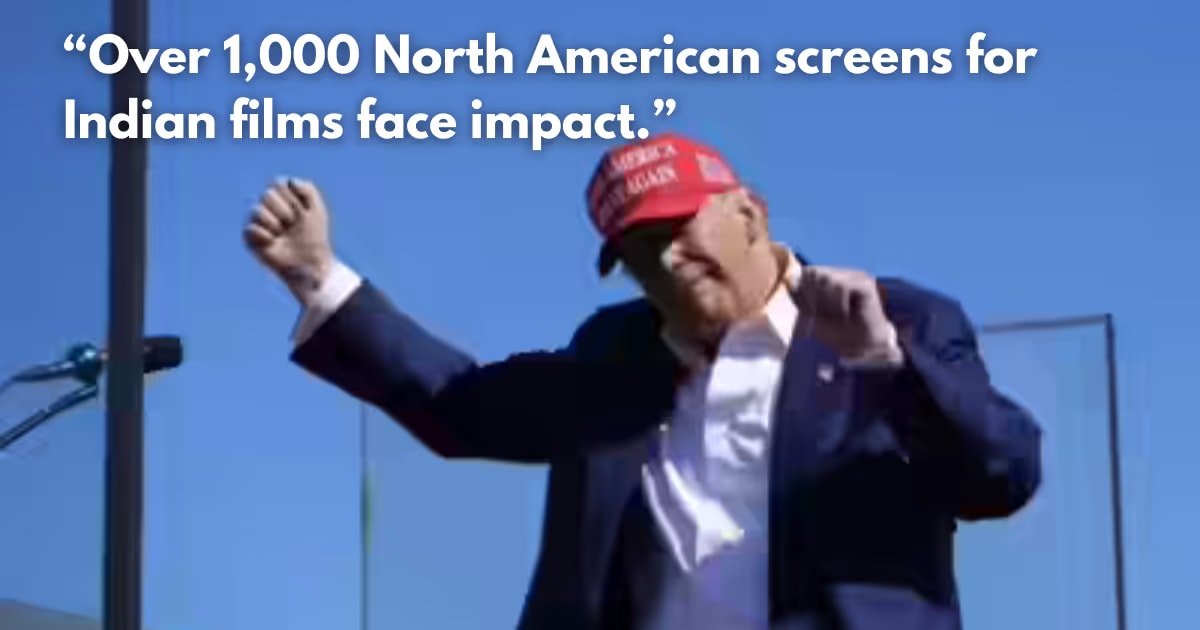
A 2017 Forbes report noted that Indian-language films in North America often gross more than $8 million, with some even crossing $10 million. Over 1,000 screens across the U.S. and Canada regularly showcase Indian films. Since then, collections have grown even higher with the rise of global hits such as RRR, Pathaan, and Jawan.
Film critic and trade analyst Komal Nahta told FazTimes that the tariffs could dampen this success story. “If ticket prices rise due to tariffs, fewer non-Indian audiences will take the risk of watching these films. Diaspora audiences will still come, but the broader expansion we’ve seen in the past five years could slow down dramatically.”
The tariffs on films are part of Trump’s broader protectionist push. Alongside cinema, Trump also announced “substantial tariffs” on furniture imports, particularly aimed at reviving North Carolina’s once-thriving furniture industry.
“To make North Carolina, which has completely lost its furniture business to China and other countries, GREAT again, I will be imposing substantial tariffs on any country that does not make its furniture in the United States. Details to follow,” Trump wrote online.
This builds on earlier measures targeting India and other trade partners. In recent months, Washington imposed 50 percent tariffs on Indian goods, including a controversial 25 percent levy on New Delhi’s purchases of Russian oil. According to Al Jazeera, the oil tariff is among the highest rates globally.
India has defended its energy strategy, insisting that discounted Russian oil helps stabilize domestic fuel prices.
Entertainment journalist Naman Ramachandran, “American audiences today are global. They want to watch Korean dramas, Japanese anime, European art films, and Indian blockbusters. Tariffs will make these movies pricier, pushing viewers toward piracy or streaming alternatives.”
Streaming platforms may benefit in the short term, as tariffs might not apply to direct-to-digital releases.
Communities often book entire halls for big premieres, turning screenings into celebrations.
A New Jersey-based IT professional, Ramesh Patel, expressed disappointment: “We watch Hindi and Telugu films on the big screen because it feels like home. If tariffs make tickets costlier, many families will stop going. It will break an important tradition for us.”
The diaspora’s purchasing power has been crucial in turning Indian films into global hits. A slowdown in U.S. collections could ripple back into Mumbai and Hyderabad studios, discouraging high-budget productions with international ambitions.
Trump’s decision also carries a domestic political message. By focusing on California and North Carolina—two states with strong film and furniture ties—he is signaling to key constituencies ahead of the 2025 presidential race.
Critics argue that the move is less about reviving industries and more about political theater. According to Al Jazeera, several U.S. trade experts have called the tariff “unworkable,” predicting legal challenges at the World Trade Organization (WTO).
India may respond by raising concerns through diplomatic and trade channels. New Delhi has historically challenged U.S. tariffs at the WTO and may do so again. Yet, given the importance of the U.S. market, India will likely pursue negotiations to secure exemptions for its film industry.
Film bodies in India, including the Producers Guild of India, are expected to lobby the government to ensure screenings remain affordable abroad. Some producers may even explore shifting premieres to Canada or the U.K., where diaspora numbers are also strong, though the U.S. market remains unmatched in scale.
Trump’s 100 percent tariff on foreign-made films is more than an economic policy—it’s a cultural flashpoint. For India, it threatens one of the brightest chapters of its film industry’s global journey. For the U.S., it risks narrowing artistic horizons in an age when audiences are increasingly embracing diverse stories.
As reported by BBC News, industry watchers say the policy might not survive legal and diplomatic pushback. But for now, filmmakers in Mumbai, Chennai, and Hyderabad are anxiously watching Washington, knowing that the reels of their global success story may be paused—at least temporarily.
Our primary goals at FazTimes Media are to be accurate and confident and adhere to the highest journalistic standards. We check every news story we share against several trustworthy and separate sources to ensure its accuracy.
We have reviewed this report, along with articles from major news outlets worldwide, including BBC News, Reuters, Bloomberg, Al Jazeera, NDTV, The Economic Times, and The Indian Express.
We want to keep the highest standards in global journalism so that our readers can trust the information they acquire.
Link:
https://www.faztimesmedia.com/viewpost/trumps-100-tariff-on-foreign-films-hollywood-turmoil





Discussion0
Join the conversation on this story
Loading comments...